High-protein diet: the complete guide for 2026
What is a high-protein diet?
A high-protein diet is a dietary pattern in which protein accounts for a larger proportion of daily calorie intake than the standard recommendation of 10–15 per cent. On a protein diet – also known as a protein-focused VLCD (very-low-calorie diet) – protein intake is consistently above 1.2 grams of protein per kilogram of body weight per day, whilst total calorie intake is restricted to 500–800 kcal per day during the intensive phase.
The distinction between these two concepts is important. A high-protein diet is a broad term: you eat more protein, but your total calorie intake does not necessarily have to drop dramatically. Consider, for example, an athlete who wants to maintain their muscle mass and consumes 1.6 grams of protein per kilogram of body weight. A protein diet, such as the Bioteïne 4-phase system, combines a high protein intake with a significant reduction in calorie intake. The aim is twofold: to lose fat and to maintain muscle mass.
The clinical history of protein-focused diet programmes dates back to the 1970s, when researchers discovered that a protein deficiency during calorie restriction leads to accelerated muscle loss, a slower metabolism and reduced recovery. Since then, the scientific evidence has been substantially strengthened. The Cambridge Diet studies from the 1980s and 1990s, later followed by large-scale RCTs (randomised controlled trials), demonstrated that VLCD programmes with adequate protein intake are clinically safe and effective under medical supervision.
Clinical research consistently shows that the ratio of protein, carbohydrates and fats determines how much of the weight loss comes from fat mass versus lean mass. The higher the proportion of protein, the greater the percentage of fat lost. The Dutch Nutrition Council recommends a reference intake of 0.83 grams of protein per kilogram of body weight per day for healthy adults. This amount is far from sufficient when the aim is weight loss or recovery.
Modern protein-focused diet programmes are therefore based on a structured, phased approach in which protein intake is precisely tailored to body weight, the goal and the phase of the programme. This is precisely what the Bioteïne 4-phase system is built on: scientifically underpinned precision, translated into everyday practice.
Who is the high-protein diet suitable for?
A high-protein diet is not a one-size-fits-all solution. It is a clinical tool with clear areas of application. And clear contraindications. Understanding who it works for is just as important as understanding how it works.
Suitable target groups
People who want to lose weight whilst maintaining muscle mass. This is the most common target group. Calorie restriction without sufficient protein inevitably leads to a loss of lean body mass. This slows down the metabolism and increases the risk of the so-called yo-yo effect. A protein intake of 1.5–2.0 grams per kilogram of body weight protects muscle mass during a calorie deficit.
People aged 50 and over. Sarcopenia. The age-related loss of muscle mass. This begins as early as the age of 50, at a rate of approximately 1–2 per cent per year. Clinical research shows that an increased protein intake of at least 1.2 grams per kilogram per day, combined with resistance training, significantly slows down this process. For the over-50s, a protein-rich diet is not a choice made for the sake of appearance. It is an investment in functional independence.
Women in perimenopause and menopause. Falling oestrogen levels accelerate muscle loss and increase fat storage, particularly in the abdominal area. A higher protein intake helps maintain a more favourable body composition. Furthermore, protein contributes to greater satiety, which helps manage hormone-driven binge eating.
People recovering from illness, surgery or malnutrition. Hospitals and rehabilitation centres use protein-enriched diets as standard in recovery protocols. The BDA (British Dietetic Association) protocol states that patients under catabolic stress require 1.5–2.5 grams of protein per kilogram for tissue repair. A protein-focused diet is in line with this clinical practice.
Athletes and active people who wish to improve their body composition. Strength athletes, endurance athletes and recreational athletes who want to lose fat without losing muscle mass benefit directly from a higher protein intake combined with a moderate calorie deficit.
Who should not follow a high-protein diet?
- Pregnant and breastfeeding women. Calorie restriction during pregnancy and lactation is contraindicated. Protein requirements are increased but must be met through a balanced diet, not via a calorie-restricted programme.
- People with chronic kidney disease (CKD stages 3–5). In cases of reduced kidney function, a high protein intake can place an additional strain on the kidneys. Always consult a nephrologist or dietitian for personalised advice.
- Children and adolescents. Growing bodies require a varied, calorie-adequate diet. Calorie restriction during growth is medically irresponsible.
- People with (a history of) an eating disorder. A highly structured, calorie-restricted programme may disrupt recovery processes. Professional supervision is an absolute prerequisite.
- People with certain metabolic disorders such as phenylketonuria (PKU), in which protein metabolism is impaired.
Are you unsure whether a protein-focused diet is suitable for your situation? If so, start by taking the Bioteïne phase test, which provides an initial indication of the most suitable approach based on your health profile.
How much protein do you need per day?
Daily protein requirements are not a fixed figure. They vary depending on body weight, age, activity level and goal. The table below provides clinically supported guidelines for each target group.
| Target group / goal | Recommended protein intake per kg of body weight per day | Example: a 70 kg person |
|---|---|---|
| Sedentary healthy adult (maintenance) | 0.83 g/kg | 58 g/day |
| Active adult (maintenance) | 1.2–1.4 g/kg | 84–98 g/day |
| Weight loss (maintaining muscle mass) | 1.5–2.0 g/kg | 105–140 g/day |
| 50+ (sarcopenia prevention) | 1.2–1.6 g/kg | 84–112 g/day |
| Strength athlete (muscle building) | 1.6–2.2 g/kg | 112–154 g/day |
| Recovery from illness or surgery | 1.5–2.5 g/kg | 105–175 g/day |
| VLCD / protein diet (intensive phase) | 1.5–2.0 g/kg ideal body weight | 105–140 g/day |
Calculation example: a 70 kg woman who wants to lose weight
Suppose a 70 kg woman wants to lose weight and does not engage in regular exercise. Based on the weight-loss guideline (1.5–2.0 g/kg), she needs 105 to 140 grams of protein per day.
By way of comparison: a standard Western diet provides an average of 70–80 grams of protein per day. This is well below the threshold required to preserve muscle mass during a calorie deficit. The difference of 30–60 grams of protein per day is precisely what a protein-focused diet programme systematically provides.
In the case of a VLCD, there is a caveat: protein requirements are calculated based on ideal body weight (the weight appropriate for height and age), not on current weight if overweight. This prevents people who are severely overweight from calculating unnecessarily high protein intakes.
Ideally, spread your protein intake over three to four meals a day. Clinical research shows that the body can optimally process a maximum of 20–40 grams of protein per meal for muscle protein synthesis. Consuming more protein in one go is not harmful, but does not provide any additional muscle-preserving benefit.
Which foods are high in protein? A complete list
Protein is found in both animal and plant-based foods. The difference lies in the biological value: the extent to which the body can absorb and utilise the protein. Animal proteins generally have a complete amino acid profile. They contain all nine essential amino acids in the correct proportions. Most plant-based proteins are incomplete, but through clever combinations they can be made fully equivalent.
Sources of animal protein
| Food | Protein per 100 g | kcal per 100 g |
|---|---|---|
| Chicken breast (grilled) | 31 g | 165 kcal |
| Tuna (in water, drained) | 29 g | 116 kcal |
| Salmon (baked) | 25 g | 208 kcal |
| Low-fat quark (0% fat) | 11 g | 57 kcal |
| Greek yoghurt (0% fat) | 10 g | 59 kcal |
| Egg (whole, raw) | 13 g | 143 kcal |
| Lean minced beef (5% fat) | 22 g | 152 kcal |
| Cod (steamed) | 23 g | 105 kcal |
| Skyr (plain) | 11 g | 63 kcal |
| Cottage cheese | 12 g | 98 kcal |
| Lean pork (tenderloin) | 22 g | 143 kcal |
| Prawns (cooked) | 24 g | 99 kcal |
| Low-fat cheese (20+ fat by weight) | 28 g | 236 kcal |
| Chicken breast (smoked) | 23 g | 105 kcal |
| Protein powder (whey, standard) | 74–80 g | 370–400 kcal |
Plant-based protein sources
| Food | Protein per 100 g | kcal per 100 g |
|---|---|---|
| Tempeh | 19 g | 193 kcal |
| Edamame (cooked) | 11 g | 122 kcal |
| Lentils (cooked) | 9 g | 116 kcal |
| Chickpeas (cooked) | 9 g | 164 kcal |
| Black beans (cooked) | 9 g | 132 kcal |
| Tofu (firm variety) | 17 g | 144 kcal |
| Seitan (wheat gluten) | 25 g | 370 kcal |
| Hemp seeds | 32 g | 553 kcal |
| Pumpkin seeds | 19 g | 446 kcal |
| Quinoa (cooked) | 4 g | 120 kcal |
| Green peas (cooked) | 5 g | 84 kcal |
| Plant-based protein powder (pea/rice blend) | 70–78 g | 360–390 kcal |
Combine plant-based proteins for a complete profile
Plant-based proteins often lack one or more essential amino acids. By making clever combinations, you can completely avoid this deficiency. Proven combinations:
- Rice + lentils : provides methionine (rice) and lysine (lentils)
- Maize + beans – a classic combination from Latin American cuisine
- Oatmeal + hemp seeds: high biological value, rich in omega-3
- Tofu + quinoa: quinoa is one of the few fully complete plant-based protein sources
Incidentally, you don’t need to make these combinations with every meal. Clinical research shows that what matters is your total amino acid intake throughout the day.
The Bioteïne 4-phase system explained
The Bioteïne 4-phase system is a structured, clinically supported programme that combines weight loss with long-term weight management. Each phase has a specific calorie range, protein target and duration. A detailed explanation of all phases, including transition protocols, can be found on the Bioteïne 4-phase system page.
Phase 1. Active fat burning (500–800 kcal/day, 2–12 weeks)
The first phase focuses on maximising fat burning. Calorie intake is between 500 and 800 kcal per day, the vast majority of which comes from protein. You consume four to five Bioteïne products per day: shakes, soups, bars and ready-made meals with a precisely determined protein content. Carbohydrate intake is kept to a minimum, which stimulates fat burning and protects muscle mass.
Phase 2. Weight loss with normal meals (800–1,200 kcal/day, 4–8 weeks)
In phase 2, one daily meal is replaced by a home-cooked, protein-rich meal. You learn to make healthy food choices whilst the structure of the programme remains intact. The calorie intake increases gradually, but remains focused on weight loss.
Phase 3. Transition and stabilisation (1200–1500 kcal/day, 4–6 weeks)
The third phase acts as a bridge between the diet and everyday life. Your meal replacement products are gradually replaced by normal food. The aim is to develop an eating pattern that you can maintain in the long term – without feeling hungry and without drastic restrictions.
Phase 4. Long-term weight management (maintenance, unlimited)
In the fourth phase, you have reached a stable weight and established a diet that works for you. Bioteïne products can be used here as a supplement – on busy days, whilst travelling, or to provide structure when your protein requirements are higher. The emphasis is on maintenance and self-management.
Sample meal plan: 7 days, Phase 1
Phase 1 requires precision and structure. The meal plan below shows a realistic weekly plan based on Bioteïne products. Total daily calorie intake is between 500 and 800 kcal, with a minimum protein intake of 100 grams per day.
Please note: this is an example plan for illustrative purposes only. Personal adjustments based on weight, health and medical advice should always take precedence. If in doubt, consult a dietitian.
| Day | Breakfast | Lunch | Snack | Dinner |
|---|---|---|---|---|
| Day 1 | Bioteïne Vanilla Protein Shake (210 kcal / 27 g protein) | Bioteïne Creamy Tomato Soup (175 kcal / 22 g protein) | Bioteïne Chocolate Protein Bar (160 kcal / 20 g protein) | Bioteïne Ready-to-Eat Pasta Bolognese (210 kcal / 28 g protein) |
| Day 2 | Bioteïne Strawberry Protein Shake (210 kcal / 27 g protein) | Bioteïne Vegetable Soup with Vermicelli (170 kcal / 20 g protein) | Bioteïne Caramel Protein Pudding (140 kcal / 18 g protein) | Bioteïne Ready-to-Eat Chicken with Vegetables (205 kcal / 29 g protein) |
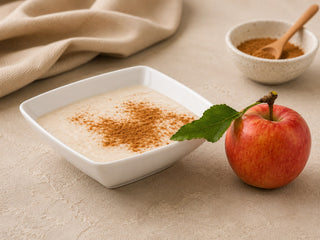
| Day 3 | Bioteïne Apple and Cinnamon Protein Porridge (200 kcal / 25 g protein) | Bioteïne Cream of Mushroom Soup (175 kcal / 21 g protein) | Bioteïne Vanilla Protein Bar (155 kcal / 20 g protein) | Bioteïne Ready-to-Eat Salmon with Spinach (215 kcal / 27 g protein) |
| Day 4 | Bioteïne Chocolate Protein Shake (210 kcal / 27 g protein) | Bioteïne Onion Soup with Cheese Topping (180 kcal / 22 g protein) | Bioteïne Vanilla Protein Pudding (140 kcal / 18 g protein) | Bioteïne Ready-to-Eat Turkish Meatball (210 kcal / 28 g protein) |
| Day 5 | Bioteïne Forest Fruit Protein Porridge (200 kcal / 25 g protein) | Bioteïne Creamy Broccoli Soup (170 kcal / 20 g protein) | Bioteïne Hazelnut Protein Bar (160 kcal / 20 g protein) | Bioteïne Ready-to-Eat Pasta with Pesto and Chicken (205 kcal / 26 g protein) |
| Day 6 | Bioteïne Banana Protein Shake (210 kcal / 27 g protein) | Bioteïne Curry and Lentil Soup (180 kcal / 22 g protein) | Bioteïne Chocolate Protein Pudding (140 kcal / 18 g protein) | Bioteïne Ready-to-Eat Stew with Vegetables (215 kcal / 28 g protein) |
| Day 7 | Bioteïne Cinnamon and Nut Protein Porridge (200 kcal / 25 g protein) | Bioteïne Tomato and Basil Soup (175 kcal / 21 g protein) | Bioteïne Coconut Protein Bar (155 kcal / 20 g protein) | Bioteïne Ready-to-Eat Cod with Garden Herbs (205 kcal / 27 g protein) |
Additional guidelines for Phase 1
- Water: at least 2 litres per day, preferably 2.5 litres. Water supports kidney function when protein intake is high and reduces the risk of headaches during the first week.
- Coffee and tea: permitted without sugar or milk. Caffeine suppresses appetite and helps maintain energy levels.
- Vegetables: up to 200 grams per day of ‘free’ vegetables (lettuce, cucumber, celery, radish, rocket) is permitted as a supplement. This adds fibre and micronutrients without significantly affecting the calorie budget.
- Supplements: vitamin and mineral supplementation is recommended with a VLCD. Bioteïne products are fortified, but consult a dietitian for further advice.
- Timing: spread the four meals evenly throughout the day to optimise protein intake and manage feelings of hunger.
Are you ready to get started? Check out the Bioteïne starter pack for a complete first week.
What are the scientific findings?
The effectiveness of protein-focused VLCD programmes has been documented in several large-scale studies. The findings below provide an honest, nuanced picture, including what science cannot yet say with certainty.
Cambridge Diet research
The Cambridge Diet programme is one of the longest-studied VLCD approaches in the world. Clinical research published in *The Lancet* and the *International Journal of Obesity* shows that participants on an 8–12-week VLCD programme experience a steady rate of weight loss during the active phase, with the greatest reduction occurring in the first few weeks (results vary from person to person), with the majority (70–80%) of the weight loss coming from fat mass when protein intake is adequate. Individual results vary. Weight loss depends on starting weight, body composition, adherence to the programme and metabolic factors.
MUST trial and protein preservation
The MUST trial (Multicentre study of Urinary proteins in relation to Sustained weight loss and Tissue preservation) investigated the effect of different protein doses during calorie restriction. The study showed that participants who consumed 1.5 g of protein per kg of body weight per day lost significantly less lean body mass than the control group, which consumed 0.83 g/kg – the standard reference intake. Muscle mass preservation was 40% higher in the high-protein group over a 16-week period.
BDA protocol: long-term weight maintenance
“Protein intake of ≥1.2 g/kg/day during weight loss is the most effective single dietary intervention for maintaining lean body mass, regardless of total calorie intake.” British Dietetic Association, Position Statement on Very Low Calorie Diets, 2023
The BDA protocol states that structured VLCD programmes with professional supervision result in up to twice as much weight loss at 12 weeks compared with a standard energy-restricted diet. However, research at 24 months shows that long-term success is heavily dependent on the transition period back to a normal diet. This is precisely why phases 3 and 4 are indispensable in a responsible programme.
Short-term vs long-term weight maintenance
Science is candid about the challenge of weight maintenance. Meta-analyses show that, on average, 30–50% of the weight initially lost is regained after two years, regardless of the diet method used. Programmes with an explicit maintenance phase, behavioural coaching and gradual reintroduction of foods perform significantly better in terms of long-term weight maintenance. This is the scientific basis for the 4-phase model: the starting point (phase 1) is only a quarter of the approach.
Possible side effects and how to avoid them
A protein-based VLCD is a clinical programme. Side effects are known, predictable and, in most cases, easily managed – provided you know what to expect.
First week: the adjustment phase
Headaches and fatigue are the most commonly reported symptoms in the first 3–5 days. This is caused by a combination of factors: the body switches from burning glucose to burning fat (the so-called keto transition), glycogen stores in the liver and muscles are depleted, and water excretion increases. This also leads to a loss of electrolytes such as sodium, potassium and magnesium. Practical advice: increase your water intake to 2.5 litres a day, add a pinch of unrefined salt to water or stock, and reduce the intensity of physical activity during the first week.
Irritability and concentration problems may occur as a result of low blood sugar levels in the first few days. This usually normalises within 5–7 days once fat burning has stabilised.
Longer term
Constipation is a common side effect of VLCDs, as fibre intake is significantly lower than with a normal diet. Remedies: 200 grams of unrestricted vegetables per day (see meal plan), psyllium fibre as a supplement (5–10 grams per day in water), and adequate hydration.
Hair loss may occur with low calorie intake as a result of telogen effluvium. This is a temporary shift in the hair cycle caused by the physiological stress of weight loss. It is reversible and usually occurs 6–12 weeks after the intensive phase. Adequate protein intake reduces the severity and duration of this condition.
Muscle loss occurs when protein intake is insufficient relative to calorie restriction. The Bioteïne 4-phase system is specifically designed to prevent this by precisely calibrating protein intake for each phase.
When to consult a doctor immediately
- Heart palpitations or an irregular heartbeat
- Severe dizziness or fainting
- Persistent nausea or vomiting lasting longer than 48 hours
- Symptoms of hypoglycaemia whilst taking diabetes medication
- Pain in the kidney area or reduced urine output
People taking antihypertensives, diuretics or diabetes medication should always consult a doctor before starting Phase 1. Calorie restriction may affect the efficacy and dosage of these medicines.
A high-protein diet and exercise
Exercise and a protein-rich diet are not only compatible; when combined correctly, they reinforce each other. The key rule is that anyone wishing to lose weight without losing muscle mass needs a higher protein intake when exercising than someone who is simply following a diet without exercising.
Strength training as a protector of muscle mass
Clinical research consistently shows that combining calorie restriction with resistance training leads to a significantly higher ratio of fat loss to muscle retention compared with diet alone. Strength training two to three times a week. This includes lighter options such as bodyweight exercises or resistance bands. This activates muscle protein synthesis and signals to the body that the muscles must be preserved.
Protein requirements for diet + exercise
When combining calorie restriction with regular exercise, a minimum protein intake of 1.5 g/kg body weight per day is recommended. For intensive strength training, the optimal range is 1.8–2.2 g/kg. Achieving this higher level through diet alone is challenging during a Phase 1 VLCD. Standardised protein products are a practical supplement in this context.
Timing of protein intake
Clinical research into protein timing shows that consuming 20–40 grams of protein within 2 hours of resistance training significantly increases muscle protein synthesis. In practical terms: a Bioteïne shake immediately after training is an effective and calorie-conscious way to make the most of this window. The same principle applies before training: a small protein intake 1–2 hours before the session supports the availability of amino acids during exercise.
Cardio training combined with a VLCD requires extra attention to hydration and electrolytes. Intensive cardio sessions in the first week of phase 1 are not recommended. Wait until the ketogenic transition is complete (days 5–7) and then start at a moderate intensity.
Common mistakes
A protein-focused diet requires precision. The mistakes listed below are common and reduce effectiveness. Sometimes they can also affect your health.
- Not drinking enough water. With increased protein intake and calorie restriction, the body’s need for water rises significantly. Not drinking enough increases the risk of headaches, constipation and, in rare cases, strain on the kidneys. A minimum of 2 litres, preferably 2.5 litres, per day.
- Calculating protein intake based on current weight when severely overweight. With a BMI above 30, calculating based on current weight leads to an excessively high absolute protein intake. Use the ideal or corrected body weight as a basis.
- Staying in Phase 1 for too long without supervision. Following a VLCD for longer than 12 weeks without medical supervision increases the risk of nutritional deficiencies, muscle loss and gallstone formation. A structured transition to Phase 2 is not an option; it is a requirement.
- Counting protein but neglecting macros. A high protein intake is of no benefit if total calorie intake is simultaneously too high due to unwitting fat consumption. 1 gram of fat contains 9 kcal – almost double that of protein or carbohydrates.
- Permanently eliminating all carbohydrates. Carbohydrate restriction makes sense in phase 1, but it is not a long-term strategy. Completely avoiding complex carbohydrates in the long term reduces fibre intake, can affect thyroid function and is difficult to sustain.
- Do not combine plant-based proteins. Anyone following a plant-based diet who relies on a single protein source (only lentils, only rice) runs the risk of a deficiency in specific essential amino acids. Variety and combination are essential.
- Do not adjust training intensity in phase 1. Intense exercise on a 500–800 kcal per day diet leads to excessive fatigue, raises cortisol levels and can accelerate muscle loss. Adapt your training to the current phase of the programme.
- Skipping Phase 3 because you feel good. Once the goal has been achieved, there is a temptation to return immediately to normal eating habits. This has been shown to lead to faster weight gain. Phase 3 is the phase that makes the difference in the long term.
- Failing to discuss medication use with your doctor. Calorie restriction alters the pharmacodynamics of several medicines. Medication for blood pressure, diabetes and the thyroid may require dose adjustments following significant weight loss.
- Comparing results with others. Weight loss is a personal journey. Factors such as age, hormone profile, sleep quality, stress levels and starting weight determine the rate of loss. Comparisons with others undermine motivation and give a distorted picture of success.
Bioteïne vs eating protein yourself: what’s the difference?
A legitimate question: can’t you simply put together a protein-rich diet yourself using chicken breast, quark and eggs? The answer is: yes, in theory. In practice, there are significant differences. Not in principle, but in implementation.
The challenge of putting it together yourself
Accurately putting together a VLCD of 500–800 kcal per day with 100–140 grams of protein from ordinary foods requires:
- Weighing and calculating all meals every day
- Knowledge of the amino acid profiles of different protein sources
- Preparing several meals a day with minimal calorie intake
- Supplementing all vitamins, minerals and trace elements that are normally obtained through an adequate diet
- Consistency over several weeks, even on busy days, in social settings and whilst travelling
This is achievable for people with nutritional knowledge, time and strong self-discipline. For most people, it represents a significant cognitive burden that increases the risk of non-adherence to the treatment.
The value of standardised products
Ready-to-use protein products such as those from Bioteïne offer a specific advantage: precision without the planning burden Each product has a precisely defined macronutrient profile. You know exactly how much protein, fat, carbohydrates and calories you are consuming, without needing scales or a calculator. Furthermore, the products are enriched with vitamins and minerals that need to be supplemented when following a VLCD.
This does not mean that standardised products are ‘better than eating chicken breast’; it simply makes them suitable for a different context. For those going through an intensive phase with a strict calorie budget and limited time, they offer structure, convenience and accuracy that are difficult to match when preparing meals yourself.
Which approach is suitable for whom?
| Situation | Recommended approach |
|---|---|
| Intensive phase (VLCD, phase 1), 500–800 kcal/day |
Complete guide: all articles on the protein diet
Everything you need to know, organised by topic. Click through to the article that answers your question.
Protein per food
- Protein pasta and protein bread: a smart carbohydrate swap for weight loss?
- High-protein food list: 50 products containing more than 15g of protein per 100g
- How much protein is there in beans and lentils? Plant-based powerhouses
- How much protein is there in an egg? Plus 8 ways to get more out of it
- How much protein is there in porridge? And how to make it higher in protein
- How much protein is there in chicken? By type and method of preparation
- How much protein is there in quark? Low-fat quark as a weight-loss aid
- How much protein is there in nuts? And do they fit into a low-carb diet?
- How much protein is there in tofu? A plant-based protein source explained
- How much protein is there in tuna? And how healthy is tinned tuna?
- How much protein is there in salmon? Oily fish as a source of protein
- Low-fat quark for weight loss: does it work and how much per day?
- Plant-based protein sources: a complete list with protein content per portion
The protein diet
- Shopping for a protein diet
- Side effects of the protein diet: what to expect and how to prevent them
- The protein diet and medication — what do you need to know?
- Protein diet phase 1 explained: what it is and how to get started
- The protein diet vs other diets: how does it compare to keto, WW and juice cleanses?
- Protein diet vs low-carb diet: what’s the difference and which works better?
- Protein diet weekly menu: free 7-day plan for weight loss
- Phase 1 – Power Start explained
- How to start a protein diet — a practical guide for week 1
- How long can you stick to a protein diet? And how to avoid the yo-yo effect
- How much weight can you lose on a protein diet? Realistic figures
- Travelling whilst on a protein diet
- Exercising whilst on a high-protein diet — what’s sensible?
- Common mistakes on a high-protein diet (and how to avoid them)
- Vitamins and minerals whilst on a high-protein diet
- What is a 4-phase protein diet and how does it work?
- What can you eat on a protein diet? A complete yes/no list
Shakes and meal replacements
- Protein shakes for weight loss: do they really work? What the research says
- High-protein smoothies for weight loss: 8 recipes under 250 kcal
- How many meals should you replace to lose weight? A safe plan
- Protein shake vs meal replacement: what’s the difference?
- When is the best time to drink a protein shake to lose weight?
- Which protein shake is best for weight loss? Checklist
Low-carb and keto
- Counting calories or counting carbohydrates: which works better for weight loss?
- Protein or carbohydrates — which is better for weight loss?
- How many calories a day to lose weight? Calculate your calorie deficit
- How many carbohydrates a day to lose weight? Guidelines by goal
- Low-carb dinners: 12 recipes under 500 kcal
- Low-carb eating: a complete list of 60 foods by category
- Low-carb breakfast: 12 protein-rich ideas under 300 kcal
- Low-carb vs keto: the difference and which is safer
- Low sugar and low carb — what’s the difference?
Sugar-free and snacks
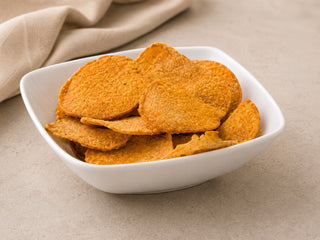
- Protein crisps: healthy snack or marketing ploy? An honest explanation
- High-protein, sugar-free desserts: 10 ideas that don’t feel like a diet
- High-protein snacks for on the go: 15 options without the junk
- Is sugar-free really healthy? What sweeteners do and don’t do
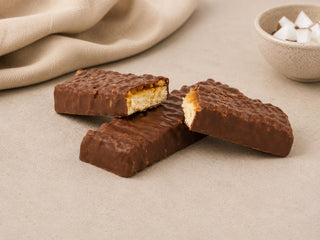
- Are protein bars healthy or not? How to spot a good one (checklist)
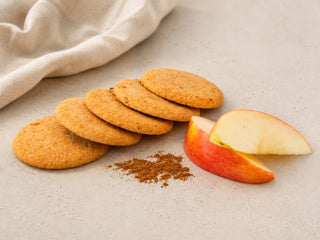
- Sugar-free protein biscuits: how they’re made and which ones work
- Sugar-free sauces for weight loss: flavour without calories
- Sugar-free snacks: 20 healthy protein-rich options
Recipes and meals
- High-protein dinners in 30 minutes: 10 quick recipes under 500 kcal
- High-protein breakfasts without eggs: 10 ideas for those who don’t like eggs
- High-protein breakfasts: 12 ideas under 350 kcal
- High-protein lunches for work: 10 ideas to take with you
- High-protein meals under 200 kcal: 12 ideas for weight loss
- High-protein salads: 10 filling recipes under 400 kcal
- High-protein vegan meals: 10 recipes with plenty of protein
Who is it for and when
- Losing weight during the menopause: why protein is most important right now
- Losing weight without exercise: is it possible, and how can you do it the smart way?
- Protein before bed: does casein help with weight loss and muscle retention?
- Protein timing around exercise: before, during or after training?
- A high-protein diet after the age of 50: muscle preservation and healthy weight loss
- Phase 3 – The menopause: a step-by-step return to normal eating
- How much protein does a woman need per day? By goal and age
- How much protein after exercise? The truth about the anabolic window
- Vegetarian high-protein diet: 30 plant-based options for weight loss
Losing weight with protein
- Losing weight without feeling hungry: why protein makes the difference
- Breaking through a weight loss plateau: 7 causes and how to get back on track
- Losing belly fat with protein: what works and what’s nonsense
- High-protein soups for weight loss: 8 filling recipes under 200 kcal
- How much protein do you really need each day?
- How much protein a day for weight loss? Calculation + advice based on weight
- Intermittent fasting and protein: a smart combination for weight loss?
- Hit a weight-loss plateau? Here’s what you can do
- Protein bars for weight loss: do they help or not?
- Maintaining muscle mass whilst losing weight: 6 strategies that really work
- Why is protein important for weight loss?
More on protein and weight loss
- Support from a dietitian — when is it helpful?
- Combining Bioteïne products: what goes well together?
- Bioteïne vs making your own: is cooking worth it?
- Protein and your kidneys: should you be concerned about a high-protein diet?
- Protein and your digestion: preventing bloating
- Protein and coffee: how to make a protein cappuccino
- Protein and muscle soreness: does it help with recovery after exercise?
- High-protein eating on a budget: getting enough protein without breaking the bank
- High-protein crackers and rusks: a clever alternative to bread?
- High-protein meal prep: cooking a week in advance to lose weight
- High-protein pancakes: protein pancakes without the guilt
- High-protein wraps and bowls: a quick, filling lunch
- Phase 2 – Combi: more flexibility without losing progress
- Phase 4 – Lifestyle: how do you maintain your results in the long term?
- How do you read a Bioteïne label?
- How do you really measure your progress? (Not just the scales)
- How do I know which phase is right for me?
- How much protein for muscle building? Per kilo and per meal
- Is too much protein harmful? What the science really says
- Social eating: how do you handle birthdays and dinners?
- Stress, sleep and weight loss — the hidden factor
- Frequently asked questions about Bioteïne products
- Satiety: why do you feel full after a protein-rich meal?
- What are high-quality proteins and why do they matter?
- What is whey protein? And is it good for weight loss?
- What should you do if your diet ‘falls by the wayside’?
- Whey, casein or plant-based protein: which should you choose?
- Sweeteners: harmful or safe?
Veelgestelde vragen
Hoeveel kilo kan ik verliezen met een eiwitrijk dieet?
Klinisch onderzoek toont een gemiddeld gewichtsverlies van 0,5 tot 1,5 kg per week in de eerste fase van een medisch begeleid eiwitdieet, afhankelijk van startgewicht, activiteitsniveau en therapietrouw. In de eerste twee weken is een deel hiervan vochtverlies. Realistisch doel: 5–10% van het lichaamsgewicht in 8–12 weken. Individuele resultaten variëren. Raadpleeg uw huisarts vóór aanvang. Wil je weten welke fase bij jou past? Doe de Bioteine fase-test.
Is een eiwitdieet veilig voor iedereen?
Een eiwitrijk dieet is voor de meeste gezonde volwassenen veilig, maar niet geschikt voor mensen met nierproblemen, leverziekten, bepaalde stofwisselingsstoornissen of een BMI onder 18,5. Zwangere en zogende vrouwen worden eveneens afgeraden dit dieet te volgen. Volgens het BDA-protocol is medische screening vóór aanvang van een energiebeperkt eiwitdieet standaardpraktijk. Bioteine raadt altijd overleg met een huisarts of diëtist aan, met name bij bestaande aandoeningen of medicatiegebruik.
Mag ik een eiwitdieet volgen als ik medicijnen gebruik?
Dat hangt af van het type medicatie. Bloeddruk- en diabetesmedicatie vereisen extra aandacht: een sterk caloriebeperkt dieet kan de werking ervan versterken, wat dosisaanpassing noodzakelijk maakt. Bloedverdunners zoals warfarine kunnen eveneens worden beïnvloed door veranderingen in voedingsinname. Raadpleeg altijd uw voorschrijvend arts voordat u begint. Dit is geen voorzorgsmaatregel voor de vorm — het is een klinische noodzaak. Zie ook het Bioteine 4-fase systeem voor de opbouw van het programma.
Wat is het verschil tussen een eiwitdieet en het Atkins-dieet?
Het Atkins-dieet is primair een koolhydraatarm dieet met nadruk op vetten en eiwitten, zonder specifieke fasering of eiwitdosering. Een klinisch eiwitdieet zoals het Bioteine-programma richt zich op een gecontroleerde eiwitinname (minimaal 60–80 g per dag) gecombineerd met een caloriebeperking, behoud van spiermassa en een gestructureerde opbouw in fasen. Atkins mist de evidence-based fasering en begeleiding die klinisch onderzoek — waaronder de Cambridge Diet-studies — als effectiever aanmerkt voor langdurig gewichtsbehoud.
Hoe verhoudt een eiwitdieet zich tot intermittent fasting?
Intermittent fasting (IF) stuurt op wanneer je eet; een eiwitdieet stuurt op wat en hoeveel je eet. Beide methoden kunnen gewichtsverlies ondersteunen, maar klinisch onderzoek toont dat een hoge eiwitinname spierafbraak beter voorkomt dan IF alleen, met name bij een calorietekort. De methoden zijn combineerbaar, maar zonder voldoende eiwit tijdens een vastenprotocol neemt het risico op spierverlies toe. Voor mensen die spiermassa willen behouden tijdens afvallen, biedt een gestructureerd eiwitprogramma meer houvast.
Hoe lang moet ik een eiwitdieet volgen?
De duur hangt af van je doel en gekozen fase. Fase 1 van het Bioteine-programma duurt 2 tot 4 weken en is bedoeld voor actief gewichtsverlies. De volledige overgang naar gewichtsbehoud — inclusief opbouw van normale voeding — beslaat doorgaans 8 tot 16 weken. Een agressief langdurig Very Low Calorie Diet (VLCD) wordt klinisch afgeraden zonder medische begeleiding. Bekijk de volledige faseopbouw op de pagina het 4-fase systeem.
Mag ik sporten tijdens een eiwitdieet?
Lichte tot matige beweging — wandelen, fietsen, yoga — is aanbevolen tijdens alle fasen. Intensieve krachttraining of duursport in fase 1 is te ontraden bij een sterk caloriebeperkt schema (onder 800 kcal/dag), omdat het herstel dan tekortschiet. Vanaf fase 2 en hoger is gestructureerde training goed combineerbaar, mits de eiwitinname voldoende is — klinisch minimaal 1,6 g eiwit per kg lichaamsgewicht voor actieve sporters. Overleg bij twijfel met een diëtist of sportarts.
Kan ik koffie en thee drinken tijdens het dieet?
Ja, zwarte koffie en ongezoete thee zijn toegestaan in alle fasen. Cafeïne beïnvloedt de ketose of eiwitverwerking niet significant bij normaal gebruik (2–3 kopjes per dag). Vermijd suiker, volle melk en plantaardige drinks met toegevoegde suikers. Calorievrije zoetstof is in beperkte mate acceptabel, hoewel sommige mensen er een hongergevoel van rapporteren. Koffiemelk of cappuccino telt mee in de dagelijkse calorie- en koolhydraatinname en dient als zodanig geregistreerd te worden.
Wat mag ik drinken naast water?
Aanbevolen vochtbronnen zijn: water (minimaal 2 liter per dag), ongezoete kruidenthee, zwarte koffie en Bioteine-shakes als maaltijdvervanger. Frisdrank — ook light-varianten met aspartaam — wordt afgeraden vanwege de associatie met hunkering naar zoetigheid. Vruchtensap bevat te veel snelle suikers. Bouillon (laag in natrium) kan in fase 1 bijdragen aan elektrolytenbalans, met name bij vermoeidheidsklachten. Raadpleeg het fase-overzicht op het 4-fase systeem voor fase-specifieke richtlijnen.
Mag ik alcohol drinken tijdens een eiwitdieet?
Nee, niet in fase 1 en 2. Alcohol levert 7 kcal per gram, verstoort de lever in de vetverbranding en verlaagt de therapietrouw. Klinisch onderzoek toont ook dat alcohol de eiwitsynthese tijdelijk remt — ongewenst wanneer spierbehoud een doel is. Vanaf fase 3 (onderhoud) kan incidenteel matig alcoholgebruik worden ingepast, mits het binnen de calorieplanning valt. Wijn, bier en gedistilleerd bevatten bovendien koolhydraten die ketose kunnen onderbreken. Dit is geen moreel oordeel, maar een fysiologisch gegeven.
Hoe ga ik om met sociale situaties, uit eten gaan of verjaardagen?
Sociale druk is een van de meest gerapporteerde obstakels bij dieetprogramma's. Praktische strategieën: kies in een restaurant voor gegrild vlees of vis met groenten als hoofdgerecht, vermijd sauzen en brood. Op verjaardagen: eet vooraf een eiwitrijke snack zodat je minder trek hebt in zoet. Communiceer eerlijk over je keuze zonder je te verontschuldigen. Bioteine biedt in het 4-fase systeem concrete richtlijnen voor het flexibel inpassen van sociale momenten vanaf fase 3.
Wat zijn de bijwerkingen van een eiwitdieet?
Veelgerapporteerde bijwerkingen in de eerste 1–2 weken zijn: vermoeidheid, lichte hoofdpijn, obstipatie of wisselende stoelgang, en een droge mond. Deze zijn doorgaans tijdelijk en hangen samen met de overgang naar een lagere koolhydraatinname. Voldoende vochtinname (≥2 L/dag) en vezels uit toegestane groenten verlichten deze klachten aanzienlijk. Bij aanhoudende klachten, hartkloppingen of duizeligheid dient u contact op te nemen met een arts. Ernstige bijwerkingen bij gezonde volwassenen zijn klinisch zeldzaam.
Mag ik een eiwitdieet volgen tijdens de zwangerschap of borstvoeding?
Nee. Een caloriebeperkt eiwitdieet is gecontra-indiceerd tijdens zwangerschap en borstvoeding. Zowel de groeiende foetus als de zuigeling hebben continue aanvoer van energie, vitamines en mineralen nodig die een energiebeperkt programma niet adequaat kan leveren. De Voedingsraad beveelt aan dat zwangere vrouwen geen actief afvaldieet volgen tenzij onder strikte medische begeleiding bij ernstige obesitas (BMI >40). Na de borstvoedingsperiode kunt u de fase-test doen om een passend startpunt te bepalen.
Wat kost een eiwitdieet per maand?
De kosten variëren sterk per programma en fase. Een volledig maaltijdvervangende fase 1 met Bioteine-producten kost gemiddeld €5–€8 per dag, vergelijkbaar met een normale boodschappendag voor één persoon. Ter vergelijking: een ongestructureerd caloriebeperkt dieet met reguliere voeding heeft vergelijkbare dagelijkse kosten, maar mist de gecontroleerde eiwitdosering. Bekijk het Bioteine startpakket voor een concreet kostenoverzi cht. In fase 3 en 4 dalen de kosten omdat reguliere voeding geleidelijk wordt herintroduceerd.
Hoe weet ik welke fase bij mij past?
Dat hangt af van factoren als je huidige gewicht, BMI, gezondheidsstatus, activiteitsniveau en eerder dieethistorie. Iemand met een BMI boven 30 en geen comorbiditeiten start doorgaans in fase 1 (actief verlies). Iemand die al dicht bij zijn doelgewicht zit of gewicht wil stabiliseren, begint in fase 3 of 4. Doe de Bioteine fase-test voor een gepersonaliseerde aanbeveling op basis van jouw profiel. Bij medische twijfel altijd overleggen met huisarts of diëtist vóór aanvang.
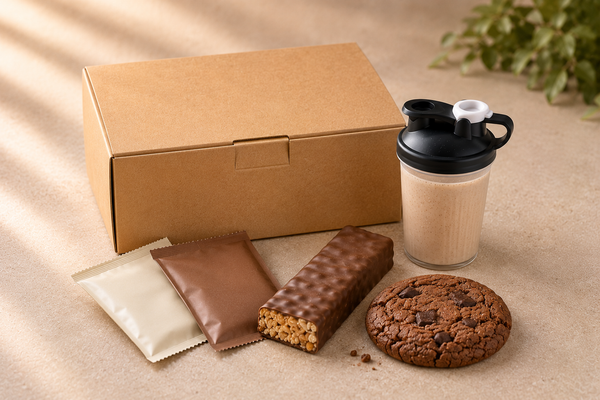
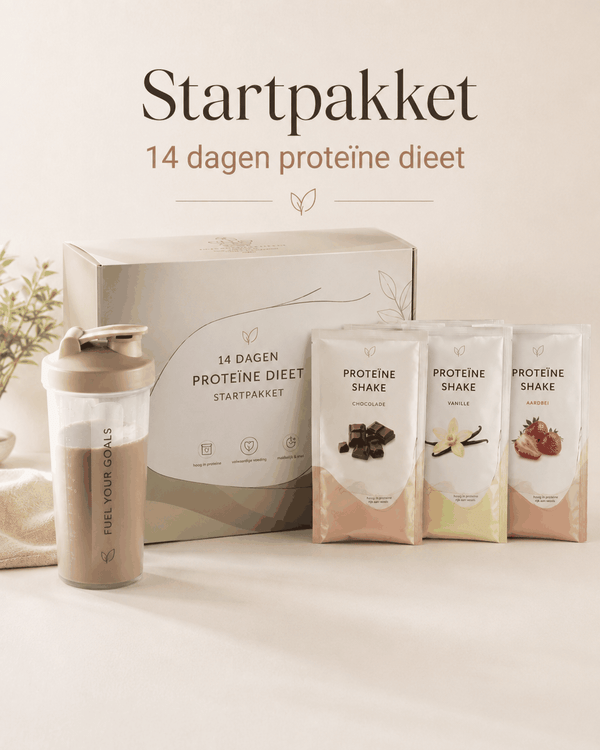
Get started today. Starter packs
Ready to get started?
Doe de fase-test
Krijg persoonlijk advies welke fase past bij jouw doel en gewoonten.
→ DE WETENSCHAPRead about the 4-phase system
Hoe vier opeenvolgende fases samen blijvend gewichtsverlies opleveren.
→ SHOPView the starter sets
7- and 14-day kits. Everything you need to start Phase 1.
→