









Why your weight loss stalls, and what to do about it
A weight loss plateau means the scales haven't moved for 2 to 4 weeks, despite you sticking rigidly to your diet. The cause is almost always a combination of a lowered resting metabolism, adaptive thermogenesis and an unnoticed creep in your calorie intake. With targeted adjustments to protein intake, training volume and calorie cycling, you can usually break the plateau within 7 to 14 days.
What's happening in your body when the scales stop moving
After 4 to 8 weeks of calorie restriction, your body adapts. Resting metabolism drops by 10 to 15 percent, hormones like leptin fall, and your NEAT (Non-Exercise Activity Thermogenesis, the energy you burn through unconscious movement such as fidgeting and standing) declines. That last point sounds abstract, but research by Rosenbaum and Leibel (2010) found that NEAT can drop by an average of 300 kcal per day under an 800 kcal daily calorie restriction. That's nearly half your deficit, gone.
Your scales lie regularly, too. Water retention from cortisol, muscle building from strength training and hormonal fluctuations can completely mask fat loss. Measure your circumference (waist, hips) at least once a fortnight alongside your weight. If your measurements are shrinking while the scale stays put, there's no plateau. There's progress.
The difference between a genuine plateau and noise
- Noise: weight fluctuates within a 1 to 1.5kg range over 7 days due to fluid and food intake
- Genuine plateau: a rolling 14-day average or longer shows no downward trend
- False plateau: your intake has crept up unnoticed while your output has dropped (check your step counter)
Track everything for a week. Weigh your portions. Reread the labels. Eating habits creep in unnoticed: an extra splash of oil, a handful of nuts here and there. That quickly adds up to 200 to 400 kcal extra per day, and you won't even clock it.
Recalibrating your calorie intake
Most people calculate their maintenance needs once and never revisit them. Understandable, since it was already a hurdle to get started in the first place. But after losing 5kg, your body is already burning 50 to 75 kcal less per day at rest. After 10kg, that can climb to 150 kcal per day. Your "unchanged" diet no longer has a deficit built in.
Use the Harris-Benedict or Mifflin-St Jeor formula and input your current weight, not your starting weight. A 90kg man has a different maintenance level to the same man at 78kg. That sounds obvious. Yet it's the most common mistake people make during a plateau.
The maths: how many calories do you need now?
| Weight (kg) | Estimated BMR (man, 40 years, 178cm) | Recommended calorie deficit (20%) | Daily target |
|---|---|---|---|
| 95kg (start) | 2,050 kcal | 410 kcal | 1,640 kcal |
| 82kg (plateau) | 1,870 kcal | 375 kcal | 1,495 kcal |
| 70kg (goal) | 1,730 kcal | 345 kcal | 1,385 kcal |
Notice the difference? From starting weight to plateau, your target has already dropped by 145 kcal. That adjustment isn't optional, it's the crux of breaking through. Recalculate every 5 to 7kg you lose.
Protein intake: the most underrated variable in a plateau
If there's one adjustment that's disproportionately effective during a plateau, it's raising your protein intake. Protein has a thermic effect of 25 to 30 percent: you burn 25 to 30 kcal for every 100 kcal of protein eaten, simply through digestion. Fats and carbohydrates sit at 3 to 8 percent. That difference adds up over time.
The guideline from the Voedingscentrum (the Dutch Nutrition Centre) sits at 0.83 grams per kg of body weight per day. For weight loss and muscle preservation, that's too low. The BDA and several meta-analyses recommend a minimum of 1.6 grams per kg during a calorie-restricted diet, rising to 2.0 to 2.2 grams per kg for older adults or active individuals.
What 1.8g/kg looks like for a 75kg woman
- Daily protein target: 135 grams
- Breakfast: protein shake with 25 grams of protein
- Lunch: chicken breast (150g) + quark: 45 grams of protein
- Dinner: salmon (150g) + lentils: 42 grams of protein
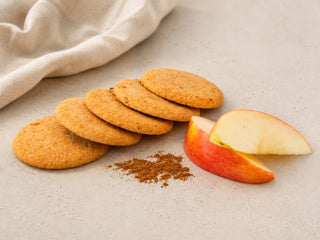
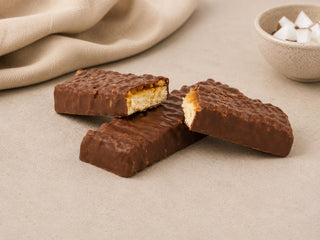
- Snack: protein bar or protein biscuit: 15 to 20 grams of protein
- Total: 127 to 132 grams. Close enough.
Many people who plateau are sitting at 80 to 100 grams a day. That's enough to get by, not enough to optimise. At Bioteïne, the protein shakes, protein bars and meal replacements are designed to close precisely this gap: 20 to 30 grams of protein per serving, with a calorie profile that fits neatly into a restrictive plan. Read the full background in our high-protein diet guide.
Calorie cycling and the refeed: physiology, not a diet trick
A refeed day is a planned increase in your calorie intake back to maintenance level, specifically through carbohydrates. Not a blowout. Not an excuse. The aim is to temporarily boost leptin, the satiety hormone that drops during prolonged calorie restriction.
A study published in Obesity Reviews (Byrne et al., 2018) found that participants alternating 2 weeks of calorie restriction with 2 weeks of maintenance lost significantly more fat than the continuous restriction group, despite the same overall dieting duration. The protocol is called MATADOR (Minimizing Adaptive Thermogenesis And Deactivating Obesity Rebound).
What a refeed day looks like in practice
| Meal time | Normal diet day | Refeed day (maintenance) |
|---|---|---|
| Breakfast | Protein shake (250 kcal) | Porridge 80g + egg (450 kcal) |
| Lunch | Chicken salad (400 kcal) | Rice + chicken + vegetables (600 kcal) |
| Dinner | Fish + vegetables (450 kcal) | Pasta + fish + sauce (700 kcal) |
| Snacks | Protein bar (180 kcal) | Fruit + protein biscuits (300 kcal) |
| Total | approx. 1,280 kcal | approx. 2,050 kcal |
One refeed a week is enough for most people. During a prolonged plateau of 3 to 4 weeks, you could switch to MATADOR's 2-on-2 schedule.
Exercise: more isn't always the answer
The first instinct when you hit a plateau is to exercise more. Understandable. But if you're already training 5 times a week and your cortisol is elevated from calorie restriction, you're adding an extra stressor to a system that's already under pressure. Cortisol encourages fat storage around the abdomen and slows fat metabolism.
What actually works: adjusting the type of exercise, not necessarily upping the volume.
Three effective tweaks to your training schedule
- Add or intensify strength training. Muscle mass structurally raises your BMR. Every kilogram of muscle burns 13 to 20 kcal a day at rest. That sounds small, but 4kg of extra muscle equals 52 to 80 kcal a day, every day, without extra effort.
- Consciously increase your NEAT. Park further away. Take the stairs. Stand up every 45 minutes. Aim for 8,000 to 10,000 steps a day. The British Dietetic Association names daily low-intensity activity as one of the most sustainable strategies for weight management.
- HIIT in limited doses. Twenty minutes of HIIT twice a week boosts the EPOC effect (increased calorie burn after exercise) without overloading your cortisol response. Three sessions or more a week offers diminishing returns during calorie restriction.
Sleep and stress: the two variables you can't diet away
Fewer than 6 hours of sleep a night raises ghrelin (the hunger hormone) by 15 to 25 percent and lowers leptin by a similar margin. That leaves you structurally hungrier, less satisfied and with less willpower. That's not a lack of discipline. That's biochemistry.
Chronic stress raises cortisol, which encourages visceral (belly) fat and lowers your insulin sensitivity. You can maintain a perfect calorie deficit and still plateau if your cortisol levels stay permanently elevated. Sleep isn't a luxury during weight loss. It's a physiological requirement.
Practical target: 7 to 9 hours of sleep a night, consistently. No screens for 45 minutes before bed. Bedroom temperature of 18 to 19 degrees Celsius. These aren't wellness tips, they're interventions with a measurable effect on fat burning.
Which phase of your diet are you actually in?
A plateau often has a different cause depending on how long you've been dieting. Someone who plateaus in week 3 is likely experiencing water retention or the loss of glycogen-bound water. Someone who plateaus in week 10 is almost certainly dealing with metabolic adaptation.
The Bioteïne 4-phase system is built around the physiological reality that your body responds differently to a diet at different stages. Phase 1 (day 1 to 14) works with a sharper deficit. Phases 3 and 4 shift towards maintenance and recovery. Not sure which phase you're in? The phase test gives you a personalised starting point in under 2 minutes.
For anyone wanting to break a plateau with a structured approach, including products matched to their phase, the Bioteïne starter pack is a sensible place to begin. It combines shakes, bars and snacks based on calorie targets per phase, so you don't have to work everything out yourself.
What to avoid doing during a plateau
A plateau triggers the wrong instincts. Recognise them for what they are.
- Slashing your calorie intake drastically. Dropping below 1,200 kcal (women) or 1,500 kcal (men) increases metabolic adaptation, accelerates muscle loss and simply isn't sustainable. It works briefly, then it wrecks your metabolism further.
- Cutting out one macronutrient entirely. Fat-free or radically low-carb diets work for some, but most people end up structurally missing nutrients and rebound as a result. The science doesn't support any single macro ratio as superior for long-term weight loss. Total calorie balance and protein intake are the dominant variables.
- Weighing yourself daily. Daily fluctuations of 0.5 to 2kg are normal. They mislead you. Weigh yourself a maximum of 3 times a week, always at the same time (morning, fasted), and track the rolling 2-week average.
- Detoxes and juice cleanses. There's no peer-reviewed evidence that short fasts or juice cleanses reset your metabolism. What they actually do: deplete glycogen stores (temporary weight loss of 1 to 2kg), which returns the moment you eat normally again.
A plateau isn't a failure. It's an adaptive response from an organism prioritising its own survival. The solution isn't to push harder, but to steer smarter.
Frequently asked questions
How long does a plateau typically last?
A plateau typically lasts 2 to 6 weeks if you make no adjustments. With targeted interventions such as recalibrating your calorie intake, raising protein to 1.6 to 2.0 grams per kg and scheduling a refeed day, most people break through within 7 to 14 days.
Should I eat less during a plateau?
Not always. Sometimes the issue isn't overeating, but metabolic adaptation or an unnoticed rise in intake. Recalculate your calorie needs first based on your current weight. A smaller adjustment of 100 to 150 kcal a day is often more effective than a drastic cut of 400 kcal or more.
Does more exercise help with a plateau?
More exercise helps, but only when applied sensibly. Extra cardio on top of already elevated cortisol can prolong the plateau. Adding strength training structurally raises your resting metabolism. Increasing NEAT through daily activity (steps, taking the stairs) is one of the most underrated and sustainable adjustments during a plateau.
What's a refeed day, and does it actually work?
A refeed day is a planned day where you eat at maintenance level, primarily through carbohydrates. Temporarily raising leptin slows metabolic adaptation. The MATADOR study (Byrne et al., 2018) showed significantly better fat loss results in people alternating between restriction and maintenance, compared with continuous calorie restriction.
Can lack of sleep really stall my weight loss?
Yes, demonstrably so. Fewer than 6 hours of sleep raises ghrelin (the hunger hormone) by 15 to 25 percent and lowers leptin. That leads to more hunger, poorer food choices and a lower thermic effect of food. Seven to nine hours of sleep a night isn't lifestyle advice, it's a physiological requirement for effective weight loss.
How do I know if I'm eating enough protein during a plateau?
Most people who plateau are sitting at 80 to 100 grams of protein a day. For weight and muscle maintenance during calorie restriction, the scientifically supported recommendation is 1.6 to 2.2 grams per kg of body weight. Tracking with a nutrition app for 3 to 7 days quickly reveals where you're falling short.
When should I recalculate my calories?
Recalculate your calorie needs every time you've lost 5 to 7kg. Your resting metabolism drops along with your weight, meaning an unchanged diet plan no longer creates a deficit. Use your current weight in the Mifflin-St Jeor formula, not your starting weight. This is the most common mistake made during plateaus.
Are protein shakes or bars worth it during a plateau?
They're a practical tool, not a miracle fix. A protein shake with 25 grams of protein at 200 kcal helps you hit your protein target without blowing your calorie ceiling. That's genuinely useful. Especially if you're plateauing and raising your protein intake to 1.8 to 2.0 grams per kg, structured products offer an easier route than trying to get everything from whole foods alone.