






Short answer: how much protein after exercise?
After a workout, you need somewhere between 20 and 40 grams of protein to get muscle repair underway. This doesn't have to happen within five minutes of your last set. Your body can make good use of that protein for up to two hours after training, sometimes longer. What you eat across the whole day matters far more than the precise moment you eat it.
That's the essence of it. The rest of this article sets out the evidence, so you can judge for yourself what works best for you.
The anabolic window: what's true and what isn't?
The anabolic window is a term that's been talked up considerably in fitness circles. The idea goes: you have 30 minutes after training to get protein in, or you "waste" your workout. This picture simply isn't accurate.
A meta-analysis by Brad Schoenfeld and Alan Aragon, published in the Journal of the International Society of Sports Nutrition (2013), reviewed 23 studies on protein timing. Their conclusion: when total protein intake was equal, the exact timing of consumption had no statistically significant effect on muscle mass or strength. The window does exist, but it's better understood as a broad stretch of several hours rather than a narrow emergency signal.
So what actually matters? Two mechanisms are relevant.
- Muscle Protein Synthesis (MPS): after training, muscle protein synthesis is elevated. That elevation lasts 24 to 48 hours, not 30 minutes.
- Training fasted: if you've fasted before your session, getting protein in quickly is more useful than if you'd already eaten a protein-rich meal two hours beforehand.
In practical terms: if you train first thing on an empty stomach, you'll genuinely want to eat something fairly soon afterwards. If you train in the afternoon after a lunch of cottage cheese and chicken, there's no need to stress about the "30-minute rule".
Comparing post-workout protein sources
Not every protein source works at the same speed or with the same completeness. Absorption rate and amino acid profile determine how effectively a source contributes to muscle recovery. Here's a comparison of commonly used options.
| Source | Grams of protein (standard serving) | Absorption speed | Leucine content | Practical post-workout? |
|---|---|---|---|---|
| Whey protein (isolate) | 25-30 g per shake | Fast (approx. 8-10 g/hour) | High (approx. 2.5 g per 25 g) | Yes |
| Chicken breast (150 g) | approx. 35 g | Medium | High | Yes, but available more slowly |
| Cottage cheese (200 g, low-fat) | approx. 20 g | Medium-slow (casein) | Medium | Good, not ideal on its own |
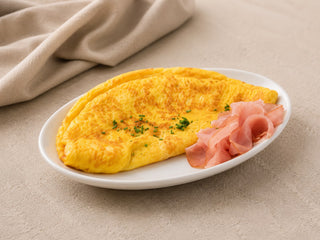
| Eggs (3) | approx. 18 g | Medium | Medium (approx. 1.4 g) | Good, combine to reach 30 g+ |
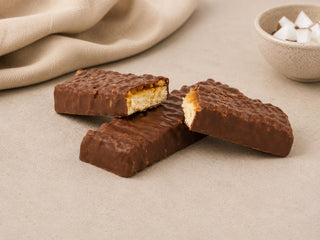
| Protein bar | 15-21 g per bar | Medium | Depends on composition | Handy, check sugar content |
| Plant-based protein powder | 20-25 g per shake | Slower than whey | Lower (unless blended) | Yes, use a blend of sources |
Leucine is the amino acid that triggers the MPS threshold. Research suggests you need at least 2 grams of leucine per meal to effectively activate muscle protein synthesis. Most animal-based sources reach that level once you're at 25 to 30 grams of protein in total.
Total daily protein intake: this matters most
This is where the real difference between progress and plateau lies. Timing is a detail. Total intake is the foundation.
The recommendation for people who train regularly, whether strength or endurance work, is 1.6 to 2.2 grams of protein per kilogram of bodyweight per day. This range is backed by both the Voedingscentrum and international sports nutrition guidelines. At 80 kilograms of bodyweight, that works out to 128 to 176 grams of protein per day.
Spread that across four to five meals. Per meal, you'd be aiming for 30 to 40 grams of protein. Not because that's some magic number, but because the body can effectively put roughly 25 to 40 grams of protein per meal to use for MPS. The rest isn't wasted, it contributes to other processes and your overall daily balance.
Take a look at the complete high-protein diet guide from Bioteïne if you want to fine-tune your daily structure. That guide breaks down the distribution across each meal moment in practical detail.
A concrete example: you weigh 75 kilograms and want to build muscle. Target: 150 grams of protein per day. Spread across five sittings, that's 30 grams each. If you only manage 20 grams post-workout but still hit 150 grams by the end of the day, you're absolutely fine. If you obsess over a shake right after training but eat poorly for the rest of the day, you won't get very far.
Shake or meal after training: which is better?
Both work. The choice depends on your context, not on some fixed rule.
A shake has advantages in three situations:
- You have no appetite straight after training. This is normal. Intense strength training temporarily suppresses the hunger hormone ghrelin.
- You have a busy schedule and are on the move.
- You've trained fasted and want to get leucine into your system quickly.
A proper meal has advantages when:
- You have enough time and had already eaten something before training.
- You also need carbohydrates for glycogen replenishment, for instance after a long run of 90 minutes or more.
- You train in the evening and the meal fits naturally into your daily rhythm.
Combinations work well too. A shake straight after training, followed by a full meal an hour later, is a pattern that suits many active people. It gives you fast-available amino acids from the shake and a broader nutritional package from the meal.
Incidentally, carbohydrates after training are mainly relevant for endurance sports and two-a-day training sessions. After a single strength session, glycogen replenishment is less urgent, and the type of training matters more than the type of meal.
Bioteïne: post-workout options without compromise
A good post-workout choice meets three criteria: sufficient protein (at least 20 grams), a complete amino acid profile, and a low sugar load. Not every shake or bar on the market clears that bar.
The Bioteïne protein shakes deliver 25 to 30 grams of protein per serving, with a leucine content that supports MPS activation. They're formulated without unnecessary additives and fit a clinical diet profile. No artificial sweeteners overdoing the flavour, no superfluous sugar.
On the move or between appointments? The Bioteïne protein bars give you 15 to 21 grams of protein per bar. Not a replacement for a full post-workout shake, but a solid addition if you've got a proper meal coming later in the day. Pair a bar with a small portion of cottage cheese or a handful of nuts for a more complete protein intake.
Want to know which approach suits your goal and current eating pattern? The Bioteïne phase test gives you personalised advice within a few minutes, based on your daily intake and training habits. The 4-phase system then offers a structured build-up that ties together distribution, timing and product choice.
For most people training three to five times a week, a starter pack is the most efficient way in. It gives you the basic combination of shakes and supporting products straight away, all designed to work together.
Frequently asked questions
How much protein should you eat after exercise?
Between 20 and 40 grams of protein after a workout is the effective range for muscle recovery. Below 20 grams, you activate muscle protein synthesis less effectively. Above 40 grams provides no extra muscle stimulus per meal moment, though it still counts towards your daily total.
What is the anabolic window and how long does it last?
The anabolic window is the period after training during which your body is more sensitive to protein. This doesn't last 30 minutes, but several hours. If you've trained fasted, getting protein in quickly is more worthwhile than if you'd already eaten a protein-rich meal shortly before training.
Should you drink a shake after training, or is a meal just as good?
Both work. A shake is useful if you have little appetite straight after training or you're on the go. A proper meal works perfectly well if you eat it within two hours of training. There's no evidence that a shake is biologically superior to a meal with an equivalent protein content.
Does protein timing really make a difference to muscle mass?
Timing has a modest effect. Total daily protein intake has a far greater one. Schoenfeld and Aragon (2013) concluded that when total intake is equal, the exact timing of consumption makes no statistically significant difference to muscle mass or strength.
How much protein per day do you need if you train?
For active strength or endurance training, the recommendation is 1.6 to 2.2 grams of protein per kilogram of bodyweight per day. At 75 kilograms, that's 120 to 165 grams of protein. Spread across four to five meals of 25 to 40 grams each.
Is protein after training also important when losing weight?
Yes. In a calorie deficit, post-training protein intake is especially relevant for limiting muscle loss. Research shows that higher protein intake while dieting improves muscle retention. At least 1.8 grams per kilogram per day is a safe minimum in this context.
Do protein bars work just as well as a shake after training?
A protein bar with 15 to 21 grams of protein makes a useful contribution, but is rarely enough as your only post-workout protein source. Pair a bar with another protein source, or use a shake if you want to get 25 to 30 grams of protein in quickly straight after training.
What if you have no appetite after training?
Intense training temporarily suppresses the hunger hormone ghrelin. A liquid source such as a protein shake is often easier to get down than solid food in this case. Wait too long, though, and your total daily protein intake may fall short, which slows muscle recovery.