
What makes a pancake high in protein?
A standard pancake made from flour, milk and egg delivers around 6 grams of protein per pancake and roughly 180 kcal. Replace part of the flour with protein powder and stir through some Greek yoghurt or quark, and the protein content jumps to 20-28 grams per portion, while the calories actually drop to 180-220 kcal. That's the whole principle behind high-protein pancakes.
Three ingredients do the heavy lifting: protein powder (20-25g protein per scoop), egg (6g protein each) and low-fat quark or Greek yoghurt (10g protein per 100g). Together, they create a batter that behaves just like traditional pancake batter but has a macro profile that fits neatly into a protein diet.
Wondering whether this approach suits your goals? The Bioteïne phase test takes two minutes and tells you how much protein your body needs each day.
Basic recipe: protein pancakes (2 servings)
This recipe works, full stop. It's not experimental. Hundreds of thousands of people make some version of it daily, and the reason is simple: the batter is forgiving and the texture is close to a proper pancake.
Ingredients
- 1 scoop (30g) vanilla protein powder
- 2 large eggs
- 100g low-fat quark
- 30g oats (finely ground)
- 1 tsp baking powder
- Pinch of salt
- Splash of water or almond milk to adjust consistency
Method
- Blitz the oats to a fine flour in a blender or food processor.
- Mix all the ingredients into a smooth batter. Let it rest for 3 minutes.
- Heat a non-stick pan over medium heat. Skip the butter and use a touch of coconut oil or cooking spray instead.
- Spoon 2-3 tablespoons of batter per pancake. Cook for 2 minutes per side over low-medium heat.
- Bear in mind that high-protein pancakes catch more easily than ordinary ones, so keep the temperature slightly lower than you'd normally use.
Macros per serving (2 pancakes): around 230 kcal, 26g protein, 22g carbs, 5g fat.
Variations: kcal and protein at a glance
Small additions to the basic recipe let you change the flavour without disturbing the macro profile much. The table below compares three popular variations.
| Variation | Addition to basic recipe | kcal per serving | Protein per serving | Note |
|---|---|---|---|---|
| Banana | ½ ripe banana (mashed) | ~265 kcal | 25g | More carbs, less water needed in the batter |
| Blueberry | 50g fresh or frozen blueberries | ~245 kcal | 26g | The lowest-calorie option, high in antioxidants |
| Chocolate | 1 tbsp cocoa powder + chocolate protein powder | ~255 kcal | 27g | Higher satiety, works well as breakfast on long working days |
The blueberry variation suits you best if you're counting calories closely. The chocolate variation scores highest on satiety, which matters if you tend to reach for a snack mid-afternoon.
Sweet versus savoury: which works better for weight loss?
Most people default to sweet protein pancakes. Understandable, but the savoury versions deserve more credit.
A savoury pancake with spinach, egg and feta offers a comparable protein content (22-24g) but has no added sugar and a lower glycaemic profile. That means steadier blood sugar after eating, less chance of an energy dip an hour later, and, in practice, lower total calorie intake across the day.
Research from the British Dietetic Association confirms that a high-protein meal with a low glycaemic profile suppresses the hunger hormone ghrelin more effectively than a sweet, carb-heavy meal with the same number of calories.
Basic savoury recipe (2 pancakes)
- 2 eggs
- 100g low-fat quark
- 30g oats (finely ground)
- Handful of spinach (finely chopped)
- 30g grated light cheese
- Pepper, salt, garlic powder
Macros: around 220 kcal, 23g protein, 15g carbs, 7g fat.
Want to fit this into a wider eating plan? The Bioteïne high-protein diet guide walks you through how to spread your meals across the day, step by step.
Toppings that won't undo your hard work
This is where most people slip up. You bake a perfect protein pancake at 230 kcal and 26g protein, then double the calories with toppings, often without even noticing.
Two tablespoons of regular syrup: 100 kcal, 0g protein. A dollop of peanut butter: 95 kcal, 4g protein. Whipped cream: don't even go there.
Toppings that actually contribute
| Topping | Amount | kcal | Protein | Effect |
|---|---|---|---|---|
| Greek yoghurt (0%) | 100g | 57 kcal | 10g | Significantly boosts protein, adds a creamy texture |
| Fresh blueberries | 80g | 46 kcal | 0.5g | Low calorie, works as a natural sweetener |
| Sugar-free syrup | 2 tbsp | ~5 kcal | 0g | Delivers sweetness without the calorie hit |
| Almond butter (2 tsp) | 10g | 63 kcal | 2.5g | Small amount, big flavour impact |
| Slice of smoked salmon | 30g | 58 kcal | 6g | Only for the savoury version, high in omega-3 |
Greek yoghurt is, in practice, the best topping if you want to boost the protein content of your meal without the calories spiralling out of control. Add 100g of yoghurt and you'll land at roughly 36g of protein per serving in total.
Meal prep and freezing: how to do it properly
Protein pancakes are perfect for meal prep. Five minutes of cooking on a Sunday evening sets you up with a week's worth of breakfasts.
Storing in the fridge
Cooked pancakes keep for 4 days in a sealed container in the fridge. Layer greaseproof paper between them so they don't stick together. To reheat: 45 seconds in the microwave at 600 watts, or 2 minutes in a dry pan.
Freezing
Freezing works perfectly well. Lay the pancakes out separately on a baking tray in the freezer for an hour first (open-freezing), then transfer them into a bag or container. That way, you can pull out exactly the number you need each morning. Frozen pancakes keep for up to 3 months.
To defrost: move them to the fridge the night before, or microwave from frozen for 90 seconds.
Work out how many you need
If you know you'll eat 2 pancakes every morning, cook 10 in one batch for a working week. That takes about 20 minutes in total, including cooking time. Divide that across 5 working days and you're looking at a 4-minute breakfast per day.
This kind of approach, preparing fixed meals with a known macro profile, is exactly how the Bioteïne 4-phase system works. Each phase comes with a recommended protein intake per meal.
Bioteïne pancake mix: for when you haven't got time to measure everything out
The basic recipe above works well, but it does call for loose ingredients, a set of scales and a blender. On a weekday morning, that's not always realistic.
The Bioteïne protein pancake mix was developed for exactly that situation. Add water, stir, cook. No weighing, no separate bags of protein powder. The mix delivers 25 grams of protein and 210 kcal per serving, with a complete amino acid profile based on whey isolate and casein.
The advantage over mixing your own: the ratio of ingredients is optimised for texture and cooking time. Home-made batter can quickly turn too thick or too thin. The mix gives you a consistent result, every single time.
Available flavours: vanilla, chocolate and plain (for savoury cooking).
Browse the full range in the Bioteïne meals collection. Want to start with a complete package? The Bioteïne starter pack includes the mix alongside other products for a full first week.
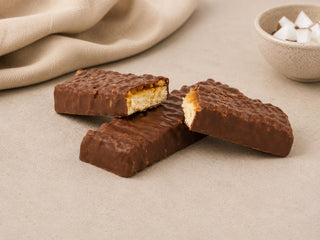
Eating on the go? The Bioteïne protein bars make a handy addition to a morning batch of pancakes as a snack.
For more background on protein intake and weight management, see the Voedingscentrum, which publishes the Dutch guidelines on protein intake. A recent meta-analysis published via PubMed (Leidy et al., 2015) shows that a protein intake of 1.2 to 1.6g per kg of body weight per day leads to significantly greater fat mass loss during a calorie-restricted diet compared with standard protein intake.
Frequently asked questions
How much protein is in home-made protein pancakes?
With the basic recipe of protein powder, egg and quark, a serving of 2 pancakes gives you 24 to 28 grams of protein and around 220 to 240 kcal. The exact amount depends on the type of protein powder and how much quark you use.
Can I eat protein pancakes if I'm trying to lose weight?
Yes. High-protein pancakes contain significantly fewer calories than traditional pancakes, while the higher protein content supports satiety. That makes them a solid breakfast choice within a calorie-restricted diet, provided your toppings stay sensible too.
Can I freeze protein pancakes?
Yes, for up to 3 months. Freeze them separately on a baking tray first, then transfer to a bag or container so they don't stick together. Defrost overnight in the fridge, or straight from frozen in the microwave at 600 watts for 90 seconds.
Which protein powder works best in pancakes?
Vanilla is the most versatile and works in both sweet and neutral recipes. Whey isolate gives a lighter texture. Casein makes the batter thicker and produces a denser pancake. A blend of the two gives the most consistent result.
Are protein pancakes suitable for a savoury breakfast too?
Absolutely. Leave out the protein powder, use plain quark, and add spinach, egg and herbs. The protein content stays comparable at 20 to 24 grams per serving, while the glycaemic profile is lower than the sweet version.
How does a ready-made pancake mix differ from mixing your own?
A good pancake mix has a fixed ratio of ingredients optimised for texture and cooking time. Mixing your own gives you more control over flavours, but the result varies more often. For everyday use, a mix is more practical and time-efficient.
How many calories should a topping contain at most?
There's no strict limit, but as a guideline, keep toppings under 80 kcal combined per serving to keep the whole meal under 320 kcal. Greek yoghurt, fresh berries and sugar-free syrup all comfortably fit within that margin.
Can I eat protein pancakes every day?
Yes, provided the rest of your diet is varied. Repeating the same high-protein breakfast daily is, in practice, one of the most effective strategies for weight management, since it significantly reduces decision fatigue around food.