
High-protein breakfast without egg: what actually works
A high-protein breakfast without egg is entirely achievable with quark, skyr, protein shakes, Greek yoghurt or porridge oats boosted with protein powder. Each of these gets you 20 to 40 grams of protein per meal, no egg required. The trick lies in combining a solid protein source with some fibre and enough volume to keep you full until lunch.
Plenty of people don't eat eggs. Perhaps you've got an allergy, perhaps the smell first thing in the morning puts you off, or you simply eat plant-based. Whatever the reason, the idea that you can't put together a proper protein breakfast without eggs simply isn't true. There are more than enough alternatives that match eggs for satiety and muscle support.
Below you'll find 10 concrete ideas, complete with calories, grams of protein and prep time. After that, we'll look at the pitfalls most people fall into when building their breakfast.
10 high-protein breakfast ideas without egg
The table below gives you a quick overview. Prep times are realistic, including weighing and setting out ingredients, not the ideal lab-conditions time.
| Breakfast idea | kcal (approx.) | Protein (g) | Time (min) |
|---|---|---|---|
| Low-fat quark (250 g) + berries + walnuts | 310 | 28 | 3 |
| Skyr (200 g) + raspberries + chia seeds | 250 | 26 | 3 |
| Protein shake (300 ml milk + 30 g whey) | 340 | 35 | 2 |
| Porridge oats (60 g) + protein powder (20 g) + semi-skimmed milk | 420 | 32 | 5 |
| Greek yoghurt 10% (200 g) + pumpkin seeds + strawberry | 360 | 22 | 3 |
| Cottage cheese (200 g) + cucumber + wholegrain crackers | 290 | 24 | 4 |
| Soya drink (300 ml) + protein powder (20 g) + banana | 370 | 28 | 3 |
| Overnight oats with quark (150 g) and hemp seeds | 390 | 27 | 1 (evening prep) |
| Edamame (100 g) + wholemeal bread (2 slices) + hummus | 430 | 25 | 6 |
| Bioteïne meal shake (1 serving) | variable | 25-30 | 1 |
The protein figures are based on standardised product information and RIVM food composition tables. Values vary by brand, so weigh your portions and check labels.
Dairy versus plant-based: which delivers more
Dairy products such as quark, skyr and cottage cheese are hard to beat on protein density. Low-fat quark delivers around 11 grams of protein per 100 grams. Skyr sits just slightly lower, around 10 to 11 grams, but the difference is negligible in practice.
Plant-based options can work just as well, but they require more planning. Soya drink is the only plant-based milk alternative with a complete amino acid profile comparable to animal protein. Oat, almond or coconut drinks are simply too low in protein to make a meaningful contribution without supplementing.
Going fully plant-based? Combine several sources. Edamame plus hemp seeds plus porridge oats gives you a broader amino acid profile than any single source alone. The Voedingscentrum explains clearly why the bioavailability of plant protein averages 10 to 15% lower than that of animal protein. Factor that in.
Quick options versus prepared options
Under 5 minutes: quark with fruit, skyr with chia seeds, a protein shake. These are the three most reliable options for busy weekday mornings. No heat, no equipment, no precision required.
Overnight oats is the smartest prepared option. Set it up the night before in 3 minutes, and your breakfast is ready to go the moment you wake up. Add 150 grams of quark instead of just milk and you'll easily hit 25 to 30 grams of protein. Made properly, this is also one of the most filling options on the list.
Warm porridge with added protein powder works well too, but watch the temperature while stirring. Add the powder only once the porridge has cooled slightly, otherwise it'll clump. Not a major issue, but it does affect the texture.
Want to see how this fits into a broader approach to high-protein eating? Take a look at the Bioteïne high-protein diet guide for more context on daily protein targets and timing.
Pitfalls: what to skip
Granola appears on nearly every "healthy breakfast" list. That's a problem. A 50-gram portion of granola provides around 6 grams of protein, but also 220 kcal, a large chunk of which is sugar and fat. The satiety it offers doesn't match the calorie cost. If you're trying to lose weight, skip granola as a main component. Use it sparingly, if at all, as a topping.
Orange juice is much the same story. A 200 ml glass delivers almost no protein, around 20 grams of sugar, and little fibre since most of the pulp has been removed. The British Dietetic Association points out that breakfasts low in protein density contribute to more snacking before lunch, which raises total energy intake over the day.
Plant-based yoghurts made from almond or coconut look reliable on the label, but often contain just 1 to 2 grams of protein per 100 grams. That's roughly comparable to a bowl of lettuce. Don't rely on them as a protein source. Always add protein powder or hemp seeds if you want to use them.
The "healthy bread" problem
Two slices of wholemeal bread provide roughly 7 grams of protein. That's a start, but not a breakfast. Without a substantial protein source alongside it (hummus beats cheese in most day-diet combinations, though nut butter also helps), you're looking at around 10 grams of protein for the whole breakfast. That means you'll need to compensate significantly for the rest of the day to reach 1.6 grams of protein per kilogram of body weight, the lower threshold most of the literature cites for weight loss while preserving muscle mass.
Not sure which phase of your diet you're in, or how much protein you need daily? The Bioteïne phase test gives you a personalised starting point in 2 minutes.
Bioteïne breakfast options
For mornings when there's no time to put anything together, Bioteïne protein shakes offer a straightforward solution. One serving provides 25 to 30 grams of protein, is fully formulated so you don't need to combine additional sources, and is ready in under 2 minutes. No weighing, no calculations.
Browse the range in the Bioteïne shakes collection. If you'd rather have something that feels more like a proper meal, the Bioteïne meal options are an alternative with a similar protein profile but more volume and fullness.
A protein shake as breakfast works best when you're also eating well through the rest of the day. It's not a replacement for a varied diet, but a practical tool for moments when preparation is lacking. Read more about integrating shakes into a complete eating pattern in the Bioteïne 4-phase system.
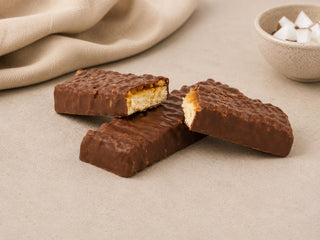
For anyone wanting something high-protein between meals too: Bioteïne snacks and protein bars pair well with a high-protein breakfast if you notice you're getting hungry before lunch. That signal usually means your breakfast was too low in protein or fibre.
When a meal shake makes more sense than loose ingredients
A homemade breakfast of quark, fruit and porridge is nutritionally sound. But it requires shopping, weighing and a degree of routine consistency. For people just starting out with high-protein eating, or going through a busy patch, the margin for error with homemade options is bigger. A meal shake removes that variable entirely. Once it's become a habit, you can always switch back to preparing your own.
A good starting point for anyone wanting to test the system without much investment is the Bioteïne starter pack. It gives you a working framework for the first 2 weeks.
How much protein do you need in the morning
Based on research, the optimal amount of protein per meal for muscle protein synthesis sits around 20 to 40 grams per sitting. A study published in the American Journal of Clinical Nutrition (2018) found that spreading protein intake evenly across three meals (roughly 30 grams per meal) is more effective for preserving muscle than concentrating protein into a single meal.
For breakfast, that means aiming for at least 20 grams of protein. That's achievable with virtually any option in the table above. Anyone wanting to lose weight while preserving muscle mass is better off aiming higher, around 30 grams per breakfast.
Eating at 7am and having lunch at 1pm? That's 6 hours between meals. A low-protein breakfast won't see you through 6 hours comfortably. That's not a willpower issue, that's physiology.
Frequently asked questions
What are good high-protein breakfast options if you don't eat eggs?
Quark, skyr, Greek yoghurt, cottage cheese and protein shakes are the most accessible options. They provide 20 to 35 grams of protein per serving, are quick to prepare, and pair well with fruit, oats or seeds for extra fibre and volume.
How much protein do you need at breakfast to lose weight?
Aim for 25 to 35 grams of protein at breakfast. This supports satiety through to lunch, limits snacking, and protects muscle mass during a calorie deficit. A breakfast with fewer than 15 grams of protein isn't enough to keep most people full until lunch.
Is skyr better than quark as a protein source for breakfast?
The difference is small. Skyr contains around 10 to 11 grams of protein per 100 grams, as does low-fat quark. Skyr has slightly less fat and a somewhat thicker texture. Choose based on preference: both are excellent protein sources for breakfast.
Can I have a plant-based, high-protein breakfast without egg or dairy?
Yes. Combine soya drink or soya yoghurt with hemp seeds, edamame or plant-based protein powder. Soya drink is the only plant-based milk alternative with a complete amino acid profile. With plant-based sources, factor in 10 to 15% higher intake to account for lower bioavailability.
Is porridge high enough in protein for breakfast?
Porridge alone isn't. A 60-gram serving provides around 7 grams of protein. Add 20 grams of protein powder or 150 grams of quark, and you'll reach 27 to 32 grams. Porridge is a good base for fibre and slow-release carbohydrates, but it's not a complete protein source on its own.
What's the difference between a protein shake and a meal shake for breakfast?
A protein shake primarily delivers protein and is meant as a supplement. A meal shake is formulated as a complete meal replacement, balancing protein, carbohydrates, fats and micronutrients. For a full breakfast, a meal shake is the better choice if you're not eating anything else.
Why do I get hungry quickly after a healthy breakfast without egg?
The cause is almost always too little protein or too little fibre. Granola, bread with jam, or fruit smoothies are calorie-dense but protein-poor. That triggers a quick blood sugar spike followed by hunger soon after. Always add a protein source of at least 20 grams.
How quickly will I see results from a higher-protein breakfast when it comes to weight loss?
With consistent use of a breakfast containing 25 to 35 grams of protein, most people report less hunger before lunch and reduced snacking within 5 to 7 days. Visible weight loss follows from a consistent calorie deficit, typically noticeable after 2 to 3 weeks.