













Short answer: calories or carbs?
A calorie deficit drives fat loss. That's the answer. You cannot lose fat without taking in less energy than you burn, regardless of which method you follow. Cutting carbs works for many people, not because it's magic, but because it makes that deficit easier to stick to.
The "count calories or count carbs" debate is a popular one, but it's really asking the wrong question. Both methods operate through the same mechanism: making less energy available than your body needs. The difference lies in how practical each is to follow, and in how hungry you feel along the way.
Which approach suits you best depends on your daily routine, your eating habits and how you respond to particular foods. That's not vague advice, either. Below, we set out exactly when each method pays off most.
How a calorie deficit drives fat loss
Your body needs energy to function. That energy comes from food. Whatever you eat but don't use gets stored, largely as fat. That's the core of weight regulation, a principle consistently confirmed by research, including guidance from the Dutch Nutrition Centre.
A deficit of 500 kcal a day leads, on average, to roughly 0.5 kg of fat loss per week. That figure is a guideline, not a guarantee. Metabolism, sleep, stress levels and hormonal factors all play a part. But the direction is always correct: less energy in means more energy drawn from fat stores.
Counting calories: what you're actually measuring
Counting calories gives you a direct view of your energy balance. You log everything, work out your daily requirement (TDEE, Total Daily Energy Expenditure) and aim for a deficit of 300 to 600 kcal per day. That's the safe margin for steady fat loss without losing muscle mass.
The problem is accuracy. Research shows people underestimate their calorie intake by 20 to 40 per cent on average. A tablespoon of olive oil you reckon at 50 kcal might actually be 120 kcal. That gap adds up over a week. Counting calories works well when you do it precisely. Doing it half-heartedly gets you nowhere.
Working out your daily requirement
A basic estimate of your TDEE: multiply your weight in kg by 30 to 35 if you're moderately active. Someone weighing 80 kg would burn roughly 2,400 to 2,800 kcal a day. Subtract 400 kcal and you're left with a manageable deficit of around 0.4 kg per week.
How cutting carbs helps indirectly
Cutting carbs works through three mechanisms, none of which is magic. It's simply physiology.
Mechanism 1: less insulin, less fat storage
Carbohydrates trigger insulin release. Insulin promotes the storage of glucose as glycogen and, when there's a surplus, as fat. Fewer carbs means lower insulin spikes. That's not a reason to avoid all carbs. It is a reason to cut back on processed carbs if you're prone to blood sugar swings.
Mechanism 2: less hunger
Highly processed carbs, white bread, sugary drinks, biscuits, are digested quickly. Quick digestion means hunger returns quickly too. Protein and fat slow down stomach emptying. Swap carbs for protein and healthy fats and you'll feel fuller for longer on the same or fewer calories. That's the indirect route to a calorie deficit.
Mechanism 3: glycogen depletion and water weight
On a low-carb diet, glycogen stores empty out faster. Glycogen binds water (roughly 3 grams of water per gram of glycogen). The initial weight loss on a low-carb diet, sometimes 2 to 3 kg in the first week, is mostly water. That's not fat loss. It feels motivating, but it's worth knowing what's actually happening.
Counting calories versus cutting carbs: a comparison
| Criterion | Counting calories | Cutting carbs |
|---|---|---|
| Scientific basis for fat loss | Strong (direct mechanism) | Strong (indirect, via energy deficit) |
| Short-term ease | Low (lots of measuring and logging) | Moderate (simplifies food choices) |
| Risk of underestimation | High (20-40% underestimation on average) | Low (avoiding categories is simpler) |
| Safeguards food quality | Not automatically | Partly (limits processed foods) |
| Flexibility | High (anything goes, within budget) | Low to moderate (trickier in social situations) |
| Muscle preservation on a deficit | Depends on protein intake | Depends on protein intake |
| First week's weight loss | 0.3-0.5 kg (fat) | 1.5-3 kg (water + fat) |
| Sustainability after 3 months | Moderate (constant monitoring gets tiring) | Moderate (socially restrictive) |
What works for whom
There's no one-size-fits-all answer. But some clear patterns do emerge.
Choose counting calories if:
- You're analytically minded and enjoy structure
- You want to keep plenty of variety in your diet
- Your eating pattern is fairly stable and you have time to log
- You already know you respond well to systematic approaches
Choose cutting carbs if:
- You react strongly to sugar and get hungry quickly after carb-heavy meals
- You'd rather not count daily and prefer working with food categories instead
- You have insulin resistance or pre-diabetes (always in consultation with a doctor or dietitian)
- You want quick structure with a clear "yes" and "no" list
Don't overlook a hybrid approach. Many people do best with a combination: a rough daily calorie check alongside a conscious effort to cut processed carbs. That's exactly how our 4-phase system is built.
Combining both methods: the practical approach
Counting calories and cutting carbs aren't mutually exclusive. In fact, combined wisely, they reinforce each other.
A workable approach for most people:
- Set a daily calorie ceiling of 300 to 500 kcal below your TDEE
- Consistently limit refined carbs (white bread, fizzy drinks, sweets, white pasta)
- Fill that calorie ceiling mainly with protein, vegetables and healthy fats
- Don't obsess over every gram, but log for at least 5 days a week to stay aware
Research published in the New England Journal of Medicine (Sacks et al., 2009) compared four dietary approaches with different macronutrient splits. The conclusion: the overall energy deficit explained the weight loss, not the specific breakdown of carbs, fat or protein. One exception: protein intake had a clear effect on satiety and muscle retention.
Why protein matters in both methods
This is where most diet approaches fall short. Whether you're counting calories or cutting carbs, if your protein intake is too low, you'll lose muscle alongside fat. That slows your metabolism in the long run.
The British Dietetic Association (BDA) recommends a minimum of 1.2 grams of protein per kilogram of body weight per day during weight loss. For active people, this rises to 1.6 grams per kilogram. For someone weighing 75 kg, that's 90 to 120 grams of protein a day.
Protein also has the highest thermic effect of any macronutrient. You burn 20 to 30 per cent of protein calories simply through digestion. Fats and carbs sit at 5 to 10 per cent. The difference isn't huge, but it does add up in your daily energy balance.
Protein and satiety
Protein suppresses hunger hormones more effectively than carbs or fat. Specifically, protein lowers ghrelin (the hunger hormone) and raises PYY and GLP-1 (satiety hormones). In practice, anyone getting 25 to 30 per cent of their calories from protein tends to eat less naturally. This has been demonstrated in multiple controlled studies.
Read more about keeping your protein intake on track in our high-protein diet guide.
The Bioteïne approach: systematic and measurable
Bioteïne isn't an "eat this, avoid that" plan. The approach is built on a structured phase system that combines calorie control with protein optimisation, without requiring you to weigh every meal down to the gram.
Each phase has a specific goal:
- Phase 1 (weeks 1-2): establish a calorie deficit, stabilise blood sugar, raise protein intake to at least 1.2 g/kg
- Phase 2 (weeks 3-6): optimise fat burning, preserve muscle mass, make portion control second nature
- Phase 3 (weeks 7-12): broaden your diet without relapsing, offset metabolic adaptations
- Phase 4 (maintenance): lock in a sustainable eating pattern, with no permanent restrictions
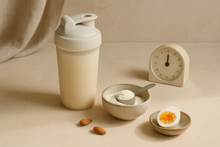
Products such as the Bioteïne protein shakes and high-protein meals are designed specifically to help you hit your protein targets within a calorie-controlled diet. A shake contains around 25 grams of protein for roughly 160 kcal, making it practical to reach your daily protein target even on busy days.
Want to know which phase you're in right now and which approach best suits your situation? Our phase test gives you personalised advice in five minutes, based on your starting point, goal and eating pattern. Also have a look at the starter pack if you want to begin straight away with a structure that works.
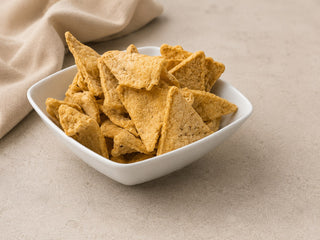
Need something between meals without derailing your plan? Our protein bars and protein snacks fit within both a calorie-based and a carb-restricted approach.
Frequently asked questions
What's more effective for weight loss: counting calories or counting carbs?
Both methods lead to fat loss when they create a calorie deficit. Counting calories is more direct and flexible. Cutting carbs is simpler for people prone to hunger after sugary meals. With equal motivation, the difference in results after 12 weeks is minimal.
How many calories should I eat per day to lose weight?
That depends on your TDEE. A rough estimate: multiply your body weight in kg by 30-35 to get your daily requirement at moderate activity levels. Subtract 400 to 500 kcal for a safe deficit of around 0.4 to 0.5 kg of fat loss per week.
How many carbs a day counts as low-carb?
There are various definitions. Moderately low-carb means 100 to 150 grams a day. Very low-carb (such as a ketogenic diet) sits below 50 grams a day. For most people looking to lose weight without extreme restrictions, 100 to 130 grams is a workable starting point.
Will I lose muscle mass eating at a calorie deficit?
Only if your protein intake is too low. With at least 1.2 grams of protein per kilogram of body weight per day, muscle mass is largely preserved, even with a 500 kcal daily deficit. Strength training reinforces this effect further.
Why do I lose weight so fast in the first week on a low-carb diet?
The first 1.5 to 2.5 kg you lose on a low-carb diet is mostly water, not fat. Glycogen in your muscles and liver binds water. Once those stores are depleted, that bound water disappears. Genuine fat loss only really gets going after that.
Do I need an app to track calories?
An app helps, but it isn't essential. Research shows that logging just 3 to 4 days a week already significantly boosts awareness of calorie intake. Daily loggers lose roughly twice as much weight, on average, as those who don't log at all. The specific app matters less than consistency.
Can I cut carbs and still have enough energy to exercise?
Yes, for moderate exercise. Endurance and strength athletes perform better with sufficient carbs around training sessions. Below 50 grams of carbs a day, performance can suffer. A moderately low-carb diet of 100 to 130 grams a day is generally sustainable for most recreational athletes.
What's the quickest way to start losing weight in a structured way?
Start by working out your energy needs, set a realistic deficit of 400 to 500 kcal a day, and raise your protein intake to at least 1.2 grams per kilogram of body weight. The Bioteïne phase test helps you work out which starting point best suits your situation.