






Is sugar-free healthy? The short answer
Eating sugar-free can support weight loss and more stable blood sugar, but only if you don't replace the sugar with extra fat or refined carbohydrates. The label "sugar-free" tells you something about one ingredient. It tells you nothing about a product's overall nutritional value.
That's the crux of it. Plenty of products marketed as sugar-free actually contain more calories, more saturated fat or more sodium than the standard version. The sugar's gone, but that doesn't automatically make the product healthier.
At the same time, there's a genuine case for eating less sugar. The average person in the Netherlands gets through roughly 100 grams of added sugar a day, while the Voedingscentrum (the Dutch Nutrition Centre) advises adults to keep free sugars to a maximum of 25 grams daily. That gap translates directly into extra calories, insulin spikes and, over time, a raised risk of type 2 diabetes.
In this article we'll cover what sweeteners actually do, which myths don't hold up, and when going sugar-free genuinely helps if you're trying to lose weight.
Types of sweeteners: what you need to know
Sweeteners are the most common replacements for sugar in sugar-free products. They deliver sweetness with little or no calories. But not all sweeteners are equal. Here's a rundown of the main types.
| Type of sweetener | Calories per gram | EFSA safety status | Flavour profile | Examples |
|---|---|---|---|---|
| Intense sweeteners | 0 kcal | Approved within ADI | Sometimes a bitter aftertaste | Stevia (E960), sucralose (E955), aspartame (E951) |
| Sugar alcohols (polyols) | 0.2 to 2.4 kcal | Approved, though high intakes can have a laxative effect | Close to sugar, with a slight cooling aftertaste | Maltitol (E965), erythritol (E968), xylitol (E967) |
| Fructose | 4 kcal | Permitted, but not low-calorie | Sweeter than glucose, no aftertaste | Fruit sugar, HFCS |
| Allulose | 0.4 kcal | Approved in the US, restricted in the EU | Neutral, close to sugar | Allulose |
The European Food Safety Authority (EFSA) assesses each sweetener individually and sets an Acceptable Daily Intake (ADI). That ADI is generally set so cautiously that normal use keeps you well below the threshold.
Sugar alcohols such as erythritol are only partially absorbed in the small intestine. That explains both their low calorie impact and the possible laxative effect at higher amounts (more than 30 to 50 grams a day in sensitive individuals).
What does the research say about sweeteners?
The scientific debate around sweeteners is nuanced. Three areas have attracted the most research: body weight, gut health, and how the brain responds to sweetness.
Body weight
A meta-analysis published in The BMJ (2019) reviewed 56 randomised controlled trials and found that swapping sugar for intense sweeteners led to an average weight loss of 0.8 kilograms over 4 to 12 weeks, compared with the sugar-sweetened version. That's modest but statistically significant. Crucially, the sweetener group didn't compensate by eating more calories elsewhere.
Gut health
Animal studies suggest certain sweeteners may influence gut flora composition. Human studies are less clear-cut. A study in Cell (2022) found that saccharin and sucralose disrupted glucose tolerance in some people, depending on their existing microbiome. This is an active area of research, and firm conclusions aren't possible yet.
Brain response and compensatory eating
Sweetness activates reward pathways in the brain. The question is whether sweetness without calories triggers compensatory eating, meaning eating more afterwards. Observational research shows mixed results. Under controlled conditions, compensation hasn't been consistently demonstrated. In people with a strong emotional relationship with food, however, sweet taste can act as a trigger for greater appetite.
The research points to one conclusion: for most people, sweeteners are a safe and effective way to cut sugar intake, provided overall diet quality stays intact.
Sugar-free myths debunked
Myth 1: Sweeteners cause cancer
This idea largely stems from older animal studies using saccharin, in which rats developed tumours at doses equivalent to hundreds of cans of fizzy drink a day. EFSA has assessed all commonly used sweeteners and found them non-carcinogenic at normal consumption levels. Aspartame was re-evaluated by the WHO in 2023 and classified as "possibly carcinogenic", in the same category as red wine and pickled vegetables. That's not a ban, nor is it evidence of risk at normal intake.
Myth 2: Sugar-free means low-calorie
This simply isn't true. A product can legally be labelled "sugar-free" if it contains less than 0.5 grams of sugar per 100 grams. It can still pack in 400 kcal per 100 grams from fat or other carbohydrates. Always check the full nutrition table, not just the front-of-pack claim.
Myth 3: Natural sweeteners (like honey or agave) are better
Honey contains roughly 300 kcal per 100 grams and is over 80% sugar. Agave syrup is high in fructose, which places extra strain on the liver when consumed in excess. From a calorie and metabolic standpoint, these alternatives are no better than ordinary sugar. Your metabolism doesn't much care where the sugar came from if the chemical structure is the same.
Myth 4: Going sugar-free automatically makes you slim
Cutting sugar only leads to weight loss if it also creates a calorie deficit. Eat less sugar but more fat, or bigger portions, and little changes. Weight loss comes down to energy balance. Sugar-free is a strategy, not a guarantee.
When does sugar-free eating actually help with weight loss?
There are specific situations where cutting sugar makes a measurable difference.
When your starting point is high sugar intake
If you currently consume 80 to 100 grams of added sugar daily and bring that down to 25 grams, that's a saving of 220 to 300 kcal a day. Over 30 days, that's a potential deficit of 6,600 to 9,000 kcal, equivalent to roughly 0.9 to 1.3 kilograms of fat mass (based on around 7,700 kcal per kilogram of fat).
When paired with protein-rich alternatives
The strongest combination is low sugar plus high protein. Protein has a higher thermic effect (20 to 30% of its calories go towards digestion) and boosts satiety via hormones like GLP-1 and PYY. A diet providing 1.2 to 1.6 grams of protein per kilogram of body weight, combined with limited sugar intake, delivers reliable weight loss without extreme calorie restriction. Read more on how this works in our high-protein diet guide.
When steady blood sugar is the goal
Eating less sugar lowers the glycaemic load of your meals. Fewer spikes in blood glucose mean less insulin response, less fat storage and fewer energy crashes after eating. This is especially relevant for people with insulin resistance or prediabetes. The British Dietetic Association (BDA) recommends keeping free sugars below 5% of total calorie intake.
How to read a label properly
Most of the confusion around sugar-free products comes down to how people read labels. Here's a practical approach.
- Look at "of which sugars" under carbohydrates. This is the figure that matters. Under 5 grams per 100 grams is low.
- Count sugar alcohols towards energy value too. Maltitol contains roughly 2.4 kcal per gram. They're not calorie-free.
- Check the total calories per serving. Not per 100 grams, as servings are often smaller than you'd assume.
- Scan the ingredients list. Sugar can hide under names like dextrose, maltodextrin, glucose-fructose syrup, invert sugar or rice syrup.
- Check the protein content. A product that's swapped sugar for fat but contains over 5 grams of protein per 100 grams is nutritionally a better choice than a sugar-free product with virtually no protein.
Take a look at the 4-phase system for a structured way to navigate labels and meal choices during a protein diet.
The Bioteïne approach: low sugar and high protein
Bioteïne develops products that sit at the intersection of low-sugar formulas and high protein content. That's not a marketing angle, it's a dietary one. Combining low sugar intake with sufficient protein is the most evidence-based approach for sustainable weight loss without losing muscle mass.
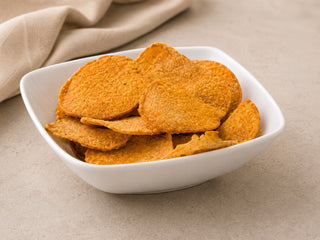
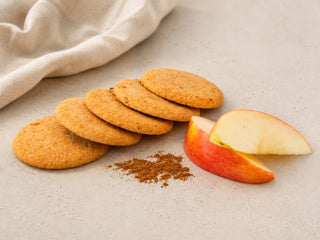
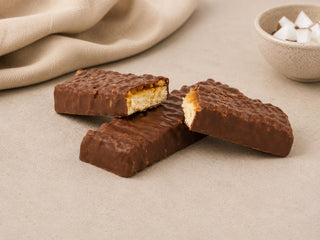
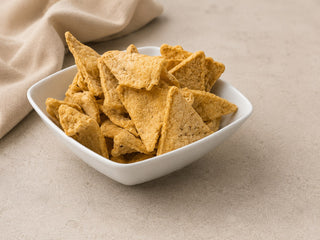
In practice, that means the Bioteïne snack range offers:
- Less than 3 grams of sugar per serving
- At least 10 grams of protein per serving
- No maltodextrin or glucose syrup used as a sweetener
- Erythritol and stevia as the primary sweeteners, both well studied and low in calories
That makes these products a solid swap for traditional snacks, which typically contain 150 to 250 kcal per serving with little protein and plenty of sugar. Browse the full range in the snacks collection.
If you'd like to start a complete programme, the starter pack is a sensible place to begin. It includes a selection of products from the first phase of the diet programme, including shakes and meal replacements that support your daily calorie and sugar targets.
Want to know which phase suits you first? Take the phase test for personalised advice based on your BMI, goals and eating habits.
Frequently asked questions
Is sugar-free the same as healthy?
No. "Sugar-free" is a legal labelling term meaning a product contains less than 0.5 grams of sugar per 100 grams. It says nothing about total calories, fat content or overall nutritional quality. Always check the full nutrition table before judging a product as healthy.
Are sweeteners harmful to health?
At normal consumption levels, approved sweeteners aren't harmful. EFSA sets a safe daily intake for each sweetener, and that limit is set so conservatively that normal use never comes close to it. Long-term effects on the microbiome are still being studied.
Can I lose weight with sugar-free products?
Yes, provided your calorie balance stays negative. Sugar-free products help lower your overall calorie intake, but only if you don't compensate with bigger portions or more fat. Combining them with high protein has the strongest effect on satiety and weight loss.
What's the difference between "sugar-free" and "no added sugar"?
"Sugar-free" means less than 0.5 grams of sugar per 100 grams. "No added sugar" means no sugar was added during production, but naturally occurring sugars (such as those in fruit) still count. The second label leaves more room for sugar in the finished product.
Do sweeteners raise blood sugar?
Most intense sweeteners such as stevia and sucralose don't measurably raise blood sugar. Sugar alcohols like maltitol have a low glycaemic index but aren't entirely neutral. Of all the sugar alcohols, erythritol has the smallest effect on blood glucose and insulin.
Are sugar-free products good for diabetes?
They can support better blood sugar control by lowering glycaemic load. However, total carbohydrate content still matters. Always consult a dietitian or doctor before making significant dietary changes if you have type 1 or type 2 diabetes.
How much sugar a day is acceptable when losing weight?
The Voedingscentrum recommends a maximum of 25 grams of free sugars a day. During an active weight loss programme, it's worth tightening this further to 15 to 20 grams a day. That leaves enough room for small amounts of fruit while largely avoiding added sugars.
What are the best sweeteners if you're trying to lose weight?
Erythritol and stevia have the lowest calorie impact (0.2 kcal and 0 kcal per gram respectively) and barely affect blood sugar. They're well tolerated in normal amounts and are found in most high-quality sugar-free food products.