




Protein and weight loss: what the science says
Protein supports weight loss by increasing satiety, protecting muscle mass and keeping your metabolism ticking over. On a calorie-restricted diet without adequate protein, you can lose up to 25% of your weight as muscle tissue. That does lasting damage to your metabolic rate. The recommendation for anyone actively losing weight sits between 1.6 and 2.0 grams of protein per kilogram of bodyweight per day.
What protein does in your body during a calorie deficit
When you eat less than you burn, your body has a choice: draw energy from fat stores, or from muscle tissue. That choice isn't random. It depends heavily on how much protein you're getting. On a low protein intake, the body sacrifices muscle tissue as fuel, which is a metabolic disaster in the long run.
Muscle tissue burns roughly 13 kcal per kilogram per day at rest. Fat burns about 4.5 kcal per kilogram per day at rest. Lose 3 kilograms of muscle during a diet and your resting metabolism drops by around 25 kcal a day. Over a year, that adds up to 9,000 kcal, equivalent to nearly 1.2 kilograms of extra fat. This is the mechanism behind the classic yo-yo effect: not a lack of willpower, but a lowered basal metabolic rate.
Eating enough protein steers the body towards burning fat instead. Muscle stays intact. So does your metabolic rate. This is the foundation of any serious protein diet, including the Bioteïne 4-phase system.
The thermic effect: protein costs more energy to digest
Not all nutrients require the same amount of energy to process. This is known as the thermic effect of food, or diet-induced thermogenesis (DIT). The figures speak for themselves:
| Macronutrient | Thermic effect | Net kcal per 100 kcal consumed |
|---|---|---|
| Protein | 20-30% | 70-80 kcal |
| Carbohydrates | 5-10% | 90-95 kcal |
| Fats | 0-3% | 97-100 kcal |
In practical terms: eat 200 kcal worth of chicken breast and your body uses 40 to 60 kcal simply digesting and processing it. With 200 kcal of pasta, that figure is only 10 to 20 kcal. Per meal, the difference looks small. But across a day with 120 grams of protein, that gap adds up to 80 to 120 extra kcal burned, purely from choosing protein. That's 8,400 extra kilocalories burned per year, with no additional exercise required.
Researchers at the British Dietetic Association confirm this mechanism and highlight the importance of spreading protein intake across the day for optimal use.
Satiety: why you feel less hungry after a protein-rich meal
Hunger isn't purely a matter of willpower. Two hormones drive it: ghrelin (the hunger hormone) and GLP-1 plus PYY (the satiety hormones). Protein suppresses ghrelin more effectively than carbohydrates or fats. A study published in The American Journal of Clinical Nutrition found that participants getting 30% of their calories from protein spontaneously ate 441 kcal less per day, without consciously limiting their intake.
That's no small detail. 441 kcal less per day, over 30 days, adds up to a calorie reduction of more than 13,000 kcal. Theoretically, that's nearly 2 kilograms of fat, lost without going hungry.
A practical example: a breakfast of 40 grams of porridge oats with a splash of milk provides 8 grams of protein and keeps you satisfied for around 2 hours. A breakfast of 250 grams of low-fat quark provides 22 grams of protein and keeps you satisfied for 3.5 to 4 hours. Same calories, completely different hormonal response.
Spread protein throughout the day
Your muscles can effectively use a maximum of 30 to 40 grams of protein per meal for muscle protein synthesis. Anything beyond that isn't wasted (it's still used, or converted to energy), but for muscle retention, spreading intake out makes sense. Divide your daily protein target across 3 to 4 meals of 25 to 40 grams each.
- Breakfast: 30 grams of protein (quark, eggs, protein shake)
- Lunch: 35 grams of protein (chicken, tuna, pulses)
- Dinner: 40 grams of protein (fish, meat, tofu)
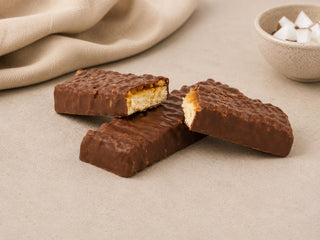
- Snack: 20 grams of protein (protein bar, cottage cheese)
Want to know exactly how much protein you need? The Bioteïne phase test calculates your personal daily requirement based on weight, goal and activity level.
How much protein do you need when losing weight?
The general recommendation from the Voedingscentrum (Dutch Nutrition Centre) is 0.8 grams per kilogram of bodyweight per day for the average adult. That's enough to survive. It isn't enough to protect muscle mass during a calorie-restricted diet.
The research is clear: for people actively losing weight, the optimal range is 1.6 to 2.2 grams per kilogram. With intensive strength training or a significant calorie deficit, this can rise to 2.4 grams per kilogram.
| Bodyweight | Minimum (0.8 g/kg) | Optimal for weight loss (1.8 g/kg) | With strength training (2.2 g/kg) |
|---|---|---|---|
| 60 kg | 48 g | 108 g | 132 g |
| 75 kg | 60 g | 135 g | 165 g |
| 90 kg | 72 g | 162 g | 198 g |
| 105 kg | 84 g | 189 g | 231 g |
Most people, eating normally, only get 60 to 80 grams of protein a day. That's not enough if you're actively losing weight. Closing that gap with protein-rich products or shakes is a practical, effective solution. Take a look at the Bioteïne starter pack for a structured approach.
Muscle retention: the most underrated benefit
Most people trying to lose weight focus on the scales. Understandable, but it's the wrong measure. What you lose matters at least as much as how much you lose.
A calorie-restricted diet without adequate protein leads to weight loss where 20 to 30% of that loss comes from muscle tissue. Say you lose 10 kilograms over 12 weeks. Then 2 to 3 kilograms of that is muscle. That might sound manageable, but muscle mass influences your resting metabolism, insulin sensitivity, functional strength and your ability to maintain your weight after the diet ends.
With adequate protein intake of 1.8 grams per kilogram, that share drops to 5 to 10%. Of the same 10 kilogram loss, only 0.5 to 1 kilogram is then muscle. The difference is substantial.
The role of leucine
Not all protein works equally well for muscle retention. The amino acid leucine is the crucial trigger for muscle protein synthesis. Animal-based proteins, whey and casein, contain relatively high concentrations of leucine. Plant-based sources such as rice or pea protein contain less leucine, but work perfectly well if you compensate with total intake. A meal needs at least 2.5 grams of leucine to fully activate muscle protein synthesis. You reach that with 25 to 30 grams of whey protein, or 35 to 40 grams of plant-based protein.
Protein and blood sugar: fewer spikes, less hunger
A meal high in simple carbohydrates causes a rapid rise in blood sugar. That rise is followed by an insulin spike and then a drop. This drop, sometimes called the post-meal dip, causes fatigue and renewed hunger, sometimes as soon as 90 minutes after eating.
Protein has almost no effect on blood sugar levels. In fact, it slows the absorption of carbohydrates when combined with a meal, flattening the glucose curve. Fewer spikes mean less insulin release, less fat storage and steadier energy levels throughout the day.
This mechanism partly explains why people on a high-protein diet report fewer afternoon slumps and less snacking hunger late in the evening.
Practical sources: what works and what doesn't
Theory is all well and good. But how much protein is actually in what you're eating?
| Food | Portion | Protein | kcal | Protein per 100 kcal |
|---|---|---|---|---|
| Chicken breast (fried) | 150 g | 44 g | 165 kcal | 27 g |
| Low-fat quark | 250 g | 22 g | 130 kcal | 17 g |
| Salmon (fried) | 150 g | 33 g | 280 kcal | 12 g |
| Eggs (2) | 120 g | 13 g | 156 kcal | 8 g |
| Lentils (cooked) | 200 g | 18 g | 230 kcal | 8 g |
| Bioteïne protein shake | 1 serving | 27 g | 160 kcal | 17 g |
| Bioteïne protein bar | 1 bar | 20 g | 195 kcal | 10 g |
Cheese, nuts and full-fat dairy provide protein, but also relatively high calories. That's not a problem in itself, but on a calorie-restricted diet, you want protein from sources with high protein density, plenty of protein per calorie. Chicken, low-fat quark, white fish and protein shakes score best here.
For more background on building a complete protein-rich daily menu, see the Bioteïne high-protein diet guide.
Common mistakes on a protein diet
A protein diet works, but not automatically. There are a few patterns that crop up time and again among people disappointed with their results.
Too little protein at breakfast
Many people start the day with toast, cereal or fruit. Tasty, but low in protein. A breakfast with less than 20 grams of protein barely gets satiety hormones going, so you're hungry again before lunch. Start the day with at least 25 grams of protein. That sets the tone for the rest of the day.
Counting protein but slipping up on snacks
Someone eats a solid lunch and dinner, but reaches for biscuits, crisps or fruit in between. Those snack moments are the gaps in the plan. Swap them for a protein bar or a protein snack. An extra 20 grams of protein a day, purely from snacks, makes a measurable difference to muscle retention over 6 weeks.
Too much protein in one meal
80 grams of protein in a single meal, and almost nothing for the rest of the day. That's not optimal for muscle protein synthesis. Spread it out. Consistency across the day matters more than a single spike.
Underestimating plant-based sources
Pulses, tofu and tempeh are good protein sources. They contain less leucine than animal sources, but you can compensate by increasing the portion. 200 grams of tempeh provides 40 grams of protein and works perfectly well as the base of a protein meal. Combine plant-based sources for a complete amino acid profile.
How long before you see results?
The first 7 to 10 days of a protein diet already produce clear signals. Hunger eases. Energy stabilises. Weight drops, partly through fluid loss linked to reduced carbohydrate intake.
Between day 14 and day 28, muscle retention becomes measurable. People who have a DEXA scan before and after 4 weeks of high-protein dieting typically see a ratio of more than 80% fat loss versus muscle loss, provided protein intake stayed on track.
After 12 weeks, the difference in body composition is significant compared to a calorie-matched but low-protein diet. A study published in Obesity Reviews found that participants on a high-protein diet (more than 1.2 g/kg/day) lost an average of 1.3 kilograms more fat and retained 1.1 kilograms more muscle mass over 12 weeks than the control group. That difference translates directly into a higher resting metabolic rate once the diet ends.
Looking for a structured programme to follow? The Bioteïne 4-phase system is built around exactly these principles: progressive protein intake, muscle retention and sustainable weight loss at every phase.
Frequently asked questions
How many grams of protein do I need per day to lose weight?
When actively losing weight, the optimal intake is 1.6 to 2.0 grams of protein per kilogram of bodyweight per day. For someone weighing 80 kilograms, that's 128 to 160 grams of protein a day. The exact requirement depends on activity level and the size of your calorie deficit.
Can I eat too much protein?
For people with healthy kidneys, an intake of up to 2.5 grams per kilogram of bodyweight per day is safe for most adults. There's no evidence that higher protein intakes harm healthy people. If you have kidney problems, speak to a doctor before increasing your intake.
Do you lose weight faster with more protein?
Yes, for several reasons. Protein increases satiety, so you naturally eat less. The thermic effect burns 20 to 30% of protein calories during digestion. Muscle retention keeps your resting metabolism higher. The combined effect is measurably faster fat loss at the same calorie intake.
Are protein shakes essential on a protein diet?
No, shakes aren't a requirement. They're a practical tool if you find it hard to hit your daily protein target through regular food. For someone targeting 130 grams of protein a day, a shake with 27 grams of protein is an efficient top-up, without adding many calories.
What are the best protein sources on a vegetarian diet?
Quark, Greek yoghurt, eggs and cheese are good vegetarian sources with a complete amino acid profile. Plant-based options include tempeh (20 g per 100 g), edamame (11 g per 100 g) and lentils (9 g per 100 g). Combine different plant-based sources for a complete amino acid profile.
Does protein help even if you don't exercise?
Absolutely. The satiety effect, the thermic effect and the protection against muscle loss all apply without training too. Exercise strengthens the effect, but isn't a requirement. Even with light activity, adequate protein intake protects the muscle mass you have during a calorie deficit.
When's the best time to eat protein?
Spread protein throughout the day for the best effect. Start the day with at least 25 grams of protein at breakfast to kick satiety in early. A protein-rich snack or meal after exercise (within 2 hours) supports muscle recovery. Consistently spreading intake across 3 to 4 meals works better than loading it all into one.
How do I know if my protein intake is high enough?
Tracking with an app like MyFitnessPal is the most reliable method. Signs you're not getting enough include persistent hunger after meals, fatigue, and weight loss accompanied by a rapid drop in strength. The Bioteïne phase test also gives you a personal guideline.