
The formula for a high-protein dinner under 500 kcal
An effective high-protein dinner follows a consistent structure: 30 to 40 grams of protein, a generous base of non-starchy vegetables, a modest portion of complex carbohydrate and a source of healthy fat. Total: under 500 kcal. Preparation time: 30 minutes at most. This formula works equally well for weight loss and for preserving muscle mass.
Research published in the American Journal of Clinical Nutrition shows that a high protein intake at the evening meal stimulates muscle protein synthesis and significantly increases post-meal satiety compared with a carbohydrate-heavy dinner of similar calorie content. For anyone looking to lose weight without losing muscle, dinner is therefore a strategic moment.
The complete Bioteïne high-protein diet guide explains why spreading protein across the day, evening included, is more effective than front-loading it all before 6pm.
Table: all 10 recipes at a glance
| Recipe | kcal | Protein (g) | Prep time | Type |
|---|---|---|---|---|
| Chicken breast with vegetables + rice | 420 | 38 | 25 min | Meat |
| Lean beef mince taco bowl | 460 | 36 | 20 min | Meat |
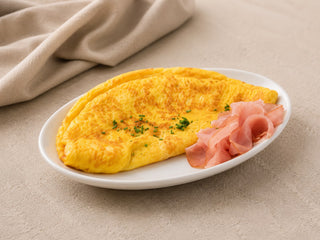
| Turkey omelette with spinach | 380 | 40 | 15 min | Meat |
| Baked salmon + broccoli | 430 | 37 | 20 min | Fish |
| Tuna bowl with avocado | 390 | 34 | 10 min | Fish |
| Prawn pasta with courgette | 445 | 35 | 25 min | Fish |
| Tofu stir-fry with soy sauce + pak choi | 370 | 28 | 20 min | Vegetarian |
| Lentil curry with low-fat quark | 410 | 32 | 25 min | Vegetarian |
| Bioteïne protein pasta carbonara | 390 | 40 | 5 min | Ready-made |
| Bioteïne stir-fry noodles | 370 | 38 | 5 min | Ready-made |
Meat-based: 3 recipes
1. Chicken breast with roasted vegetables and brown basmati rice
Use 150g chicken breast (35g protein), 200g roasted peppers and courgette, and 60g dry brown rice (yielding roughly 160g cooked). Season the chicken with garlic powder, paprika and black pepper. Fry in a cast-iron pan over medium-high heat, 6 minutes per side. Total: 420 kcal, 38g protein. The rice provides slow-release carbohydrates that keep blood sugar steady overnight.
2. Lean beef mince taco bowl
Use 120g lean beef mince (5% fat), fried with onion, cumin and chilli powder. Serve over a base of iceberg lettuce, 80g black beans (tinned, drained) and 100g tomato salsa. Finish with 30g low-fat Greek yoghurt in place of soured cream. Total: 460 kcal, 36g protein. Preparation time: 20 minutes, including 10 minutes of frying time for the mince.
3. Turkey omelette with spinach
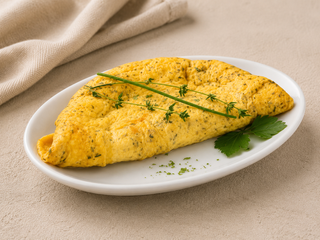
Whisk 3 eggs with 2 egg whites (roughly 24g protein from the eggs). Add 80g smoked turkey strips (12g extra protein) and 100g fresh spinach. Fry in a non-stick pan with half a teaspoon of olive oil. Ready in 15 minutes. Total: 380 kcal, 40g protein. The low carbohydrate content makes this a good choice for anyone limiting carbs in the evening.
Fish-based: 3 recipes
4. Baked salmon with steamed broccoli
Place 150g salmon fillet (wild or farmed) on baking paper, season with lemon, dill and garlic. Bake for 18 minutes at 200°C. Serve with 250g steamed broccoli and a tablespoon of tahini (15g). Total: 430 kcal, 37g protein. Salmon also provides omega-3 fatty acids, which the Dutch Nutrition Centre (Voedingscentrum) confirms support heart health.
5. Tuna bowl with avocado and rice
Use 1 tin of tuna in water (160g drained, roughly 30g protein), mixed with half an avocado (75g), cucumber, edamame (50g, 6g protein) and a dressing of rice vinegar and soy sauce. Serve over 80g cooked brown rice. Total: 390 kcal, 34g protein. No hob required: preparation takes just 10 minutes.
6. Prawn pasta with courgette
Use 150g peeled prawns (24g protein), fried with 2 cloves of garlic in olive oil. Add spiralised courgette as a pasta base (200g courgetti, roughly 30 kcal) and 60g dry wholemeal pasta. Season with lemon zest and parsley. Total: 445 kcal, 35g protein. The courgetti doubles the volume of the dish without inflating the calorie count.
Vegetarian: 2 recipes
7. Tofu stir-fry with soy sauce and pak choi
Use 200g firm tofu (pressed and cubed, 18g protein), fried until crisp in 1 tablespoon of sesame oil. Add 200g pak choi, 100g mushrooms and 2 tablespoons of soy sauce. Serve with 80g cooked soba noodles. Total: 370 kcal, 28g protein. Make it gluten-free by using tamari instead of regular soy sauce.
8. Lentil curry with low-fat quark
Use 200g red lentils (tinned and cooked, 18g protein), fried with onion, tomato purée, garam masala and 100ml light coconut milk. Serve with 150g low-fat quark (18g protein) as a cooling contrast. Total: 410 kcal, 32g protein. Lentils also contain fermentable fibre that supports gut health, as described by the British Dietetic Association.
Bioteïne ready-made: 2 options
9. Bioteïne Protein Pasta Carbonara
The Bioteïne pasta carbonara delivers 40g protein per portion at 390 kcal. Preparation time: 5 minutes in the microwave or on the hob. Add 100g rocket or roasted cherry tomatoes for extra volume and micronutrients. A handy weekday swap when time is short.
10. Bioteïne Stir-Fry Noodles
The Bioteïne stir-fry noodles contain 38g protein per portion at 370 kcal. Preparation time: 5 minutes. Combine with a handful of frozen edamame (3 minutes to cook) for an extra 6 grams of protein and a more complete meal. Both ready-made options are formulated without unnecessary additives and fit neatly into a structured protein diet.
The 5 time-saving techniques
- Batch-cook your protein sources. Cook 400g of chicken breast and 200g of hard-boiled eggs on a Sunday. This gives you 4 to 5 dinners with a ready protein base and no extra cooking time.
- Use frozen vegetables. Broccoli, spinach, edamame and peas from the freezer are nutritionally on a par with fresh versions, according to the Voedingscentrum. Preparation time: 3 to 5 minutes in the microwave.
- Buy pre-washed, pre-cut salad leaves. Bags of lamb's lettuce, rocket or iceberg eliminate washing and chopping entirely, saving 5 to 8 minutes each evening.
- Use a pressure cooker or Instant Pot. Lentils cook in 10 minutes, chicken thighs in 12 minutes, brown rice in 15 minutes. This roughly halves the usual cooking times.
- Portion out sauces in advance. Make a large batch of tomato salsa, tahini dressing or curry sauce and store in glass jars. Per portion (80g), this saves 10 minutes of preparation.
What not to eat every night
Not every dinner fits comfortably within a protein-focused eating pattern. A few common choices are worth a closer look:
- White pasta as a daily base. A standard portion (80g dry) delivers roughly 280 kcal but only 10g protein. The calories-per-gram-of-protein ratio is poor for anyone aiming for a daily target of 1.6g protein per kg of bodyweight.
- Chips as a side. 150g of deep-fried chips already amounts to 400 kcal, mostly from fat and starch, with less than 5g protein. That leaves little room for a proper protein source within a 500 kcal budget.
- So-called "light" pizza alternatives. Many products marketed as a "light meal" turn out, on closer inspection of the label, to contain 450 to 600 kcal per portion with only 15 to 20g protein. Always check the calories per 100g and the protein content in grams.
This doesn't mean these foods are off-limits. It simply means they don't work as a default dinner structure when hitting your protein target is a priority.
Protein before bed: does it help?
Casein, the dominant protein in quark and skimmed milk, digests slowly. Digestion takes 5 to 7 hours, releasing amino acids gradually through the night. Research by Res et al. (2012, Medicine and Science in Sports and Exercise) found that 40g of casein taken just before sleep increased overnight muscle protein synthesis by 22% in trained men.
In practice: a portion of low-fat quark (200g, 18g casein protein) or a glass of semi-skimmed milk (250ml, 9g protein) alongside dinner is an evidence-based choice for anyone prioritising muscle retention. It's not compulsory, but it's a worthwhile option for people on a calorie-restricted diet where muscle loss is a risk.
Want to know which phase of a protein diet makes casein relevant for you? The Bioteïne phase test gives you personalised advice in 2 minutes.
Fitting Bioteïne meals into your weekly plan
Cooking a full week's menu from scratch takes time. The realistic strategy is a hybrid approach: cook 3 to 4 evenings a week using the recipes above, and use a structured ready-made option on the other 2 evenings.
The Bioteïne meals collection was developed for exactly this purpose. Each meal is formulated with a precise protein profile (35 to 45g per portion), a calorie ceiling of under 400 kcal, and a preparation time of 5 minutes. That makes them ideal for busy weekdays without putting your protein target at risk.
An example weekly pattern:
- Monday: chicken breast with vegetables (home-cooked, 25 min)
- Tuesday: Bioteïne pasta carbonara (ready-made, 5 min)
- Wednesday: salmon with broccoli (home-cooked, 20 min)
- Thursday: Bioteïne stir-fry noodles (ready-made, 5 min)
- Friday: lentil curry (home-cooked, 25 min)
- Weekend: free choice within the formula
This pattern delivers 5 evenings above 30g protein, all under 500 kcal, with an average preparation time of just 16 minutes per evening. For more background on structuring a full protein diet, see the Bioteïne high-protein diet guide and the 4-phase system.
Frequently asked questions
How much protein do I need in a high-protein dinner?
For optimal muscle preservation and satiety, nutrition scientists recommend 30 to 40 grams of protein per meal. This is the amount that maximises muscle protein synthesis per eating occasion, regardless of your total daily intake.
Can I actually lose weight with a protein-rich dinner?
Yes. A high protein intake raises the thermic effect of food (TEF) by 20 to 30%, compared with just 3 to 8% for carbohydrates. That means your body burns more energy digesting a protein-rich meal, even at the same calorie intake. Over a week, this adds up significantly.
Are frozen vegetables as nutritious as fresh ones?
Largely, yes. Frozen vegetables are frozen at peak ripeness, so their vitamin and mineral content is comparable to fresh varieties. The Voedingscentrum confirms that frozen vegetables are a perfectly valid choice for daily vegetable intake.
Is 500 kcal enough for a dinner?
For most adults in a weight-loss context, yes, provided total daily intake is sufficient (typically 1,400 to 1,800 kcal depending on sex and activity level). A dinner of 400 to 500 kcal leaves room for a satisfying breakfast and lunch.
What's the benefit of quark before bed?
Quark contains casein protein, which digests over 5 to 7 hours. This provides a steady stream of amino acids through the night, supporting muscle recovery. A 200g portion of low-fat quark delivers 18 grams of protein at roughly 130 kcal.
How do I stop protein meals from getting boring?
Vary your flavours and cooking styles: Asian soy-sesame combinations, Mediterranean lemon and herbs, or Mexican-inspired cumin and chilli. The protein source stays the same; the flavour experience changes completely. Varying your seasoning costs nothing in extra calories or preparation time.
Which Bioteïne products work best as a dinner?
The Bioteïne meals are specifically designed to work as a complete dinner. They offer 35 to 45g protein per portion at under 400 kcal. The pasta carbonara and stir-fry noodles are the most popular choices for weekday evenings.
Can I combine this weekly plan with a specific diet phase?
Yes. The recipes and products in this article fit several phases of a structured protein diet. Use the Bioteïne phase test to work out which protein targets and meal structure suit your current situation.