
How do you combine Bioteïne products effectively?
Combining Bioteïne products effectively comes down to three variables: your daily protein requirement (typically 1.2 to 1.6g per kg of body weight), the shape of your day, and which phase of the diet you're in. A 27g protein shake covers a meal slot. A 20g protein bar works as a between-meal snack. Biscuits and snacks fill the smaller gaps. Put these together without much thought and you'll naturally hit 80 to 100g of protein a day.
Why combining beats sticking to one product
Many people settle on a single product, eat it for a week solid, then give up. That's understandable, but it rarely works. Taste fatigue tends to set in after 5 to 7 days of monotonous eating, an effect researchers call "sensory-specific satiety". Your appetite doesn't drop because you're full, it drops because the food has become boring.
Combining products solves this. It's not just about variety either, there's a functional side too. Different products deliver protein at different times, in different forms. A liquid shake is absorbed faster than a dense bar. A hot meal sends a different fullness signal than a biscuit does. Together, they form a complete system that works across the whole day.
The Voedingscentrum (the Dutch nutrition centre) advises spreading protein across several meals, since the body can only put around 25 to 40g per meal to efficient use for muscle protein synthesis. Anything you take in above that threshold in one sitting isn't stored as extra muscle fuel. So spacing your protein out isn't a nice-to-have, it's simply how physiology works.
The building blocks: what does each product type offer?
Before you start combining, it helps to know what each product actually does, not in terms of taste, but macros and function.
| Product type | Average protein | Average kcal | Best time | Function |
|---|---|---|---|---|
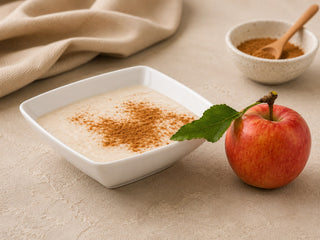
| Protein shake | 25-27g | 160-200 kcal | Breakfast, lunch or post-workout | Meal replacement |
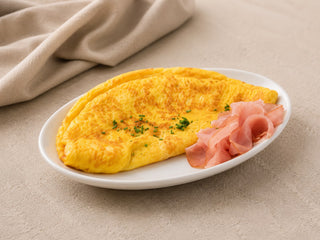
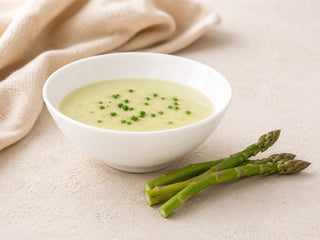
| Meal (soup, pasta) | 18-25g | 200-280 kcal | Lunch or evening meal | Hot meal replacement |
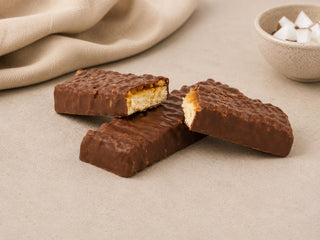
| Protein bar | 18-22g | 200-230 kcal | Mid-morning or mid-afternoon snack | Controlled snacking |
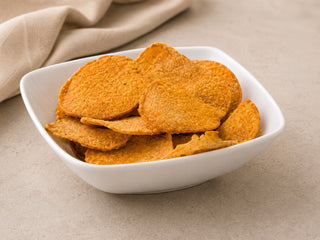
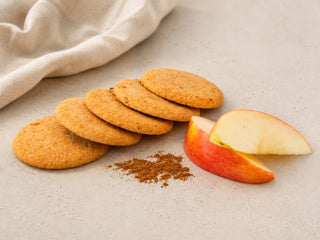
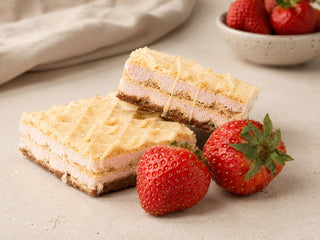
| Protein biscuit | 10-14g | 120-160 kcal | Snack or after a meal | Small top-up, taking the edge off hunger |
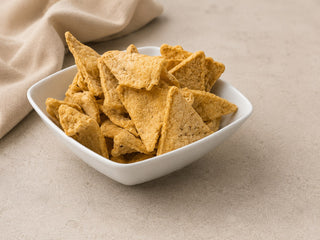
| Protein snack | 8-12g | 90-130 kcal | Evening or on the go | Managing hunger without a calorie surplus |
Think of this as your palette. A 25g protein meal plus a 27g protein shake already gets you to 52g. Add two 15g snacks and you're at 82g for the day. For someone weighing 70kg, that's already enough to support muscle preservation during a calorie-restricted diet.
Daily structure: three schedules that work
There's no one-size-fits-all schedule. What works for someone starting work at 6am won't suit someone who sleeps until 10am. Here are three common day types with combinations to match:
Schedule 1: the early starter (work begins before 8am)
- 7am - Protein shake for breakfast (27g protein, 185 kcal)
- 10am - Protein biscuit on the go (12g protein, 140 kcal)
- 1pm - Hot meal or soup (22g protein, 250 kcal)
- 4pm - Protein bar (20g protein, 210 kcal)
- 7pm - Regular evening meal with an additional protein source
Total from Bioteïne products: roughly 81g protein, 785 kcal. That's your base, and the evening meal tops you up to your daily target.
Schedule 2: the flexible home worker
- 8.30am - Shake for breakfast (27g protein)
- 12.30pm - Hot meal for lunch (22g protein)
- 3.30pm - Biscuit with coffee (12g protein)
- 8pm - Regular meal, perhaps a protein snack afterwards (10g protein)
This pattern suits people who'd rather not snack constantly. Four clear moments in the day, nothing to overthink.
Schedule 3: intensive diet protocol (more than 15kg to lose)
- 7am - Shake (27g protein)
- 10am - Bar (20g protein)
- 1pm - Meal (22g protein)
- 4pm - Biscuit (12g protein)
- 7pm - Shake or soup (25g protein)
- 9.30pm - Snack (10g protein)
Total: around 116g protein. For someone weighing 90kg on a calorie-restricted protocol (under 1,000 kcal a day), this level of protein intake is essential for protecting muscle mass. The British Dietetic Association is explicit that on very low calorie diets, protein intake of 1.5g per kg of body weight is needed to limit loss of fat-free mass.
Not sure which protocol suits you? Take the phase test, it takes two minutes and tells you exactly where you stand and which schedule fits.
Combinations to avoid
Not every combination works. Here are the most common mistakes:
Two meal replacements at once
A shake and a hot meal eaten side by side as lunch adds up to 420 to 500 kcal in one sitting. On a calorie-restricted diet, that's too much for one slot. Pick one. If you're genuinely hungry, go for the meal. If you want something quick, take the shake.
Three bars a day as your main source
Bars are designed as a top-up, not a foundation. They contain less fibre than a meal product and give a less lasting sense of fullness. Anyone eating three bars a day as their only protein source misses out on the variety and micronutrients that meal products provide. Keep bars to a maximum of two a day.
Front-loading everything before lunchtime
Three products before 1pm and nothing after makes the evening hard going. Hunger creeps in, you reach for something off-plan, and your daily result no longer adds up. Space your products out deliberately, and always keep something back for after 6pm.
Combining without counting calories in week one
Don't rely on instinct in your first week. Count your kcal. After 7 to 10 days, you'll know what you're doing and can run on autopilot. But starting without a clear overview leads to underestimating portions. A biscuit "on the side" seems small, but it still counts.
Combining by goal: what works when?
Your goal determines how you combine products. Weight loss calls for different choices than muscle preservation in older adults or athletes.
Goal: weight loss (500 to 750 kcal deficit per day)
Focus on high protein density per calorie. Shakes score well here, 27g protein for roughly 185 kcal. Meals bring warmth and fullness. Keep biscuits and snacks to a minimum. A typical schedule delivers 800 to 900 kcal from Bioteïne products, topped up with 200 to 400 kcal of vegetables, stock, or a protein-rich evening meal.
Goal: muscle preservation in older adults (65+)
Older adults need a higher protein threshold per meal to trigger muscle protein synthesis, a phenomenon known in the literature as "anabolic resistance". A study published in the American Journal of Clinical Nutrition (2016) found that older adults need 35 to 40g of protein per meal to achieve the same effect that 25g gives younger adults. Try pairing a shake (27g) with an extra protein biscuit (12g) at the same time, bringing you to 39g per sitting.
Goal: maintaining weight after the diet
Fewer products, more regular food. One shake for breakfast, one bar as a snack. The rest of the day is made up of ordinary meals with deliberate protein sources. This pattern gives you structure without feeling like you're still dieting.
Read the full approach for each goal in our high-protein diet guide.
The 4-phase system and product combinations per phase
Bioteïne's 4-phase system splits the diet journey into four phases with increasing flexibility. Each phase calls for a different combining strategy.
| Phase | Duration | Recommended products | Calorie level | Protein target |
|---|---|---|---|---|
| Phase 1 (start) | 2-4 weeks | Shakes, soups, meals | 600-800 kcal/day from products | 80-100g protein/day |
| Phase 2 (build-up) | 4-8 weeks | Shakes, meals, bars | 800-1000 kcal/day | 90-110g protein/day |
| Phase 3 (stabilisation) | 4-6 weeks | Bars, biscuits, 1 shake | 1000-1200 kcal total | 80-100g protein/day |
| Phase 4 (maintenance) | Ongoing | 1-2 products as a top-up | 1400-1800 kcal total | 70-90g protein/day |
Keep it simple in phase 1. Two or three shakes, a soup, a meal, no bars or biscuits that might undermine your hunger control. By phase 3, things shift: the shake fades into the background and the bar becomes a regular fixture. This is also the phase where people most often trip up, by stopping the products too soon. Stick with phase 3, even once you're feeling good.
Just getting started? The starter pack contains a carefully considered selection for your first few weeks, so you don't have to work out which products you need on your own.
Practical tips: combining on busy days, when travelling, and eating out
Real life rarely fits neatly into a schedule. What do you do when an 11am meeting runs over, you skip lunch, and you can't eat again until 4pm?
That's exactly when a bar or biscuit proves its worth. Easy to carry, no preparation needed, it keeps your protein intake on track while the rest of your day goes off-script. One bar at that moment stops you making a decision at 5pm based on hunger rather than planning.
The same principle applies when travelling or abroad. Shakes can be carried as powder and mixed on the spot. Bars fit in any bag. The one pitfall is an evening meal at a restaurant. No problem: order a protein-rich meal (fish, chicken breast, eggs), skip the bread, and accept that you'll need slightly fewer products that day. Don't try to compensate the next day, just carry on as normal.
One tip that genuinely helps: lay out three products each evening for the following day. Set them aside, take them with you, no decisions needed in the morning.
Flavour pairing and daily variety
Everything works together functionally, but you still have to enjoy eating it, so a little flavour logic helps.
Savoury meals (soup, pasta, rice) in the afternoon pair well after a sweet shake in the morning. It prevents taste fatigue and gives the day a familiar rhythm with contrasting flavours. A sweet bar after a savoury soup mirrors how most people naturally structure meals anyway, savoury first, something sweet after.
Biscuits work best after a hot meal or alongside a coffee or tea. They give a sense of closure after a meal, which helps psychologically to stop you eating more.
Snacks are the most flexible option, filling in the gaps. Evening snackers (people used to eating between 8pm and 11pm) benefit most from a protein snack, it satisfies the habit without the calorie damage of a typical evening snack.
Browse the full range by category: shakes, bars, meals, biscuits and snacks. Vary your choices week by week to avoid getting bored.
Frequently asked questions
Can I combine a shake and a bar as one meal slot?
That depends on your calorie target. Together they provide roughly 430 to 470 kcal and 45 to 50g protein. On an 800 kcal a day protocol, that's too much for one sitting. On a 1,200 kcal protocol, it's fine as long as the rest of the day balances out. Work out your daily budget first.
What's the maximum number of Bioteïne products per day?
Five to six products a day is the practical ceiling on an intensive protocol. Beyond that, your nutrient variety becomes too narrow. Always aim to keep at least one regular meal, even in phase 1, unless you're under medical supervision. Discuss this with your dietitian or doctor.
Can I combine products with regular food?
Yes, and in phases 3 and 4 that's actually the intention. Bioteïne products are there to top you up, they don't always need to fully replace meals. A regular meal of chicken and vegetables alongside one or two products a day is a healthy, sustainable long-term pattern.
What if I don't like a particular product?
Swap it for something from the same category with a similar macro profile. Nothing changes functionally. Taste fatigue is a sign to switch things up, not to give up altogether. The range is wide enough to vary for weeks without repeating yourself.
Can I use bars as a meal replacement?
Occasionally, yes, but not as a regular habit. A bar lacks the nutrient density (fibre, micronutrients) of a true meal replacement. If you can't make a shake one day, a bar is a fine stopgap. Just don't let it become a habit for more than two days running.
How do I know which phase I'm in?
Take the phase test. It looks at your current weight, your goal, and your experience with protein diets. Based on those three factors, you'll get concrete advice on which products and schedule suit you best.
Are there any combinations that cause digestive issues?
If you switch suddenly to a high-protein intake, digestion can feel sluggish for the first three to five days. Drink at least 2 litres of water a day and build up your products gradually in the first week. Adding fibre-rich vegetables to your regular meals also helps keep things moving.
What's the best starting option if I've never used protein products before?
Start with the starter pack. It contains a balanced mix of shakes, a meal and a bar for your first two weeks. This way, you'll learn which textures and flavours suit you before putting together your own combination, saving you from buying things that end up untouched.