









What does 'low-carb' actually mean?
Eating low-carb, in practice, means consuming fewer than 50 grams of carbohydrates a day. Keto diets set a stricter limit of no more than 20 grams. A moderate low-carb pattern sits somewhere between 50 and 100 grams. This differs from low-glycaemic eating, which focuses on the source of the carbohydrate rather than the total quantity.
The ground rules: what counts and what doesn't
Not all carbohydrates are treated equally in the calculation. Dietary fibre isn't digested by the body and barely raises blood sugar levels. That's why many low-carb eaters work with net carbs: total carbohydrates minus fibre.
Take an avocado as an example: per 100 grams it contains roughly 9 grams of carbohydrates, but also 7 grams of fibre. That brings the net carbs down to 2 grams. For keto followers, this is a significant difference. For those eating a more moderate low-carb diet, the outcome matters less.
The Dutch Nutrition Centre (Voedingscentrum) doesn't set an official definition of 'low-carb', but states that the recommended daily carbohydrate intake is 40 to 70 percent of total energy intake. Anyone who deliberately stays under 50 grams a day is departing substantially from this guidance. That's not a medical problem in itself, but it does call for a considered approach and sufficient protein intake to preserve muscle mass.
The British Dietetic Association (BDA) notes in its Low Carbohydrate Diet Fact Sheet that low-carb diets can be effective for weight management and blood sugar regulation, provided they're sufficiently varied and protein-rich. Read more about the role of protein in our protein-rich diet guide.
List 1: meat, fish and eggs (0-2g carbs per 100g)
Animal protein sources naturally contain virtually no carbohydrates. Below is an overview of 15 products with their macro values per 100 grams raw weight.
| Product | Carbs (g) | Protein (g) | Calories (kcal) |
|---|---|---|---|
| Chicken breast | 0 | 23 | 110 |
| Beef mince (lean) | 0 | 20 | 152 |
| Salmon (Atlantic) | 0 | 20 | 208 |
| Tuna (in water) | 0 | 26 | 116 |
| Egg (whole, raw) | 0.7 | 13 | 143 |
| Cod | 0 | 18 | 82 |
| Pork tenderloin | 0 | 22 | 143 |
| Turkish-style chicken (breast) | 0 | 24 | 104 |
| Prawns (peeled) | 0.9 | 18 | 85 |
| Mackerel (smoked) | 0 | 19 | 239 |
| Lamb fillet | 0 | 21 | 172 |
| Chicken (thigh, skinless) | 0 | 18 | 157 |
| Sardines (in oil) | 0 | 25 | 208 |
| Steak (rib-eye) | 0 | 19 | 291 |
| Mussels | 2 | 12 | 86 |
Processed meats such as sausages, chicken nuggets or meats coated in sauces often contain added carbohydrates. Always check the label.
List 2: vegetables (0-7g carbs per 100g)
Vegetables that grow above ground tend to be low in carbohydrates. Root vegetables such as potato and sweet potato fall outside this list. All values are per 100 grams raw weight.
| Product | Carbs (g) | Fibre (g) | Calories (kcal) |
|---|---|---|---|
| Spinach | 1.4 | 2.2 | 23 |
| Cucumber | 2.2 | 0.7 | 16 |
| Broccoli | 4.0 | 2.6 | 34 |
| Courgette | 2.1 | 1.0 | 17 |
| Lettuce (iceberg) | 1.8 | 1.2 | 14 |
| Pepper (red) | 6.0 | 2.1 | 31 |
| Cauliflower | 3.0 | 2.0 | 25 |
| Asparagus (green) | 2.1 | 2.1 | 22 |
| Mushrooms | 0.5 | 1.0 | 22 |
| Kale | 4.8 | 4.1 | 50 |
| Celery | 1.4 | 1.6 | 16 |
| Avocado | 1.8 | 6.7 | 160 |
| Tomato | 2.6 | 1.2 | 18 |
| Chicory | 2.1 | 1.8 | 21 |
| Pak choi | 1.2 | 1.0 | 13 |
List 3: dairy and alternatives (0-5g carbs per 100g)
Not all dairy products are suitable for a low-carb diet. Full-fat versions actually contain less lactose than low-fat ones, as the fat content affects the overall ratio. Worth noting: 'fat-free' yoghurt often contains more sugar than its full-fat equivalent.
| Product | Carbs (g) | Protein (g) | Calories (kcal) |
|---|---|---|---|
| Hard cheese (Gouda 48+) | 0 | 25 | 356 |
| Quark (low-fat) | 4.0 | 12 | 67 |
| Skyr (plain) | 4.0 | 11 | 62 |
| Greek yoghurt (10%) | 3.6 | 9 | 133 |
| Mozzarella | 2.2 | 18 | 253 |
| Cream cheese (plain) | 3.4 | 7 | 342 |
| Whipping cream (unsweetened) | 2.8 | 2 | 324 |
| Cheddar | 0.1 | 25 | 403 |
| Brie | 0 | 19 | 334 |
| Eggnog (unsweetened) | 3.0 | 4 | 142 |
Plant-based milk alternatives such as oat milk typically contain 6 to 9 grams of carbohydrates per 100ml, making them less suitable for a strict low-carb diet. Unsweetened almond milk is a better option, at around 0.3 grams per 100ml.
List 4: nuts, seeds and fats (0-15g carbs per 100g)
Nuts and seeds contain carbohydrates, but also plenty of fibre and healthy fats, which keeps their net carb count low. Mind your portion sizes, though: 30 grams of nuts averages 180 kcal.
| Product | Carbs (g) | Fibre (g) | Calories (kcal) |
|---|---|---|---|
| Macadamias | 5.2 | 8.0 | 718 |
| Pecans | 4.3 | 9.6 | 691 |
| Walnuts | 7.0 | 6.7 | 654 |
| Almonds | 9.4 | 12.5 | 579 |
| Chia seeds | 7.7 | 34.4 | 486 |
| Flaxseed (linseed) | 1.6 | 27.3 | 534 |
| Pumpkin seeds | 10.7 | 6.0 | 559 |
| Olive oil (extra virgin) | 0 | 0 | 884 |
| Coconut oil | 0 | 0 | 862 |
| Sesame seeds | 8.0 | 11.8 | 573 |
List 5: low-carb processed products
Not every packaged product is a carb bomb. There's a growing range of processed foods formulated with fewer carbohydrates and more protein. Always check the nutritional table, even on products that claim to be low-carb.
Bioteïne develops products specifically for people who manage their carbohydrate intake carefully, without compromising on satiety or taste. The category overviews below give a sense of what fits within a low-carb eating pattern:
- Protein shakes (unsweetened or lightly sweetened): typically 2 to 5 grams of carbs per serving, with 20 to 30 grams of protein. Browse the shakes collection.
- Protein bars: range from 10 to 22 grams of carbs. Choose variants with more than 15 grams of protein per bar. See the bars collection.
- Protein-rich meals: ready-made options with a calculated carbohydrate and protein profile. Available in the meals collection.
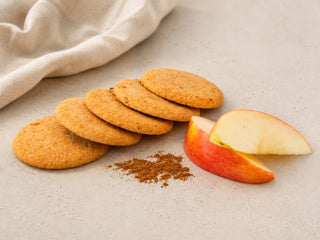
- Protein biscuits: an alternative to regular biscuits, with significantly less sugar. Browse the biscuits collection.
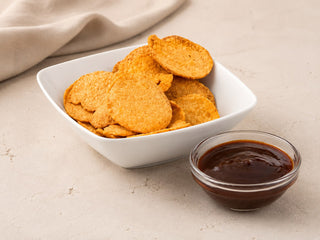
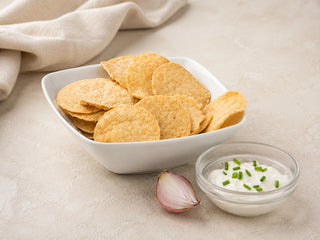
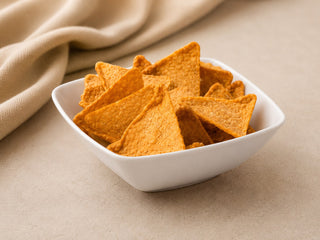
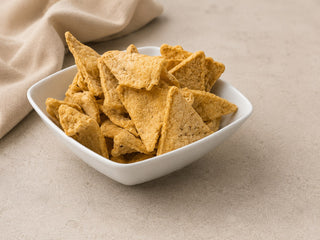
- Protein snacks: crisp-style snacks, crackers or dried options with protein as the primary macronutrient. See the snacks collection.
Sugar-free jam, low-carb tortillas and alternative flours (such as almond flour or coconut flour) are other examples. With these products, fibre and sugar substitutes are counted into the total calculation. Polyols (such as maltitol) do partially raise blood sugar, which is why keto followers don't always subtract them in full from net carbs.
What to avoid: hidden carb bombs
The biggest pitfalls aren't found in obvious culprits like pasta or bread. They're hiding in products marketed as 'healthy'.
- Wholemeal bread: contains 40 to 45 grams of carbs per 100 grams. Two slices alone deliver 30 grams.
- Smoothies: a standard 400ml green smoothie contains, on average, 25 to 40 grams of carbs from the fruit content.
- Low-fat fruit yoghurt: the fat reduction is almost always compensated for with sugar. Check the label: sometimes 12 to 15 grams of sugar per 150 grams.
- Sauces and dressings: ketchup contains roughly 25 grams of carbs per 100 grams. Barbecue sauce can reach up to 40 grams.
- Granola and muesli: even 'sugar-free' versions often contain 50 to 60 grams of carbs per 100 grams, thanks to oats and dried fruit.
- Sports drinks and fruit juices: 250ml of orange juice provides around 25 grams of carbs, comparable to a quick sugary snack.
- Rice cakes: seen as light and healthy, yet they contain more than 80 grams of carbs per 100 grams.
A peer-reviewed study published in Cell Metabolism (Hall et al., 2021) found that processed foods significantly increase energy intake, regardless of the macro profile stated on the packaging. That makes careful label reading more valuable than relying on category labels alone.
Sample meal plan: one day at 50g carbs
The plan below is a concrete reference point for someone eating 1600 to 1800 kcal a day while aiming to stay under 50 grams of carbohydrates.
| Meal | Product | Carbs (g) | Protein (g) | kcal |
|---|---|---|---|---|
| Breakfast | 3 eggs (fried in olive oil) + 100g spinach + 30g cheese | 2 | 30 | 390 |
| Mid-morning snack | Bioteïne protein bar + black coffee | 14 | 20 | 210 |
| Lunch | 150g chicken breast + 150g mixed salad + olive oil | 6 | 38 | 385 |
| Snack | 30g walnuts + 150g Greek yoghurt (10%) | 12 | 14 | 395 |
| Dinner | 150g salmon + 200g broccoli + 1 tablespoon butter | 8 | 38 | 430 |
| Total | 42 | 140 | 1810 |
This plan delivers 42 grams of carbohydrates and 140 grams of protein, comfortably above the minimum protein threshold of 0.8 grams per kilogram of body weight. For someone weighing 75 kilograms, that's a minimum of 60 grams a day. The 140 grams in this plan also supports muscle preservation during weight loss.
Want to know which phase of a structured diet you're in? Take the phase test to find your starting point.
How Bioteïne products fit into a low-carb diet
A low-carb diet requires structure. The risk of shortfalls, in fibre, B vitamins and magnesium, increases as intake becomes more restrictive. Bioteïne products are designed to reduce that risk, with a focus on high protein density and a controlled carbohydrate profile.
Our 4-phase system is built specifically around the nutritional realities of carbohydrate restriction. Phase 1 is the most restrictive: products in this phase generally contain fewer than 10 grams of carbs per serving while delivering at least 20 grams of protein. That makes them a solid building block within a plan like the one above.
If you're just starting out with low-carb eating, the starter pack offers a structured way in, with selected products for each phase, calibrated to a starting threshold of 50 to 100 grams of carbs a day.
For snacks that fit a low-carb pattern without calorie spikes, see our snacks collection. Our protein snacks are formulated with a carb-to-protein ratio suited to the goals of people who actively track their carbohydrate intake.
The full protein logic behind our nutritional system is set out in our protein-rich diet guide, including explanations of muscle preservation, satiety and the role of protein distribution throughout the day.
Frequently asked questions
How many carbs can you eat on a low-carb diet?
The commonly used limit for low-carb eating is under 50 grams a day. A ketogenic diet caps intake at 20 grams. A moderate low-carb pattern sits between 50 and 100 grams. The right limit depends on your goals, activity level and metabolic response.
What are net carbs and how do you calculate them?
Net carbs are total carbohydrates minus dietary fibre. Fibre isn't digested and has almost no effect on blood sugar. A product with 12 grams of carbs and 5 grams of fibre has 7 grams of net carbs. Keto followers also partially subtract certain polyols.
Which vegetables are best suited to low-carb eating?
Leafy greens such as spinach, lettuce and pak choi contain fewer than 2 grams of carbs per 100 grams. Broccoli, courgette and cauliflower sit between 2 and 5 grams. Avoid sweetcorn, peas, beetroot and potatoes, as these contain 15 to 20 grams of carbs per 100 grams.
Can you eat fruit on a low-carb diet?
Fruit contains fructose and delivers carbohydrates relatively quickly. Berries (strawberries, raspberries, blueberries) are the best choice, at 5 to 8 grams of carbs per 100 grams. Banana, grapes and mango sit above 15 grams per 100 grams and fit less easily into a strict plan.
Is low-carb eating the same as keto?
No. Keto is the most extreme form of carbohydrate restriction, capped at 20 grams a day, with the aim of reaching ketosis. Low-carb eating is a broader category that also covers 50 to 100 grams a day. Keto requires specific adjustments to fat intake that aren't necessary with a more moderate low-carb approach.
What are good snacks for a low-carb diet?
Suitable options include a handful of nuts (around 30 grams), hard-boiled eggs, a portion of Greek yoghurt, slices of hard cheese, or a protein bar with fewer than 10 grams of carbs. Avoid rice cakes, fruit bars and 'light' biscuits, as these often contain more carbs than expected.
Can you combine low-carb eating with exercise?
Yes, but timing and protein intake become more critical. During intense training, the body needs readily available energy. Some athletes increase their carbohydrate intake on training days to 80 to 100 grams. A protein intake of at least 1.6 grams per kilogram of body weight supports muscle recovery under carbohydrate restriction.
How long does it take before low-carb eating shows results?
Initial results are often visible after 7 to 14 days, partly due to the loss of water bound to glycogen (each gram of glycogen binds around 3 grams of water). Steady fat loss usually becomes visible after 3 to 6 weeks of consistent carbohydrate restriction combined with a modest calorie deficit.