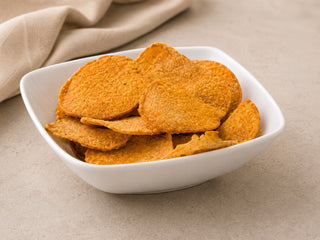
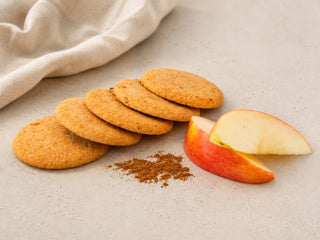

How do you make a biscuit "sugar-free with protein"? The short version
A sugar-free protein biscuit replaces ordinary sugar with erythritol, stevia or allulose, and swaps out (some of) the wheat flour for protein powder and ground almonds. Structure and bite come from xanthan gum or inulin. The result: under 2g of sugar per biscuit, 5 to 10g of protein, and a texture that's remarkably close to the real thing.
The 3 ways manufacturers replace sugar
Sugar alcohols: erythritol, xylitol and maltitol
Sugar alcohols are carbohydrates that are chemically similar to sugar but aren't fully absorbed by the body. They provide bulk and mouthfeel, which matters enormously for biscuit texture.
- Erythritol has a glycaemic index of 0 and provides 0.24 kcal per gram. Around 90% is absorbed in the small intestine and excreted unchanged via urine. Fermentation in the large intestine is minimal, which keeps digestive upset to a minimum.
- Xylitol has a GI of 7 and provides 2.4 kcal per gram. Partial fermentation can occur at higher doses (above 20-30g per day).
- Maltitol has a GI of 35, provides 2.1 kcal per gram, and is significantly fermented in the large intestine. It's cheap and popular with budget brands, but tends to cause more digestive discomfort than the alternatives.
Curious which sweeteners feature in Bioteïne biscuits? Have a look at the Bioteïne biscuits collection for the full ingredient list per product.
Stevia and monk fruit: high-intensity sweeteners
Stevia is an extract from the leaf of Stevia rebaudiana. Its active compounds, steviol glycosides such as stevioside and rebaudiosides, are 200 to 300 times sweeter than sucrose. That means only a tiny amount is needed per biscuit, so the calorie contribution is practically nil.
Monk fruit (luo han guo) works in much the same way and is 150 to 250 times sweeter than sugar. Neither sweetener triggers an insulin response, and both are considered safe by the European Food Safety Authority (EFSA). The catch: neither provides any bulk. That's why manufacturers almost always pair them with a bulking sweetener like erythritol.
Allulose: the rare sugar your body doesn't absorb
Allulose is a monosaccharide found naturally in small amounts in figs and raisins. It shares the same molecular formula as fructose but with a different spatial configuration, which means it doesn't bind to the enzymes that metabolise sugar. Roughly 84% is absorbed but excreted unchanged. It provides just 0.2 kcal per gram and has a GI of virtually zero.
Allulose is already widely used in the US, but its approval as a novel food is still pending in the EU. That's why you'll rarely see it as the main sweetener in products sold in Britain.
The 3 ways manufacturers boost protein content
Whey isolate: fast-acting and functional
Whey isolate contains 85 to 95% protein by dry weight, is virtually lactose-free, and scores a perfect 1.0 on the PDCAAS scale (Protein Digestibility Corrected Amino Acid Score), the maximum possible. In biscuits, whey isolate acts as a partial flour replacement. This reduces the gluten structure, which bakers compensate for with binders such as xanthan gum or psyllium husk.
Plant-based protein blends: pea, rice and soya
Pea and rice protein are frequently combined because they complement each other's amino acid profiles. Soya isolate has a PDCAAS of 0.99, offering quality on a par with whey. Plant-based proteins tend to have a slightly coarser mouthfeel and affect the biscuit's colour, since the Maillard reaction behaves differently at these temperatures.
Casein and collagen: texture takes the lead
Micellar casein is a slow-digesting protein (6 to 8 hours to absorb) with a high leucine content. In biscuits, it produces a denser, more cake-like texture. Collagen has a weaker amino acid profile for muscle building (no tryptophan, low leucine), but contributes to a soft, chewy bite. Manufacturers who list collagen as the primary protein source are, functionally speaking, offering a less complete product.
Table: 8 sugar-free protein biscuits compared
| Product | kcal | Protein (g) | Sugar (g) | Fibre (g) | Protein/kcal ratio |
|---|---|---|---|---|---|
| Bioteïne Chocolate Biscuit | 95 | 9 | 0.8 | 4 | 9.5g/100 kcal |
| Generic whey biscuit A | 130 | 8 | 1.2 | 2 | 6.2g/100 kcal |
| Generic plant-based biscuit B | 110 | 6 | 0.5 | 3 | 5.5g/100 kcal |
| Supermarket protein biscuit C | 145 | 5 | 3.0 | 1 | 3.4g/100 kcal |
| Supermarket protein biscuit D | 160 | 6 | 4.5 | 1.5 | 3.8g/100 kcal |
| Generic casein biscuit E | 105 | 7 | 0.9 | 3 | 6.7g/100 kcal |
| Generic collagen biscuit F | 120 | 5 | 1.0 | 2 | 4.2g/100 kcal |
| Generic maltitol biscuit G | 135 | 4 | 0.7* | 1 | 3.0g/100 kcal |
*Maltitol isn't listed as sugar on the label, but it has a GI of 35 and a calorific value of 2.1 kcal/g. This distinction matters if you have diabetes or insulin resistance.
Why sugar alcohols cause digestive issues (and how to avoid them)
Not all sugar alcohols behave the same way in your gut. The difference comes down to two mechanisms: fermentation and osmotic effect.
Osmotic effect occurs when undigested sugar alcohols draw water into the large intestine. This speeds up gut transit and can lead to diarrhoea at doses above 20g per day for xylitol, or above 40g for maltitol.
Fermentation by gut bacteria produces short-chain fatty acids and gas. Maltitol ferments heavily, causing bloating and cramps. Erythritol barely ferments at all, thanks to its early absorption in the small intestine. A study published in the European Journal of Clinical Nutrition (2016) confirms that erythritol is well tolerated by healthy adults at typical consumption levels (up to 35g per day).
Practical advice: if you're not used to sugar alcohols, start with no more than 1 to 2 biscuits a day. Increase gradually if you don't notice any discomfort.
Baking your own: 3 recipes under 100 kcal with at least 5g of protein
Chocolate almond cookies
Ingredients for 10 biscuits:
- 100g ground almonds
- 30g whey isolate (chocolate)
- 40g erythritol
- 1 egg
- 30g cocoa powder (unsweetened)
- 0.5 tsp xanthan gum
- 30ml water
Mix the dry ingredients. Add the egg and water. Shape into 10 balls and flatten onto baking paper. Bake for 12 minutes at 170°C.
Per biscuit: 88 kcal, 6.2g protein, 0.4g sugar, 2.8g fibre.
Oat and banana biscuits
Ingredients for 12 biscuits:
- 100g fine porridge oats
- 1 ripe banana (around 100g)
- 40g plant-based protein powder (vanilla)
- 20g erythritol
- 1 tsp cinnamon
- 30ml plant-based milk
Mash the banana. Mix in all the other ingredients. Spoon 12 portions onto baking paper and flatten gently. Bake for 15 minutes at 180°C.
Per biscuit: 74 kcal, 5.1g protein, 1.8g sugar (naturally from the banana), 1.5g fibre.
Peanut butter protein cookies
Ingredients for 8 biscuits:
- 120g natural peanut butter (no added sugar)
- 30g whey isolate (natural or vanilla)
- 30g erythritol
- 1 egg
- 0.5 tsp baking powder
Mix everything into a dough. Roll into 8 balls, then flatten with a fork. Bake for 10 to 12 minutes at 175°C. Let them cool completely before handling, they firm up as they cool.
Per biscuit: 98 kcal, 7.8g protein, 0.6g sugar, 1.2g fibre.
When protein biscuits actually make sense
A protein biscuit isn't a health supplement. It's a snack substitute. The real question isn't "can I have this as well?" but "what am I replacing with this?"
An ordinary shortbread biscuit contains around 75 kcal and 1g of protein. A protein biscuit with 95 kcal and 9g of protein delivers nine times more protein for the same calorie spend. That difference matters if you're working towards a protein target of 1.6 to 2.2g per kilogram of bodyweight per day, the current guideline for weight loss while preserving muscle mass according to the British Dietetic Association.
In practical terms: someone weighing 75kg needs 120 to 165g of protein a day when losing weight. Three meals typically provide 80 to 100g. The remaining 20 to 65g has to come from snacks. Two protein biscuits (18g protein, 190 kcal combined) go a long way towards closing that gap, without eating into the calorie budget the way a full-sized snack would.
Read more about how to spread your protein intake across the day in our high-protein diet guide.
Protein biscuits make far less sense if you simply add them on top of an already complete diet. Then all you're doing is adding calories without any real purpose. Use them as a substitute, not an extra.
Bioteïne protein biscuits: what we do differently
The Bioteïne biscuits collection was developed around the same principles as the wider Bioteïne 4-phase system: controlled calorie density, high protein density per portion, and no sweeteners that trigger digestive discomfort.
Every Bioteïne biscuit contains at least 9g of protein each, under 1g of sugar, and uses erythritol as the primary sweetener alongside a small amount of steviol glycosides. No maltitol, ever. The texture comes from a combination of whey isolate and ground almonds, with inulin added as a prebiotic fibre that supports both structure and gut health.
New to Bioteïne? The starter pack includes a selection of products, biscuits included, so you can work out which flavours and textures suit your eating pattern before committing to a large quantity of any single product.
Frequently asked questions
Are sugar-free biscuits really free of sugar?
Not always entirely. "Sugar-free" means under 0.5g of sugar per 100g of product, in line with EU regulations. Sugar alcohols such as maltitol aren't counted as sugar on labels, but they do carry a calorific value and a measurable glycaemic index. Always check the full nutritional table.
How many protein biscuits can you eat per day when losing weight?
That depends on your overall calorie and protein targets. As a snack substitute, 1 to 2 biscuits a day is realistic. More than 3 a day increases the risk of digestive discomfort from sugar alcohols, and your calorie budget fills up faster than it would with liquid protein sources.
What are the best sweeteners in protein biscuits for people with type 2 diabetes?
Erythritol has a glycaemic index of 0 and doesn't trigger an insulin response. Neither do stevia or monk fruit. Avoid maltitol if you have diabetes: it has a GI of 35, comparable to some grains. Always consult a dietitian if you're unsure about specific sweeteners and blood sugar management.
Why do protein biscuits sometimes taste bitter or chalky?
Bitterness usually comes from stevia used at too high a concentration, or from certain protein isolates with a particular amino acid profile. A chalky texture points to too much protein powder relative to fat-rich ingredients like ground almonds or nut butter. The ideal ratio is roughly 1:2 (protein to fat-rich component).
Are plant-based protein biscuits just as effective as whey-based ones?
For muscle building and satiety, what matters is the total amount of essential amino acids per portion. A well-combined plant-based blend (pea plus rice, or soya) delivers an amino acid profile comparable to whey. The difference in absorption speed matters far less for snacking throughout the day than it does for post-workout nutrition.
Can I use protein biscuits as a meal replacement?
That's not advisable. A biscuit providing 95 to 130 kcal simply doesn't offer enough micronutrients, fibre or fat for a complete meal. For meal replacement, purpose-formulated Bioteïne meal replacements are a far better fit, as they're built around recognised nutritional guidelines for complete meals.
What's the difference between protein biscuits and regular protein bars?
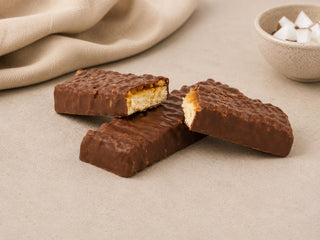
Nutritionally, they're fairly similar, but the way you use them differs. Biscuits have a lower energy density per gram and a drier texture, which some people find more satisfying. Bars more often include nuts or chocolate coatings with a higher fat content. Have a look at the Bioteïne bars collection for a direct comparison.
What's the best way to store homemade protein biscuits?
Homemade protein biscuits contain no preservatives. Store them in an airtight container at room temperature for up to 5 days, or freeze for up to 8 weeks. Because of their low sugar content, they dry out faster than regular biscuits. A sheet of baking paper between layers stops them sticking together.