
Sugar-free snacking with protein: why the combination works
A sugar-free snack with enough protein keeps you fuller for longer because protein slows gastric emptying and doesn't trigger a sharp blood sugar spike. Research shows that a snack containing at least 10g of protein can delay the hunger response for up to two hours, without the insulin surge that ordinary sugary snacks cause.
Snacking without sugar sounds simple enough, but the pitfalls are everywhere in practice. Plenty of products labelled "sugar-free" still contain maltodextrin, glucose syrup or high doses of fruit sugar. The answer isn't total abstinence, but smarter choices: snacks that satisfy through protein and fibre, without the blood sugar swing that triggers hunger afterwards.
On this page you'll find an overview of 20 practical options, broken down by category, plus guidance on how to actually read a label. Curious which protein intake suits your situation? Take the personal phase test first to work out your starting point.
20 sugar-free snacks: an overview with nutritional values
The table below lists 20 snacks with their calories, sugar content and protein content per serving. The "sugar" column refers to added sugars plus naturally occurring sugars combined, as shown on the label under "of which sugars".
| Snack | Serving | kcal | Sugar (g) | Protein (g) |
|---|---|---|---|---|
| Boiled egg | 1 large egg | 78 | 0 | 6 |
| Cottage cheese, plain | 150g | 111 | 3 | 17 |
| Smoked salmon | 60g | 80 | 0 | 11 |
| Edamame (salted) | 100g | 121 | 2 | 11 |
| Greek yoghurt (0% fat, plain) | 150g | 88 | 4 | 15 |
| Chicken breast strips (grilled) | 80g | 98 | 0 | 22 |
| Almonds (unsalted) | 25g | 144 | 1 | 5 |
| Peanuts (unsalted, plain) | 25g | 142 | 1 | 6 |
| Curd cheese, plain | 100g | 74 | 3 | 11 |
| Tuna in water (drained) | 85g | 90 | 0 | 20 |
| Light mozzarella | 50g | 79 | 0 | 9 |
| Protein bar (Bioteïne) | 1 bar (45-60g) | 170-200 | 1-2 | 15-20 |
| Protein biscuit (Bioteïne) | 1 biscuit (35-40g) | 130-160 | 1-2 | 10-14 |
| Cucumber with light cream cheese | 100g + 30g | 72 | 2 | 4 |
| Seitan slices | 60g | 104 | 0 | 18 |
| Cheese cubes (30%+ fat content) | 30g | 95 | 0 | 7 |
| Celery with plain peanut butter | 2 sticks + 15g | 94 | 1 | 4 |
| Protein crisps (Bioteïne) | 1 pack (25g) | 105 | 0-1 | 10 |
| Raw carrots with hummus | 100g + 40g | 112 | 5 | 4 |
| Linseed crackers (unsweetened) | 3 pieces (20g) | 95 | 0 | 3 |
Note on carrots and hummus: the 5g of sugar comes from the naturally occurring sugars in carrot. There's no added sugar. For most people this is perfectly acceptable within a low-sugar eating pattern.
Sweet versus savoury sugar-free snacks
Sweet options without a blood sugar spike
Sweet snacks without sugar get their flavour from sweeteners (stevia, erythritol, sucralose) or from the natural sweetness of ingredients such as cocoa or vanilla. The difference from sugary alternatives is measurable: an ordinary chocolate bar contains an average of 26g of sugar per 50g serving. A Bioteïne protein bar from the protein bar collection contains just 1 to 2g of sugar at a comparable weight.
Sweet sugar-free snacks that work well:
- Whey or casein protein bars sweetened with stevia or erythritol
- Protein biscuits with cocoa powder or vanilla extract
- Plain Greek yoghurt with a small square of dark chocolate (85% or higher, roughly 1g of sugar per 10g)
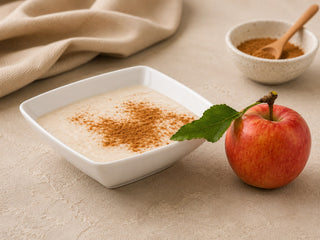
- Cottage cheese with cinnamon powder, no added sugar
Savoury options that keep you fuller for longer
Savoury snacks generally score better on satiety per calorie. Protein combined with salt and umami, as found in smoked salmon or cheese, activates several satiety signals at once. That makes savoury snacking more effective if you need to bridge more than two hours between meals.
Savoury sugar-free snacks that perform well:
- Chicken breast strips with mustard: 22g protein per 80g, 0g sugar
- Tuna in water with lemon: 20g protein per serving, 0g sugar
- Salted edamame: fibre and protein combined, 2g sugar
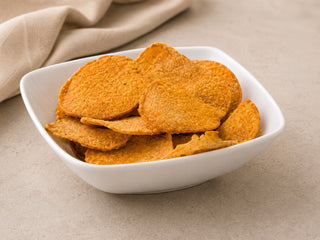
- Bioteïne protein crisps: crunchy texture, 10g protein per pack, maximum 1g sugar
Sugar-free snacks for on the go
Snacking away from home calls for options that need no chilling and minimal preparation. The practical criteria for a good on-the-go snack: no more than 200 kcal, at least 10g protein, under 3g sugar, and shelf-stable without refrigeration.
The most practical choices at a glance:
- Protein bars: individually wrapped, stable at room temperature, 15 to 20g protein each. Browse the range in the bar collection.
- Protein biscuits: lightweight and easy to slip into a bag. See the biscuit collection.
- Protein crisps: pocket-sized, savoury, no refrigeration needed. Available in the snacks collection.
- Boiled eggs: safe unrefrigerated for up to 4 hours if left in their shells. Simple, cheap and 6g protein per egg.
- Pouched tuna (not tinned): convenient portions with no need for a tin opener or cutlery. 0g sugar, roughly 20g protein per 85g pouch.
How to read a label: spotting hidden sugars
The "sugar-free" label on packaging has a legal definition: less than 0.5g of sugar per 100g or 100ml, under EU Regulation 1924/2006. But that says nothing about the total carbohydrate load or the glycaemic impact.
Ingredients that are hidden sugar
When reading an ingredients list, watch for the following terms. They're not listed as "sugar", but biochemically speaking, that's exactly what they are:
- Maltodextrin (glycaemic index of 85 to 105, higher than table sugar)
- Glucose syrup, fructose-glucose syrup
- Rice syrup, agave syrup, corn syrup
- Dextrose, sucrose, lactose in large quantities
- Fruit juice concentrate
- Honey, maple syrup, coconut blossom sugar
Coconut blossom sugar and honey are often marketed as "healthy". Yet they contain 70g and 80g of sugar per 100g respectively. The Netherlands Nutrition Centre doesn't consider any sugar variant a healthy substitute for ordinary sugar when consumed in larger quantities.
What you can actually trust on the label
The nutrition table on the back of the packaging is far more reliable than the marketing claims on the front. Look for:
- Total carbohydrates and below that "of which sugars": aim for under 5g of sugars per serving
- Fibre: a higher fibre content slows glucose absorption
- Protein per serving: at least 10g for a noticeable satiety effect
The pitfalls of "sugar-free" products
Sugar-free doesn't automatically mean healthy or low in calories. This is one of the most common misconceptions in the world of nutrition. The British Dietetic Association explicitly warns that sugar-free products sometimes contain more fat or calories than their regular counterpart, because manufacturers compensate for mouthfeel.
Extra fat as a substitute for sugar
A sugar-free biscuit can contain 30 to 40% more saturated fat than its sugary equivalent. If total calorie intake is your goal, as it is within a protein diet, fat counts for more per gram: 9 kcal per gram of fat versus 4 kcal per gram of carbohydrate or protein.
Sweeteners and overconsumption
Intense sweeteners such as sucralose and aspartame contain no calories, but research shows they can heighten the desire for sweetness in some people rather than reduce it. A meta-analysis in the Canadian Medical Association Journal (2017) found an association between regular use of artificial sweeteners and a higher BMI over the long term. This isn't a reason to avoid them altogether, but it is a reason not to assume that more is always better.
The portion-size effect
Because a product is "sugar-free", there's a tendency to eat more of it. But three handfuls of unsalted almonds still add up to 430 kcal. Portion discipline still matters, even with sugar-free choices. Use the protein-rich diet guide for concrete guidelines per phase.
Bioteïne snacks: composition and use
Bioteïne develops snacks specifically for people following a structured protein diet. The products are designed to fit within a calorie-controlled plan, starting from a low sugar content and a high protein content.
Protein bars
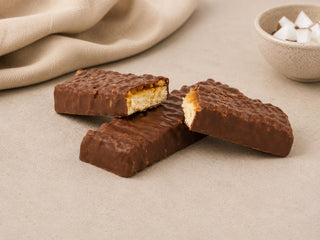
The bars in the Bioteïne bar range contain 15 to 20g of protein each and no more than 2g of sugar. They're intended as a snack replacement, not a meal replacement. Calorie-wise, they sit between 170 and 200 kcal, which fits within a snacking target of no more than 200 kcal.
Protein biscuits
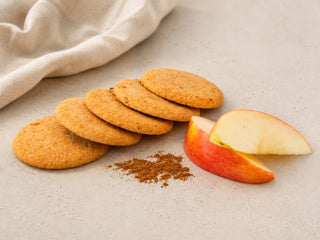
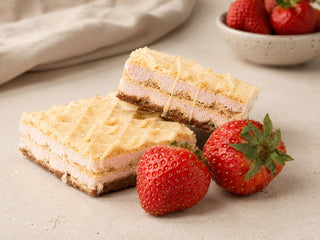
The Bioteïne protein biscuits combine 10 to 14g of protein with a sweet taste experience and no added sugar. They work well as a substitute for a regular biscuit, which contains 8 to 12g of sugar on average, and contain under 2g of sugar per biscuit.
Protein crisps
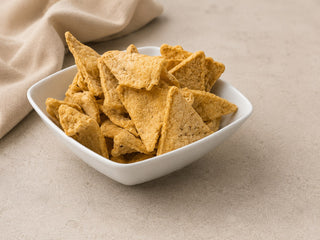
The crisps in the snacks collection have a savoury flavour, contain around 10g of protein per 25g pack and no more than 1g of sugar. They make a practical substitute for standard crisps, which average 2g of sugar and just 2g of protein for a comparable portion.
Not sure yet which product line suits your phase? The phase test gives you personal advice in two minutes, based on your current weight, goal and activity level. Or start straight away with a complete package via the starter pack.
Frequently asked questions
What does "sugar-free" actually mean on packaging?
Under EU Regulation 1924/2006, a product may be called "sugar-free" if it contains less than 0.5g of sugar per 100g. This says nothing about sweeteners, maltodextrin or total carbohydrate content. Always read the full nutrition table and the ingredients list to get the complete picture.
How much protein should a good snack contain?
A snack with at least 10g of protein produces a demonstrable satiety effect lasting roughly 1.5 to 2 hours. Below 5g of protein, the satiety effect is limited and the snack differs little from an ordinary carbohydrate-heavy treat.
Are sweeteners such as stevia safe?
Stevia (steviol glycosides) is approved by the EFSA and has an acceptable daily intake of 4mg per kg of body weight. With normal use of sugar-free products, you'll stay well within that limit. Stevia has no calories and doesn't directly affect blood sugar.
Can I eat sugar-free snacks during a protein diet?
Yes, sugar-free snacks with a high protein content fit well within a structured protein diet. They top up your protein needs without the blood sugar swings that intensify hunger. Check the phase test to see how many snacks suit your phase.
Are nuts a good sugar-free snack?
Unsalted nuts contain little to no sugar (0 to 2g per 25g serving) and provide healthy fats plus some protein. The downside is their high calorie density: 25g of almonds already comes to 144 kcal. Portion control remains essential if you're watching your calories.
What are the best sugar-free snacks for on the go?
Protein bars, protein biscuits and protein crisps score best for on-the-go eating. They're individually wrapped, need no refrigeration and contain 10 to 20g of protein per serving with no more than 2g of sugar. Boiled eggs and pouched tuna are cheaper alternatives.
How do I spot hidden sugars in an ingredients list?
Look out for maltodextrin, glucose syrup, dextrose, fructose-glucose syrup, rice syrup, agave syrup and fruit juice concentrate. These aren't listed as "sugar" but have a similar or higher glycaemic impact. Products with these ingredients among the first five listed contain substantial amounts of hidden sugar.
How many sugar-free snacks a day is reasonable?
Within a protein diet, one to two snack moments a day is typical, totalling 200 to 400 kcal outside main meals. The exact split depends on your daily calorie and protein target. The protein-rich diet guide gives concrete guidelines for each goal.