
How much protein is in tuna?
Tuna delivers 25 to 30 grams of protein per 100 grams, depending on how it's prepared. That makes it one of the most protein-dense foods you'll find in an ordinary supermarket. Its calorie density stays low, which makes the protein-to-kilocalorie ratio exceptionally favourable if you're watching your weight.
Fresh tuna, tuna in spring water and tuna in oil all deliver plenty of protein, but the calories and fatty acid composition differ considerably. That nuance determines which variety is the smarter choice at any given moment.
Tuna in water, oil and fresh: the figures compared
The table below is based on figures from the Dutch Voedingscentrum and standard laboratory benchmarks. Weights are per 100 grams of edible product (drained weight for tinned varieties).
| Variety | Protein (g) | Fat (g) | kcal | Protein per 100 kcal (g) |
|---|---|---|---|---|
| Tuna in spring water (drained) | 26 | 1 | 116 | 22 |
| Tuna in oil (drained) | 25 | 9 | 189 | 13 |
| Fresh tuna (raw) | 30 | 2 | 144 | 21 |
| Fresh tuna (cooked) | 29 | 2 | 138 | 21 |
Tuna in spring water wins hands down on calorie control. A standard 160-gram tin (roughly 120 grams once drained) gives you a quick 31 grams of protein for under 140 kcal. That's comparable to an average protein shake, only in solid form.
Tuna in oil tastes richer, but you pay for it in calories. Mind you, those extra fats aren't necessarily unhealthy; it depends heavily on which oil was used and whether you drain it off or eat it along with the fish.
Tuna compared with other protein sources
Protein is protein, but context matters. Price, preparation, satiety and amino acid profile all come into play.
| Food | Protein per 100g (g) | kcal per 100g | Fat (g) | Note |
|---|---|---|---|---|
| Tuna in spring water | 26 | 116 | 1 | High protein, low fat |
| Chicken breast (cooked) | 31 | 165 | 4 | Complete amino acid profile |
| Cottage cheese/quark (low fat) | 12 | 64 | 0 | Slower-release casein protein |
| Egg (whole, raw) | 13 | 155 | 11 | Good bioavailability |
| Salmon (cooked) | 25 | 208 | 13 | Omega-3, higher calories |
| Tempeh | 19 | 193 | 11 | Plant-based, also contains fibre |
| Whey protein (powder) | 75-80 | 380 | 5 | High concentration, fast absorption |
Tuna scores well, though chicken breast edges it out on protein per 100 grams. Tuna's real advantage lies in preparation: open the tin, drain it, done. No hob required. That makes it a genuinely practical option on busy days or when you're eating on the move.
Tuna's amino acid profile is complete. All nine essential amino acids are present in adequate amounts. Leucine, the amino acid that most strongly triggers muscle protein synthesis, is present in meaningful concentrations. An analysis published in the Journal of Food Composition and Analysis confirms that oily fish and lean whitefish alike deliver complete protein profiles, with DIAAS scores comparable to poultry.
Tinned versus fresh: sodium content and mercury risk
Tinned tuna is convenient. Fresh is purer. But two factors can sway the decision: sodium and mercury.
Sodium content
Because of the canning process, tinned tuna often contains 300 to 400 mg of sodium per 100 grams, three to four times more than fresh tuna. For anyone managing high blood pressure or following a low-sodium diet, fresh tuna or tuna in spring water with no added salt is the better option. Check the label; there are tins on the market with no added salt.
Mercury and how often to eat it
Tuna, particularly the larger species such as yellowfin and bigeye, accumulates methylmercury in its muscle tissue. The EFSA (European Food Safety Authority) advises vulnerable groups, pregnant women and young children, to limit their intake of large tuna species to no more than two portions a week. For healthy adults who aren't pregnant, the guidance is less strict, though eating large quantities daily still isn't recommended.
Most supermarket tuna is skipjack, which carries a lower mercury load than the larger species. Check the packaging for the species if you're eating tuna daily.
In short: two to three portions of tuna a week poses no known risk for most healthy adults. If you eat it more often, alternate with other protein sources.
Tuna in a weight-loss diet: how it works
Losing weight comes down to a consistent energy balance. Protein helps in two ways: it satisfies more per kilocalorie than carbohydrates or fat, and it protects muscle mass during a calorie deficit. That second point is often underestimated in practice.
Research published in the American Journal of Clinical Nutrition showed that a protein intake of 1.2 to 1.6 grams per kilogram of body weight on a calorie-restricted diet leads to significantly less muscle loss than the classic guideline of 0.8 g/kg. Tuna fits neatly into that protein target. A 120-gram portion alone delivers 31 grams of protein for around 140 kcal, a genuinely favourable trade-off.
If you'd like to understand how to build your protein intake strategically into a diet plan, the Bioteïne high-protein diet guide is a good place to start. You'll also find calculations based on weight and goal.
Tuna and satiety
Protein triggers cholecystokinin (CCK) and peptide YY, two hormones that dampen hunger. Fish does this effectively, partly because of its high protein content and zero glycaemic index. A meal of tuna, vegetables and a modest portion of carbohydrates keeps blood sugar stable, which reduces the urge to snack in the hours that follow.
Calorie budgeting in practice
Say you're working with a daily budget of 1,500 kcal. A lunch of 120 grams of tuna in spring water (140 kcal), a generous mixed salad (50 kcal) and a boiled egg (80 kcal) comes to 270 kcal in total. That's less than a quarter of your daily budget for a meal delivering over 40 grams of protein, leaving plenty of room for dinner and snacks.
Want to know which diet phase you're in and how much protein suits it? The Bioteïne phase test gives you personalised advice based on your current situation.
Quick high-protein tuna recipes
You don't need to be a cook. The recipes below take under 10 minutes and each deliver at least 30 grams of protein per portion.
Tuna salad with egg (35 g protein, 310 kcal)
- 120 g tuna in spring water (drained)
- 2 hard-boiled eggs
- 100 g cucumber, sliced
- 1 tablespoon Greek yoghurt (0% fat) as dressing
- Black pepper, lemon juice
Mix it all together and you're done. No heat, no washing up. Works well packed for lunch.
Tuna with cottage cheese dip (32 g protein, 290 kcal)
- 100 g tuna in spring water
- 150 g low-fat quark or cottage cheese
- 1 teaspoon capers
- Fresh dill, salt to taste
- Crudités of your choice: carrot, pepper
Quark adds casein protein, which slows the release of protein, handy if this is your last meal before bed.
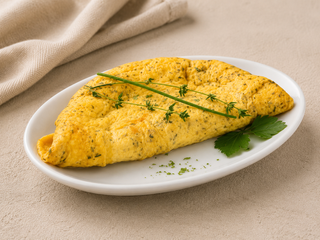
Warm tuna omelette (38 g protein, 360 kcal)
- 3 eggs
- 80 g tuna in spring water
- 50 g spinach
- Cooking spray, pepper
Cook the omelette over medium heat, adding the tuna and spinach once the egg has nearly set. Three minutes' work.
When a protein shake is more practical than tuna
Tuna is a solid protein source, but it has its limits. The smell makes it awkward at the office or the gym. Preparing it and taking it with you requires planning. And if you need a lot of protein several times a day, it gets repetitive fast.
There are moments when a shake is simply more practical. Straight after training: a shaker of whey protein is ready in 30 seconds, absorbed faster by the body than solid food, and fits in any gym bag. On the go in the morning: no kitchen, no time, but still 25 grams of protein. As an office snack: no smell, no plates, no colleagues asking questions.
The Bioteïne protein shakes are designed to complement a high-protein diet. They deliver 25 to 30 grams of protein per serving with a controlled calorie count. The flavour profiles are built so you can keep drinking them without effort even after weeks. That's a real issue with protein products: flavour fatigue. Variety is the advice.
Combine tuna, other fresh protein sources and shakes. None of these three is a complete diet on its own; they complement each other. Take a look at the Bioteïne starter packs too, if you're just beginning a protein-focused diet plan. The protein bars and protein snacks are handy additions for moments when tuna simply isn't an option.
The British Dietetic Association recommends spreading protein intake across three to four meals a day for optimal muscle protein synthesis. A mix of whole foods (fish, meat, dairy) and supplements makes that realistically achievable, without turning every meal into a production.
Frequently asked questions
How much protein is in a standard tin of tuna?
A 160-gram tin of tuna (roughly 120 grams once drained) in spring water delivers an average of 31 grams of protein. Tuna in oil comes in slightly lower due to moisture loss to the oil, though the difference is small, around 28 to 30 grams per tin.
Is tuna good for weight loss?
Tuna is one of the most efficient protein sources for weight loss. It delivers plenty of protein for relatively few calories, satisfies well, and helps protect muscle mass during a calorie deficit. Tuna in spring water is the most favourable variety for this, at around 116 kcal per 100 grams.
How often a week can you eat tuna?
For most healthy adults, two to three portions a week is a safe upper limit. This accounts for mercury accumulation in larger tuna species. Skipjack tuna, the most commonly tinned variety, carries lower mercury levels than yellowfin or bigeye.
What's the difference between tuna in water and tuna in oil?
Protein content is comparable: both deliver around 25 to 26 grams per 100 grams. The big difference lies in calories. Tuna in spring water sits around 116 kcal, while tuna in oil (drained) comes in around 189 kcal. On a calorie-restricted diet, water is the better choice.
Is tuna a complete protein?
Yes. Tuna contains all nine essential amino acids in adequate amounts, including leucine, which plays a key role in triggering muscle protein synthesis. The bioavailability of fish protein is high, comparable to that of poultry and eggs.
Can I combine tuna with a protein shake on the same day?
Not only is that possible, it's actually a smart strategy. Tuna delivers protein through a solid meal at a set time. A shake fills the gap when a hot meal isn't practical, such as straight after training or as a snack. Spreading protein across the day improves overall protein uptake.
How much protein does the average person need per day?
The European minimum guideline sits at 0.8 grams of protein per kilogram of body weight. For active people, or anyone losing weight without wanting to lose muscle, dietitians recommend 1.2 to 1.6 grams per kilogram. Someone weighing 75 kg would then need 90 to 120 grams of protein a day.
Tuna or chicken: which is the better protein source?
Chicken breast delivers slightly more protein per 100 grams (around 31 grams versus 26 grams for tuna in spring water). Tuna wins on convenience, as no cooking is required. The best approach is to alternate. Both have a complete amino acid profile and fit well into a protein-focused diet.