
What makes a snack 'high-protein enough' when you're out and about?
A snack earns its high-protein badge when it delivers at least 10 grams of protein per portion, contains no more than 200 kcal, and either keeps for a minimum of 4 hours without refrigeration or needs no refrigeration at all. These are the three criteria that decide whether a snack is actually practical away from the office or home.
For anyone working, travelling or training, that translates into a small pack, dependable shelf life, and enough protein to keep you satisfied until your next meal. Below are 15 concrete options, each measured against those three requirements.
Table: 15 options with grams of protein, kcal and shelf life
| Snack | g protein | kcal | Shelf life unrefrigerated | Price/portion (estimate) |
|---|---|---|---|---|
| Bioteïne protein bar | 20g | 180 kcal | 12+ months | €2.50 |
| Beef jerky (plain) | 18g | 160 kcal | 12+ months | €2.00 |
| Beef sticks (dried) | 12g | 140 kcal | 6+ months | €1.50 |
| Edamame (dried, salted) | 14g | 130 kcal | 6+ months | €1.20 |
| Dried chickpeas | 10g | 120 kcal | 6+ months | €0.90 |
| Almonds (25g portion) | 6g | 145 kcal | 3+ months | €0.60 |
| Nut and seed mix with pumpkin seeds | 9g | 170 kcal | 3+ months | €1.00 |
| Sunflower seeds + pine nuts | 8g | 155 kcal | 3+ months | €0.80 |
| Quark cup (small pack) | 12g | 85 kcal | 2-4 hours (cool bag) | €0.80 |
| Hard-boiled egg | 6g | 78 kcal | 2 hours | €0.30 |
| Skyr portion (150g) | 15g | 90 kcal | 2-4 hours (cool bag) | €1.10 |
| Cheese portion (mature, 30g) | 8g | 120 kcal | 2-4 hours (cool bag) | €0.60 |
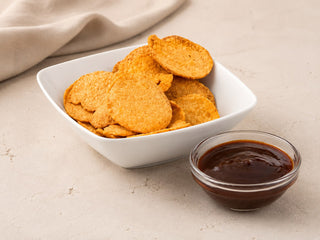
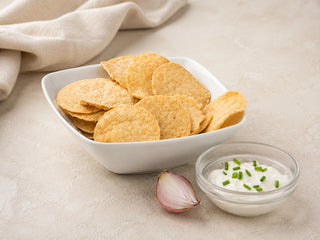
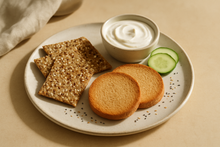
| Bioteïne protein cracker + dip | 14g | 160 kcal | 12+ months (cracker) | €2.00 |
| Bioteïne protein coffee (instant) | 15g | 90 kcal | 12+ months | €2.20 |
| Peanut butter stick pack (32g) | 8g | 190 kcal | 6+ months | €1.00 |
Note: almonds and peanut butter fall just below the 10g threshold per portion. We've included them anyway, since they pair well with other protein sources in a lunch on the go. See the section below.
No refrigeration needed: 8 options
These are your most practical picks for long journeys, trains without a cold store, and busy working days. None of them need preparation and all sit happily at room temperature.
- Protein bars: The best balance of shelf life and protein content. A decent bar delivers 15 to 22g of protein per portion. Choose bars without sugar alcohols if you want to avoid stomach upset. Have a look at the Bioteïne bars collection for options with 20g protein per bar.
- Beef jerky: High in protein, low in kcal. Watch the salt content though, as some varieties pack over 1,500mg sodium per portion. Go for plain or lightly salted.
- Beef sticks (dried): Less salt than jerky and individually wrapped. Handy in a pocket or bag. Keeps for up to 6 months.
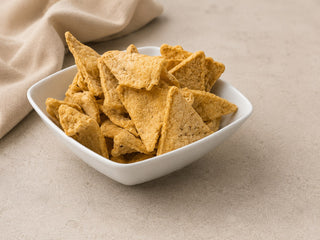
- Dried edamame: 14g protein per 40g portion. Plant-based, crunchy and mess-free. A solid alternative to crisps when you're out and about.
- Roasted chickpeas: 10g protein per 40g portion. Also fibre-rich (6g per portion), which extends satiety. Some varieties contain added sugar, so check the label.
- Nut and seed mix: Pair pumpkin seeds (8g protein per 30g) with cashews. Portion your own into a small bag of 30-40g for travel.
- Peanut butter stick pack: Ready to eat, no knife required. Pair with a cracker for a complete snack.
- Dried soybeans: Up to 17g protein per 40g portion. Less well known, but available in Asian supermarkets and online. Keeps for a long time.
Short cold chain (2-4 hours): 4 options
These work if you're carrying a cool bag or thermal lunchbox. They're also the most satisfying choices per kcal.
- Quark cup (small pack, 150g): 12g protein, 85 kcal. Add a handful of berries for flavour and fibre. Keeps for up to 4 hours at a maximum of 10 degrees.
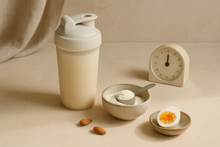
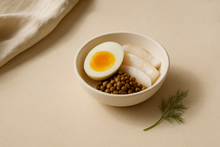
- Hard-boiled egg: 6g protein per egg, so two eggs give you 12g. Easy to prepare the night before. Keeps for 2 hours unrefrigerated, or up to a week in the fridge.
- Skyr portion (150g): 15g protein, 90 kcal. Thicker than quark, so less risk of spillage. Choose a variety without added fruit, as the sugar content climbs quickly otherwise.
- Cheese portion, mature (30g): 8g protein, 120 kcal. Pair with a protein cracker for a full snack of 14-16g protein. Keeps for up to 4 hours unrefrigerated at normal room temperature.
Bioteïne portable: 3 options
For travellers who want to hit their protein targets consistently, without hunting for the least-bad option at a station or airport every time.
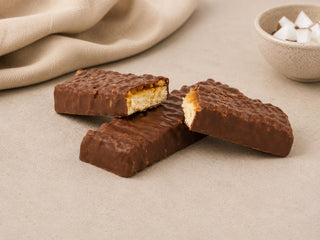
- Bioteïne protein bar: 20g protein, 180 kcal, no refrigeration needed. Fits in any bag and holds its texture even in heat up to 35 degrees. Browse all the varieties in the bars collection.
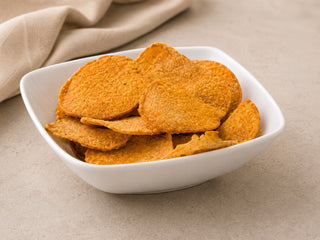
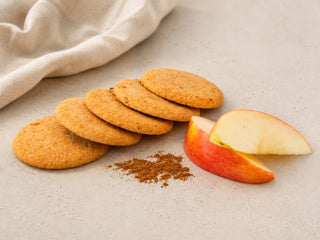
- Bioteïne protein cracker with dip: Crackers delivering 14g protein per portion, paired with a protein-rich dip. Ideal if you fancy a proper snack rather than just a bar. See the snacks collection.
- Bioteïne protein coffee (instant): 15g protein per sachet, made hot or cold with just water. A far better swap than the empty-calorie station cappuccino. 90 kcal per portion.
What not to buy at the station or airport
Stations and airports tend to sell food with a poor protein-to-kcal ratio. Here's how some of the usual suspects stack up:
| Product | g protein | kcal | The problem |
|---|---|---|---|
| Ready-made sandwich (white bread) | 6g | 420-480 kcal | High in refined carbs, low in protein |
| Fruit juice (250ml) | 0g | 110 kcal | No protein, high in fructose, no fibre |
| "Healthy" chicken wrap | 9g | 380 kcal | Low protein relative to kcal |
| Muesli bar / oat cake | 4g | 280 kcal | High sugar, misleadingly healthy image |
| Smoothie (shop-bought) | 2g | 150 kcal | Fructose spike, barely any protein |
The British Nutrition Foundation states that an adult needs, on average, 0.8 grams of protein per kilogram of body weight per day. At 70kg, that's 56g a day. A sandwich with 6g protein barely dents that target, despite costing you 400-plus kcal. That's a poor trade. Read more on optimal protein intake in the Bioteïne high-protein diet guide.
How to build the ideal lunch on the go
A satisfying lunchbox for travelling has four elements: a protein source, fibre, healthy fats, and water. Not five components, not one. Four.
- Protein source (20-30g): Hard-boiled egg (x2) plus a Skyr cup, or a protein bar plus a cheese portion
- Fibre (at least 5g): Vegetable sticks (carrot, cucumber), dried chickpeas, or a wholegrain cracker
- Healthy fats (10-15g): A handful of almonds, a peanut butter stick, or avocado in a small tub
- Water (500ml minimum): No juice, no fizzy drinks. Processing protein takes extra fluid.
Example 1 (no refrigeration): Bioteïne protein bar (20g protein) plus a bag of dried edamame (14g protein) plus 25g almonds plus 500ml water. Total: 34g protein, 455 kcal.
Example 2 (with a cool bag): 2 hard-boiled eggs (12g protein) plus a Skyr cup (15g protein) plus carrot sticks plus a handful of pumpkin seeds. Total: 35g protein, 390 kcal.
Both examples cover more than 60% of the daily protein requirement for someone weighing 70kg, in a single lunch.
Snacks for 12-hour flights
Long flights bring two extra factors into play: shelf life over an extended period, and smell (out of consideration for fellow passengers). Strongly spiced or fishy beef jerky is a no-go. So is any cheese with a pungent rind.
The best options for flights of 8 to 14 hours:
- Protein bars: No smell, no mess, no temperature requirements. Pack two for a long-haul flight.
- Dried edamame or chickpeas: Crunchy, low odour, a decent protein hit. Pack in a resealable bag.
- Beef sticks (plain): Less smell than the spiced varieties. Keeps well at any airport temperature.
- Nut and seed mix (self-assembled): No liquid, no odour, no fuss. Cashews, pumpkin seeds and pine nuts are the least pungent choices.
- Instant protein coffee: Ask cabin crew for hot water. Delivers 15g protein per sachet and replaces the sugary in-flight snack.
Liquids over 100ml aren't allowed in hand luggage. Quark, Skyr and liquid dips fall into that category. Pack the dry or solid alternatives instead, and pick up a Skyr cup after security if you fancy one.
Research published in The American Journal of Clinical Nutrition shows that high-protein foods reduce feelings of hunger significantly more than high-carbohydrate foods at equivalent calorie intake. That matters on a long flight: less boredom-snacking, less of a mid-flight energy slump.
Snacks for driving without the mess
Driving comes with its own set of rules. You don't want a greasy steering wheel, anything that drips, or snacks you can't grab one-handed without taking your eyes off the road.
What works:
- Protein bars in their wrapper: Keep the wrapper half on while you eat. No crumbs, no drips. The Bioteïne bars work well here thanks to their compact packaging.
- Beef sticks: Individually wrapped, no knife required. Grabbing one at a time while driving is easy enough.
- Dried chickpeas or edamame: Tip a portion into a cup holder or small tub. One handful at a time, no spills.
- Nut and seed mix in a travel cup: Pour the mix into an (empty) travel mug. You can fish them out one at a time without losing focus on the road.
What doesn't work in the car: quark, yoghurt, cheese in damp packaging, or anything that needs unwrapping with both hands. Save those for your next stop.
See also the Bioteïne snacks collection for portable options built specifically for use outside the kitchen. For the full picture on structuring your protein intake around a busy day, read the high-protein diet guide.
Frequently asked questions
How much protein should a snack contain to be satisfying?
A snack should deliver at least 10 grams of protein to provide measurable satiety. Research shows that protein intake above 10 grams per eating occasion significantly reduces hunger through ghrelin suppression. Below 10 grams, the effect is small and short-lived.
Are protein bars healthy for everyday use?
Yes, provided the bar contains no more than 5 grams of sugar per portion and no excess sugar alcohols. A bar with 20g protein and 180 kcal is a better everyday snack than most station alternatives. Always check the nutrition label.
What's the nutritional difference between beef jerky and beef sticks?
Beef jerky contains around 18g protein per 40g portion. Beef sticks contain slightly less protein (10-12g per stick) but also less salt. Jerky has a higher sodium content due to the drying process. For anyone with high blood pressure or kidney issues, beef sticks are the better choice.
Can I bring high-protein snacks in my hand luggage on a plane?
Dry snacks such as bars, nuts, jerky and dried pulses are always allowed in hand luggage. Liquid or paste-like products such as quark, Skyr or dips are limited to 100ml per container. Buy these after security instead.
What are good high-protein snacks for people who don't eat meat?
Dried edamame (14g per 40g), roasted chickpeas (10g per 40g), dried soybeans (17g per 40g), quark, Skyr, and plant-based protein bars are all solid options. Combine two sources to reach 20g protein per snack.
How many calories should a snack contain if I'm dieting?
The BDA (British Dietetic Association) recommends snacks of 100 to 200 kcal on a calorie-restricted diet. Choose snacks that stay under 200 kcal while delivering at least 10g protein. That gives the best ratio of satiety to calorie intake across the day.
Are dried chickpeas better than crisps as a snack?
Yes, considerably so. Dried chickpeas contain 10g protein and 6g fibre per 40g portion. Crisps contain 2g protein and less than 1g fibre for a comparable portion. Chickpeas keep you fuller for longer, and the blood sugar spike is smaller thanks to their lower glycaemic index.
What's the best way to store homemade snack mixes for travel?
Use resealable silicone bags or small glass jars. Portion them out in advance at 30 to 40 grams per bag so you don't eat the whole batch at once. Dry mixes stay fresh for three to seven days unrefrigerated at room temperature, provided they're stored airtight.