











Why the scales won't budge: the physiology behind a weight loss plateau
A weight loss plateau happens because your body adapts to a lower weight. Your resting metabolism slows down, you move less without noticing, and hormones such as leptin reduce your energy expenditure. This isn't failure. It's a measurable physiological mechanism that affects almost everyone after 4 to 12 weeks of calorie restriction.
Research published in the American Journal of Clinical Nutrition shows that total energy expenditure can fall by 20 to 25% on average once you've lost 10% of your body weight. In practical terms, if you needed 2000 kcal a day at the start, your body might manage on just 1500 to 1600 kcal after losing 8 to 10 kg. You're eating the same, but your body is burning less. The deficit disappears, and so does the weight loss.
This mechanism has a name: metabolic adaptation. It isn't unusual. It happens to anyone who's seriously trying to lose weight. The good news is that there are specific adjustments that can break the plateau, without pushing yourself into an even deeper calorie deficit.
The 7 most common causes of a weight loss plateau
Not every plateau has the same cause. Sometimes it's your metabolism, sometimes it's your eating pattern, sometimes it's something else entirely. The table below sets out the seven most common causes, along with what to do about each one.
| # | Cause | What's happening | What to do |
|---|---|---|---|
| 1 | Lower calorie needs | At a lower body weight, you need less energy. You burn 20 to 25% less after losing 10% of your body weight. | Recalculate your daily calorie needs based on your current weight. |
| 2 | Calorie creep | Portions grow without you noticing. After 8 weeks, people eat 200 to 400 kcal more than they think, on average (source: BDA). | Weigh your food accurately for 3 to 5 days. Keep a food diary. |
| 3 | Insufficient protein | Below 1.2g of protein per kg of body weight, you increase the risk of muscle loss and reduced fullness. | Increase protein intake to 1.6 to 2.2g per kg. See the section below. |
| 4 | Chronic sleep deprivation | Fewer than 7 hours of sleep raises ghrelin (the hunger hormone) by 28% and lowers leptin (the fullness hormone). | Prioritise 7 to 9 hours of sleep. Avoid screens for 1 hour before bed. |
| 5 | Elevated cortisol | Chronic stress raises cortisol, which encourages fat storage, particularly around the midsection. | Actively reduce stress: breathing exercises, walking, conscious recovery time. |
| 6 | Reduced NEAT | Non-exercise activity thermogenesis drops by 100 to 300 kcal a day whilst dieting. You move less without realising it. | Add a daily step count target. Aim for at least 8,000 steps a day. |
| 7 | Fluid retention masking fat loss | Your menstrual cycle, salt intake, or a new training schedule can cause 1 to 3 kg of water weight fluctuation. | Weigh yourself every morning, fasted. Assess the trend over 2 weeks, not a single day. |
Increasing protein intake as your first step
Of all the adjustments you can make, increasing your protein intake has the strongest evidence base when it comes to breaking a plateau. Protein delivers three measurable benefits that are directly relevant here:
- Thermic effect: your body burns 20 to 30% of the calories from protein during digestion alone. For carbohydrates and fats, that figure is just 3 to 8%.
- Muscle preservation: during a calorie deficit, 1.6 to 2.2g of protein per kg of body weight protects your lean mass. Muscle loss lowers your metabolism further.
- Fullness: protein activates satiety hormones (PYY, GLP-1) more strongly than carbohydrates or fat. You naturally eat less as a result.
Here's a practical example: someone weighing 75 kg who's eating 100g of protein a day is falling short by at least 20g compared with the lower threshold of 1.6g per kg (which works out at 120g). That extra 20g of protein delivers an additional 80 kcal of thermic effect per day. Over 30 days, that's 2,400 kcal, roughly equivalent to 0.3 kg of body fat.
Find out more about how to structure your protein intake in the Bioteïne high-protein diet guide. It sets out, meal by meal, how many grams of protein are realistically achievable without overhauling your entire daily menu.
Not sure which phase of your diet you're in? The Bioteïne phase test gives you a concrete starting point for your protein targets in under 2 minutes.
Refeed days and diet breaks: eating more on purpose to keep losing weight
This sounds counterintuitive, but the science backs it up. A refeed day (24 hours at maintenance calories, high in carbohydrates) or a longer diet break (1 to 2 weeks at maintenance level) temporarily slows the decline in leptin. Leptin is the hormone that regulates your metabolism. During prolonged calorie restriction, leptin drops, which slows your rate of burning fat even further.
A 2017 study published in the International Journal of Obesity (the CALERIE study) found that participants who ate at maintenance for 2 weeks during their diet lost significantly more body fat after resuming their diet than the group who dieted continuously. Total weight loss was greater, despite the break.
Here's how to apply it:
- Calculate your maintenance calories based on your current weight (not your starting weight).
- Introduce 1 day a week, or 1 week a month, at maintenance calories, with extra carbohydrates (rice, potatoes, oats).
- Keep protein the same. Temporarily reduce fat. Add carbohydrates until you reach maintenance level.
- Expect your scale weight to rise due to glycogen storage (400 to 800g). This isn't fat. It disappears within 2 to 3 days once you resume your diet.
Measuring versus weighing: why the scales can mislead you
The number on the scales is a poor standalone measure of progress. Your body weight fluctuates by 1 to 2.5 kg daily due to fluid, food, bowel movements and hormones. Someone consistently losing fat can see no change on the scales for an entire week.
A more reliable approach:
- Daily weigh-ins: every morning, fasted, after using the toilet, before eating. Record the number.
- Weekly average: calculate the average of 7 readings. Compare weekly averages, not individual days.
- Additional measurements: waist circumference (at navel height), hip circumference and thigh, every 2 weeks. These figures often shift even when the scales don't.
- Clothing and photos: how your clothes fit and a monthly photo taken under similar conditions provide visual feedback independent of the scales.
If your weekly average hasn't dropped over 3 consecutive weeks, you're dealing with a genuine plateau, and it's worth taking action. If your weekly average fluctuates but the trend is downward, your approach is working and there's no need to change anything.
Sleep and stress: the underestimated factors in a weight loss plateau
Two variables people rarely factor into their approach are sleep and cortisol. Both have a direct effect on weight loss, regardless of what you eat.
Sleep: Fewer than 7 hours of sleep a night raises ghrelin (the hunger hormone) by an average of 28% and lowers leptin by 18%, according to research from the University of Chicago. The result is more hunger, less fullness, and a higher risk of calorie creep. People with chronic sleep deprivation lose up to 55% less fat than well-rested people, even at the same calorie intake.
Cortisol: Chronic stress raises cortisol. High cortisol raises blood glucose, encourages fat storage around the midsection, and breaks down muscle tissue. This lowers your metabolism. Active relaxation isn't a luxury during a weight loss journey. It's a physiological necessity.
In practice, if you've been sleeping less than 7 hours for more than 3 weeks and your workload is high, no dieting protocol will solve that plateau. Address the fundamentals first.
When it isn't a plateau but something else
Sometimes your weight stalls for a medical reason unrelated to your diet. It's worth considering this if you've made no progress for more than 6 weeks despite a genuine calorie deficit and adequate protein intake.
Possible underlying causes include:
- Thyroid problems (hypothyroidism): an underactive thyroid lowers your basal metabolic rate. Symptoms include fatigue, feeling the cold, and dry skin. Ask your GP for a blood test (TSH, fT4).
- Insulin resistance: reduced insulin sensitivity slows fat mobilisation. Fasting glucose and HbA1c are standard blood tests your GP can arrange.
- Medication: certain antidepressants, corticosteroids and beta blockers directly affect body weight. Discuss this with your doctor if you're taking any of these.
- PCOS: polycystic ovary syndrome is associated with insulin resistance and can make weight loss considerably harder.
The Voedingscentrum and the British Dietetic Association both advise seeing your GP if your weight loss has stalled for a prolonged period, to rule out medical causes.
How Bioteïne can support you through a plateau
Breaking a plateau requires precision: the right protein intake at the right time, within a manageable calorie budget. That's exactly what Bioteïne is built around.
The products in the Bioteïne starter pack have been developed for exactly the phase where weight loss stalls. Every product comes with a transparent nutritional profile, with at least 20g of protein per portion and a deliberately low carbohydrate and fat content. That makes it straightforward to hit your protein target without going over your calorie budget.
Practical options for different times of day:
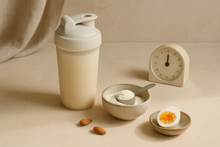
- Morning: a Bioteïne protein shake delivers 25 to 30g of protein for under 200 kcal. A practical choice for breakfast, or if morning calorie creep is an issue.
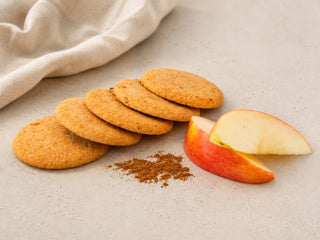
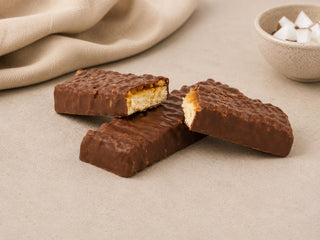
- Between meals: Bioteïne protein bars and protein biscuits contain 15 to 20g of protein per portion with a predictable calorie count. This replaces uncontrolled snacking.
- Main meals: Bioteïne meal replacements are portion-controlled and help avoid the estimation errors that lead to calorie creep.
- Evening: Bioteïne snacks offer a controlled option for the moments when cravings hit hardest.
Want to know how to build this into a diet approach that works after a plateau? Take a look at the Bioteïne high-protein diet guide for a complete overview by phase. Or take the phase test to work out which phase you're in and which approach suits it.
Frequently asked questions
How long does a weight loss plateau typically last?
Most plateaus last 2 to 6 weeks if you don't change anything. With targeted adjustments, such as increasing protein or taking a diet break, you can break through in 7 to 14 days. Track weekly averages for at least 3 weeks before drawing any conclusions.
How much protein do I need to break a plateau?
The scientifically supported range is 1.6 to 2.2g of protein per kg of body weight per day. For someone weighing 70 kg, that's 112 to 154g of protein a day. Spread this across 3 to 5 meals of at least 20g each for optimal muscle protein synthesis.
Can I break a plateau without exercising?
Yes. Exercise speeds up the process, but it isn't the primary variable. Diet, protein intake, sleep and calorie balance all have a greater impact on a plateau than extra training. A step count target of 8,000 to 10,000 steps a day already increases your NEAT without any formal exercise.
What exactly is a refeed day?
A refeed day is 24 hours of eating at your maintenance calories, with a higher carbohydrate intake and protein kept the same. The aim is to temporarily raise leptin and interrupt metabolic adaptation. Your scale weight will temporarily rise by 400 to 800g, but this is glycogen, not fat.
Why am I not losing weight even though I'm eating less than my TDEE?
The three most common reasons: your TDEE has dropped as a result of weight loss and your old calculation is out of date, you're underestimating your calories (calorie creep), or you're experiencing temporary fluid retention. Weigh your food accurately for 5 days and recalculate your TDEE based on your current weight.
Is a weight loss plateau a sign I should stop dieting?
No. A plateau is a normal physiological adaptation, not a signal to give up. It is a signal to review your approach, though. Look at the 7 causes in the table above and address whichever factor is most likely to apply to your situation.
Does drinking more water help break a plateau?
Drinking water helps indirectly. Adequate hydration prevents apparent weight stalls caused by dehydration and supports kidney function when protein intake is high. Its direct effect on fat mobilisation is limited. Aim for 1.5 to 2.5 litres a day as a baseline, more if you're exercising intensely.
When should I see a doctor about a weight loss plateau?
See your GP if you've made no progress for more than 6 weeks despite a demonstrable calorie deficit and adequate protein intake. Ask for your thyroid function (TSH, fT4), fasting glucose and HbA1c to be checked. This rules out medical causes before you make any further dietary adjustments.