




The short answer: why is losing weight harder during the menopause?
During the menopause, oestrogen drops significantly, which lowers your basal metabolic rate by an average of 200 to 300 kcal per day, speeds up muscle loss and reduces insulin sensitivity. Together, these changes make weight gain easier and weight loss harder, even if your eating habits haven't changed at all.
The biology: what's happening hormonally
Losing weight during the menopause isn't about willpower. It's biology. Understanding exactly what's changing allows you to take a more targeted approach.
Oestrogen and progesterone
From perimenopause onwards (around age 47 on average), oestrogen and progesterone start to fluctuate before eventually dropping sharply. Oestrogen plays a direct role in fat distribution: at higher levels, fat tends to be stored on the hips and thighs. As levels fall, storage shifts towards the abdomen, known as visceral fat. Visceral fat is more metabolically active than fat stored under the skin and raises the risk of insulin resistance, cardiovascular disease and chronic low-grade inflammation.
Progesterone has a diuretic effect. When it declines, the body retains more fluid. For many women, this feels like weight gain, even when fat mass hasn't actually increased.
Cortisol
The hormonal imbalance of the menopause increases sensitivity to cortisol, the stress hormone. Chronically elevated cortisol encourages fat storage around the midsection and increases appetite, particularly for carbohydrate-rich and fatty foods. Sleep disruption, common during the menopause, only amplifies this effect.
Ghrelin and leptin
Ghrelin is the hunger hormone, leptin the satiety hormone. Research published in Menopause: The Journal of The Menopause Society shows that the balance between these hormones shifts during the postmenopausal years: ghrelin activity increases relatively, meaning the feeling of fullness arrives later. In practical terms, you eat more before you feel satisfied.
Insulin sensitivity
Oestrogen has a protective effect on the insulin sensitivity of cells. As oestrogen levels fall, muscle cells respond less effectively to insulin. Glucose is taken up less efficiently by muscle tissue and is more often stored as fat instead. This makes managing carbohydrate intake more relevant during the menopause than in earlier life stages.
Why "just eating less" backfires
The instinctive response to weight gain is to cut calories. During the menopause, that's an incomplete strategy, and sometimes a counterproductive one.
From your 40s onwards, without targeted strength training and sufficient protein intake, you lose an average of 1 to 2% of your muscle mass every year, a process known as sarcopenia. Muscle is the most metabolically active tissue in your body: 1 kg of muscle burns roughly 13 kcal more per day at rest than the same amount of fat. Lose 5 kg of muscle mass over a decade, which is realistic without intervention, and your basal metabolic rate drops by around 65 kcal a day. Add that to the hormone-driven reduction of 200 to 300 kcal, and you've got a structural shortfall in your energy balance.
A heavily calorie-restricted diet without adequate protein accelerates this process. When energy is scarce, your body prefers to break down muscle, especially if protein intake is too low. The result: the number on the scale drops, but your body fat percentage rises relatively. And once calorie restriction stops, you regain the weight faster than you rebuild the muscle. That's the classic yo-yo effect, and it becomes more damaging with every cycle.
Getting enough protein (1.5 to 2.2 g per kg of body weight per day) is the most evidence-based way to protect muscle mass during a calorie deficit. This is also the foundation of the Bioteïne high-protein diet guide, which covers the role of protein at every stage of your lifestyle in detail.
Table: how much protein per day during the menopause?
The general recommendation from nutrition bodies for adults sits around 0.83 g of protein per kg. For women in the menopause who want to preserve muscle mass or lose weight, this simply isn't enough. The British Dietetic Association (BDA) and recent research recommend 1.2 to 2.2 g per kg for this group, depending on activity level.
| Age | Weight | Activity level | Recommended protein per day |
|---|---|---|---|
| 45-55 years | 65 kg | Little to no exercise | 98 to 110 g |
| 45-55 years | 65 kg | Strength training 2-3x per week | 110 to 130 g |
| 45-55 years | 80 kg | Little to no exercise | 120 to 136 g |
| 45-55 years | 80 kg | Strength training 2-3x per week | 136 to 160 g |
| 55-65 years | 70 kg | Little to no exercise | 105 to 120 g |
| 55-65 years | 70 kg | Strength training 2-3x per week | 120 to 154 g |
Source: calculations based on 1.5 to 2.2 g per kg of body weight, in line with BDA guidance and research published by the National Institutes of Health (NIH) on protein intake in postmenopausal women.
The 5 most important dietary changes during the menopause
1. Raise your protein intake to at least 1.5 g per kg
This is the single most direct intervention, backed by the strongest evidence. Sufficient protein protects muscle mass, boosts the thermic effect of food (protein takes more energy for the body to digest than carbohydrates or fats) and keeps you feeling fuller for longer. Spread your intake across 3 to 4 meals of at least 25 to 30 g of protein each for optimal muscle protein synthesis.
2. Strength train 2 to 3 times a week
Protein alone isn't enough. Muscle only grows and is maintained when there's a training stimulus behind it. Resistance training, whether with weights, machines or your own bodyweight, also improves insulin sensitivity, which is directly relevant given the hormonal shifts taking place. Two 45-minute sessions a week are already enough to make a meaningful difference.
3. Keep an eye on magnesium and vitamin D
Vitamin D deficiency is strongly linked to reduced muscle function and weight gain. Nutrition guidance advises women over 50 to take a daily supplement of 10 mcg of vitamin D. Magnesium supports sleep quality, muscle recovery and insulin regulation. If in doubt, ask your GP to check your levels.
4. Cut back on fast-digesting carbohydrates
Reduced insulin sensitivity means your body processes glucose less efficiently. Opt for complex carbohydrates (wholegrains, pulses, vegetables) over refined ones (white bread, sugar, processed snacks). This isn't a low-carb diet. It's about quality and timing, not radical elimination.
5. Make sleep hygiene a priority
Poor sleep raises cortisol, disrupts ghrelin and leptin, and saps motivation to be active. Practical steps include: fixed sleep and wake times, no screens for an hour before bed, a cool bedroom (which also makes hot flushes more bearable), and cutting back on alcohol, which significantly disrupts sleep architecture.
Meal plan: an example of a menopause-friendly day at 1500 kcal and 110 g protein
This plan is illustrative only, not personal dietary advice. A registered dietitian can put together a plan tailored to your specific situation.
| Time | What | kcal | Protein (g) |
|---|---|---|---|
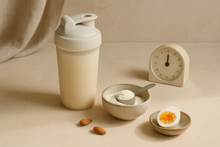
| Breakfast (08:00) | Bioteïne protein shake + 150 g Greek yoghurt + a handful of blueberries | 380 | 38 |
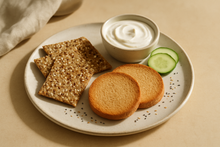
| Lunch (12:30) | 2 wholegrain crackers + 125 g cottage cheese + cucumber + 2 eggs | 390 | 32 |
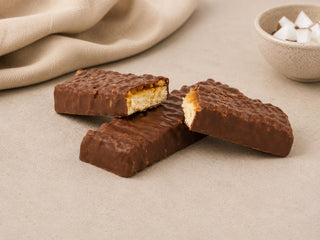
| Snack (15:30) | Bioteïne protein bar | 190 | 20 |
| Dinner (18:30) | 150 g cod + 200 g roasted vegetables + 75 g (dry weight) quinoa | 420 | 38 |
| Evening (20:30) | 200 ml unsweetened almond milk + a small handful of nuts | 120 | 4 |
| Total | 1500 kcal | 132 g |
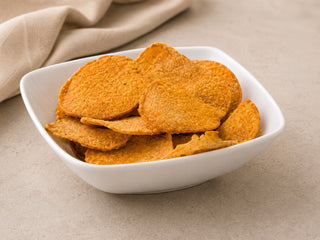
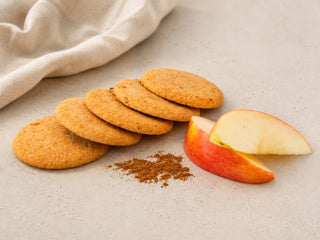
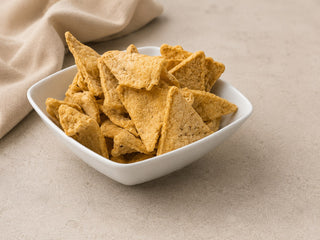
The Bioteïne protein shakes and protein bars are specifically formulated to concentrate protein without adding a heavy calorie load. That makes them genuinely practical within a calorie-controlled plan like this one.
What doesn't help (and costs money)
The market for "menopause solutions" is large and poorly regulated. A few widely purchased products and approaches with no proven effect on menopausal weight:
- Detox teas and cleanse programmes: there's no mechanism by which these reduce visceral fat or influence hormones. The liver and kidneys handle detoxification perfectly well without supplements.
- Extremely low-fat diets: fat is essential for hormone production. Too little fat intake (under 20% of calories) can further destabilise your hormonal balance.
- Shakes-only diets: these produce temporary weight loss without preserving muscle mass. Once you return to normal eating, you regain the weight faster than the muscle. Shakes are a supplement to a varied diet, not a replacement for it.
- Phyto-oestrogens as hormone replacements: products based on soy isoflavones are sometimes marketed as "natural HRT". Their effectiveness for weight management or vasomotor symptoms isn't convincingly supported by evidence.
When to consider hormone replacement therapy (HRT)?
Hormone replacement therapy (HRT) replaces the declining levels of oestrogen and/or progesterone. It isn't a primary weight management tool, but it can offer indirect benefits: better sleep, less cortisol activation, preserved muscle mass and improved insulin sensitivity.
Possible benefits of HRT:
- Reduced hot flushes and night sweats (which improves sleep)
- Protection of bone density
- A potentially favourable effect on fat distribution (less visceral fat)
Possible drawbacks and risks:
- Increased risk of certain types of breast cancer with long-term use (depending on the type of HRT and duration)
- Increased risk of blood clots with oral administration
- Not suitable for everyone, including those with a history of hormone-dependent tumours
HRT is a medical decision. Always discuss it with your GP or gynaecologist based on your personal health history. This article is not a substitute for medical advice.
How Bioteïne supports women through the menopause
Bioteïne works with a 4-phase system tailored to different stages of weight management. For women in the menopause, two phases in particular stand out.
Phase 1 (the intensive phase) is a good fit if you want to start with a structured approach: high protein, low calorie, supported by protein shakes and meal replacements. This helps you see results quickly in the first few weeks while protecting muscle mass through a high protein intake.
Phase 4 (the maintenance phase) is built for the long term: keeping your weight stable with an eating pattern you can genuinely sustain. This is where the Bioteïne protein bars and other products in the range fit in as a permanent part of your daily diet, rather than a temporary measure.
Not sure which phase suits you? The Bioteïne phase test gives you a concrete starting point based on a few short questions. It's the quickest way to begin without any guesswork.
Disclaimer: the information in this article is intended for general guidance and does not replace advice from a GP, gynaecologist or dietitian. If you have concerns or questions about your specific situation, please consult a healthcare professional.
Frequently asked questions
How much weight do women typically gain during the menopause?
Women gain an average of 1 to 3 kg during perimenopause and menopause, though this varies considerably from person to person. Fat distribution shifts more than the absolute weight does: more abdominal fat, less on the hips and thighs. That shift has a bigger metabolic impact than the scale suggests.
Is it possible to lose weight during the menopause without medication or hormone therapy?
Yes. Sufficient protein intake (1.5 to 2.2 g per kg), resistance training two to three times a week and a modest calorie deficit are effective without medication. It requires more consistency than before the menopause, but the same principles still work as hormone levels decline.
Why am I not losing weight even though I'm eating the same as before?
Your basal metabolic rate drops during the menopause due to muscle loss and hormonal changes. What kept you at a stable weight in your mid-30s can already be a surplus of 200 to 300 kcal a day by your 50s. Your eating habits haven't changed, but your energy needs have.
Does intermittent fasting help with menopause-related weight gain?
Intermittent fasting can help by reducing total calorie intake, but it isn't superior to other forms of calorie restriction as long as protein intake stays consistent. Some women experience increased cortisol activation from prolonged fasting, which can work against you. Discuss this with a dietitian.
Which supplements are worth taking during the menopause?
Vitamin D (10 mcg a day for those over 50) and magnesium have the strongest evidence behind them. Calcium is relevant for bone maintenance. Beyond that, the evidence is weak. A varied, protein-rich diet has far more impact than a stack of supplements without a solid dietary foundation.
How many calories a day should I eat to lose weight during the menopause?
A common starting point is your estimated maintenance calories minus 300 to 500 kcal a day. For most women going through the menopause, that works out to between 1400 and 1700 kcal, depending on height, weight and activity level. Don't go below 1200 kcal, as this significantly increases muscle loss.
What's the difference between perimenopause and menopause when it comes to weight loss?
During perimenopause, hormone levels fluctuate considerably, which makes appetite and energy balance unpredictable. After menopause (12 months without a period), levels stabilise at a lower baseline. Weight gain can happen in either phase, but the hormonal dynamics differ. The approach, protein, training and sleep, remains similar across both.
Can you use a protein shake as a meal replacement during the menopause?
A protein shake can partially replace a meal if it contains enough protein (at least 25 g) and is supplemented with fibre, fats and micronutrients. Relying on shakes as a complete diet isn't sustainable long term. Use them to complement a varied diet, not to replace it.