
Short answer: yes, you can lose weight without exercising
Weight loss comes down to a calorie deficit: you burn more energy than you take in. Exercise speeds up that process, but it isn't compulsory. Nutrition determines 80 to 85 per cent of your result. If you don't exercise, though, you do need to pay closer attention to your protein intake, because without training you'll lose muscle mass alongside fat more quickly.
That's the real risk. It isn't that losing weight without exercise "doesn't work", it's that you risk losing the wrong things. A falling number on the scales tells you nothing about what's actually disappearing. Fat or muscle: that distinction shapes how you look, how you feel, and how easily you keep the weight off afterwards.
A high-protein diet is the best-evidenced way to guard against this. More on that shortly. First, the basics.
Why nutrition accounts for 80 per cent of the result
Say you burn 2,000 kcal a day with a sedentary lifestyle. To lose weight you need a deficit of around 500 kcal a day, which works out to roughly 0.5 kg of fat loss a week. You can create that deficit in two ways: moving more, or eating less. In practice, movement is the slow route.
An hour of brisk walking burns roughly 250 to 300 kcal. Half an hour of cycling, perhaps 200 kcal. Those figures look decent until you realise that one extra slice of bread with peanut butter cancels out 200 kcal in seconds. Nutrition simply carries more weight, quite literally.
That's not to say movement is worthless. The Dutch Nutrition Centre (Voedingscentrum) points out that enough physical activity brings health benefits regardless of weight. But if you're not exercising today, or simply can't, you don't need a diet excuse for that. Your calorie balance is primarily managed on your plate.
What counts as "nutrition" and what doesn't
Many people underestimate liquid calories. Fizzy drinks, fruit juice, alcohol, syrup-laden coffee shop drinks: these are calories with no real satiety effect. They don't register in your mind, but they certainly register in your deficit. Cut these out and you'll often find a passive deficit of 200 to 400 kcal a day without ever feeling hungry.
Where to find your deficit: an overview
The table below sets out three strategies for a daily deficit of 500 kcal, without taking a single extra step.
| Adjustment | Estimated saving (kcal/day) | Practical example |
|---|---|---|
| Swap fizzy drinks and juice for water | 150 to 300 | Cutting out 2 glasses of fizzy drink |
| Halve white carbs at dinner | 100 to 200 | Half a plate of pasta swapped for vegetables |
| Swap the evening snack for a protein-rich option | 100 to 250 | Crisps (300 kcal) for cottage cheese or a protein bar (80 to 150 kcal) |
| Protein-rich meals boost satiety | 50 to 150 indirect | Less snacking thanks to feeling fuller for longer |
| Limit alcohol to 0 or 1 unit | 100 to 300 | Cutting out 2 glasses of wine |
Combine three of these changes and you'll comfortably reach a deficit of 400 to 500 kcal a day, no gym required.
Keeping protein high without exercise: why it's essential
In a calorie deficit, you always lose a mix of fat and muscle. The ratio depends on two factors: the size of the deficit and your protein intake. Eat too little protein and you'll lose a disproportionate amount of muscle. In the short term that feels fine, since the scales are moving, but it's bad news metabolically.
Muscle tissue burns more energy at rest than fat tissue. Less muscle means a lower resting metabolic rate. And a lower resting metabolic rate makes it progressively harder to maintain your weight once the diet ends. This pattern is documented in the literature as one of the mechanisms behind the so-called yo-yo effect.
The British Dietetic Association (BDA) recommends that adults on a weight-loss programme consume 1.2 to 1.6 grams of protein per kilogram of body weight per day. For someone weighing 80 kg, that's 96 to 128 grams of protein a day, considerably more than most people currently eat.
How much protein do you get from everyday foods?
| Food source | Portion | Protein (g) | Calories (kcal) |
|---|---|---|---|
| Chicken breast (grilled) | 150 g | 42 | 165 |
| Greek yoghurt (0% fat) | 200 g | 20 | 120 |
| Cottage cheese | 150 g | 18 | 100 |
| Eggs (2) | 120 g | 12 | 150 |
| Bioteïne protein shake | 1 serving | 27 to 32 | 130 to 170 |
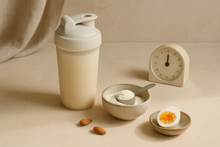
A protein shake isn't a substitute for proper meals, but it's an efficient way to hit your daily protein target without blowing your calorie budget. The Bioteïne protein shakes provide 27 to 32 grams of protein per serving at 130 to 170 kcal, a favourable ratio if you're on a calorie-controlled diet. Read more about the role of protein in the high-protein diet guide.
NEAT: the movement you're already doing
NEAT stands for Non-Exercise Activity Thermogenesis. It's the energy you burn doing everything that isn't formal exercise: climbing stairs, shopping, standing at a desk, doing laundry, cycling to the supermarket. For people with a sedentary job and little exercise, NEAT accounts for 15 to 30 per cent of total energy expenditure.
That's genuinely good news. You don't need a training schedule to increase your NEAT. Get up from your chair more often. Take the stairs. Walk to do your shopping. Pace while you're on the phone. Research from 2018 (Levine et al., Mayo Clinic) found that NEAT differences between individuals can amount to as much as 2,000 kcal a day, no small margin.
If you're "losing weight without exercise" but letting your NEAT drop at the same time, you're quietly sabotaging yourself. Deliberately boosting NEAT isn't exercise, but it certainly has an effect.
A realistic pace: what to expect
A daily deficit of 500 kcal theoretically results in 0.5 kg of fat loss a week. In practice it's rarely quite this linear. The first few weeks often show a bigger drop due to water loss, particularly if you're cutting carbohydrates. After that, it settles down.
A realistic target for people who don't exercise is 0.3 to 0.5 kg a week. You can go faster, but a deficit above 750 kcal a day significantly raises the risk of muscle loss, especially without strength training to counterbalance it.
Over 12 weeks, 4 to 6 kg of fat loss is a sensible goal. Anyone expecting to lose 8 kg in 4 weeks without exercising is either setting themselves up for disappointment or losing the wrong kind of weight.
When to consult a doctor or dietitian
If your starting weight is above 100 kg, if you have a medical condition such as type 2 diabetes or a thyroid disorder, or if you've experienced unexplained weight loss before, speak to a healthcare professional first. Starting a diet unsupervised in these situations is simply too risky.
The risk of muscle loss and how protein counters it
Muscle loss during a calorie deficit isn't a hypothetical risk, it's what happens by default if you don't take steps to prevent it. Studies on Very Low Calorie Diets (VLCDs) show that 25 to 40 per cent of total weight lost can come from lean body mass when protein intake is low. That's substantial.
Protein counters this through three mechanisms. First, protein has a high thermic effect of food (TEF): your body burns 25 to 30 per cent of the calories from protein simply digesting it, compared with 5 to 10 per cent for carbohydrates. Second, protein stimulates muscle protein synthesis even without training, though the effect is smaller than when combined with exercise. Third, protein gives a stronger, longer-lasting satiety signal via leptin and GLP-1, making you less likely to overeat afterwards.
In practice, this means spreading your protein intake across 3 to 4 meals a day rather than loading it all into one. Research by Norton and Layman (2006, Journal of Nutrition) found that a threshold of around 30 grams of protein per meal is needed for optimal muscle protein synthesis. One large protein-rich meal a day simply isn't enough.
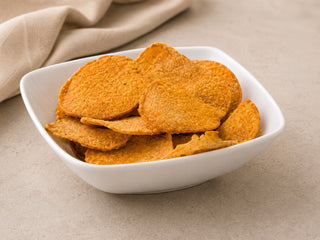
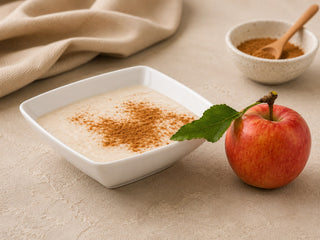
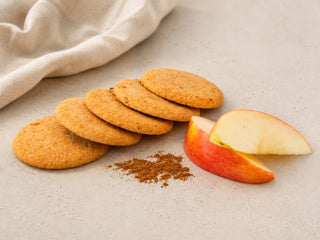
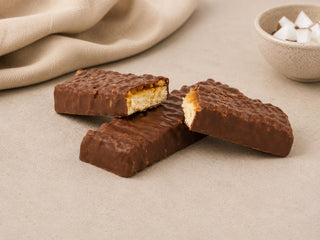
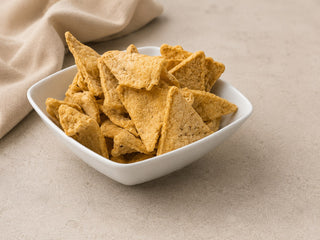
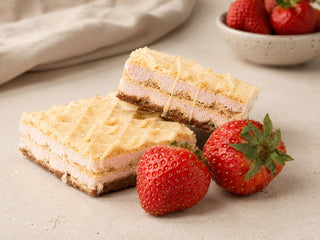
For anyone who finds this spread hard to achieve, protein bars, protein biscuits or protein snacks from Bioteïne make a useful functional addition between meals. They're not a substitute for a proper eating pattern, but a way to hit your protein target without racking up extra calories.
The Bioteïne 4-phase system: structure without guesswork
Losing weight without exercise works best with a clear structure. Not because intuitive eating is wrong, but because without a plan, people systematically eat too little protein and take in too many calories through snacks and drinks.
The Bioteïne 4-phase system builds from strict to flexible. In the early phases, the focus is on kick-starting fat burning and protecting muscle mass through a high protein intake. Solid foods are then reintroduced gradually, step by step. The system is designed with the metabolism of people who exercise little or not at all in mind.
Not sure which phase suits you? The phase test helps you work that out in under 2 minutes, based on your current weight, desired result and lifestyle. The Bioteïne starter pack is also a good place to begin, covering the first phase of the programme in full, including the relevant products.
If you'd rather use protein-rich ready meals as a base, you can combine these with regular meals for a hybrid approach. Flexible, but still structured around your protein target.
Frequently asked questions
Can you really lose weight without exercising?
Yes. Weight loss requires a calorie deficit, not exercise. Nutrition accounts for 80 to 85 per cent of that deficit. Exercise helps, but it isn't essential. If you don't exercise, though, you do need to pay extra attention to your protein intake to preserve muscle mass while losing weight.
How much can you lose without exercising?
With a consistent deficit of 500 kcal a day, you'll lose 0.3 to 0.5 kg a week. Over 12 weeks, 4 to 6 kg of fat loss is realistic. More is possible, but it raises the risk of muscle loss and is harder to sustain.
How much protein do you need if you don't exercise?
The BDA recommends 1.2 to 1.6 grams of protein per kilogram of body weight during a weight-loss programme. For someone weighing 75 kg, that's 90 to 120 grams a day. Spreading this across 3 to 4 meals of at least 30 grams each is more effective than one large hit.
What is NEAT and why does it matter when losing weight without exercise?
NEAT stands for Non-Exercise Activity Thermogenesis: the energy you burn outside of formal exercise, such as walking, climbing stairs and standing. NEAT can account for 15 to 30 per cent of your total energy expenditure. Deliberately increasing it speeds up weight loss without needing a training schedule.
What's the difference between fat loss and muscle loss when dieting?
Fat loss reduces your body fat percentage and improves health markers. Muscle loss lowers your resting metabolic rate, making it easier to regain weight later. With too little protein, 25 to 40 per cent of weight lost can be muscle mass. That's exactly what you want to avoid.
Is a protein shake useful if you don't exercise?
Yes, provided you use it to hit your daily protein target without exceeding your calorie budget. A protein shake with 27 to 32 grams of protein at 130 to 170 kcal is more efficient than many everyday snacks. It doesn't replace a meal, but it does top up your protein intake.
How quickly do you see results when losing weight without exercise?
In the first week you'll often see a bigger drop due to water loss, up to 1 to 2 kg. After that, it settles at 0.3 to 0.5 kg a week with a solid calorie deficit. After 4 weeks, 1.5 to 2 kg of fat loss is a realistic and sustainable result.
Where should I start if I want to lose weight without exercising?
Start by mapping out your current eating pattern: calories, protein intake and liquid calories. Then use the Bioteïne phase test to work out which approach suits you. The high-protein diet guide provides a solid foundation for the nutritional side of your plan.