
What Phase 2 (Combi) is and why it works
Phase 2 is the combination phase of the Bioteïne 4-phase system: you combine protein replacements with one or two home-cooked, protein-rich meals a day. The result is a daily protein intake of at least 80-100 grams alongside a calorie intake of 800-1000 kcal. This way you preserve fat-free mass while fat loss continues.
After Phase 1, the strict start-up phase, many people reach a point where they need more structure in everyday life without wanting to give up their rate of weight loss. We understand that. You've worked hard and stayed disciplined for weeks, it's going well, but the world around you is asking for more flexibility: a work dinner, cooking for the family, a birthday. Phase 2 is the answer to that tension.
But flexibility doesn't mean freedom without limits. Anyone who slips into loose habits during Phase 2 can undo in three days what took three weeks to build. This article explains exactly how to strike that balance: what you can eat, how much, when, and what's best avoided altogether.
When you're ready for Phase 2
Moving from Phase 1 to Phase 2 isn't something you decide on a whim. There are measurable criteria. If you're following the 4-phase system, you move on to Phase 2 when:
- You've completed at least 2 weeks of Phase 1 without interruption
- Your weight loss has been steady, averaging 0.5-1 kg per week
- You no longer feel significant hunger on 4-5 protein replacements a day
- Your blood values (where applicable) are stable
Not sure whether the timing is right? The phase test gives you clear advice in five minutes, based on your current situation. Use it. There's no benefit in switching too early: in Phase 2 you eat more calories, and if the foundations of Phase 1 aren't fully bedded in yet, you'll only slow your own progress.
The macronutrients in Phase 2: the exact figures
Phase 2 revolves around a precise macronutrient profile. Straying from these figures, even by 150-200 kcal a day, can interrupt ketosis or significantly slow your rate of fat burning.
| Nutrient | Phase 1 (reference) | Phase 2 (target) |
|---|---|---|
| Protein | 70-90 g/day | 80-110 g/day |
| Carbohydrates | <30 g/day | 30-50 g/day |
| Fat | <30 g/day | 30-45 g/day |
| Calories | 600-800 kcal/day | 800-1000 kcal/day |
| Protein replacements | 4-5 per day | 2-3 per day |
| Home-cooked meals | 0 | 1-2 per day |
The rise in carbohydrates from under 30 grams to 30-50 grams a day is deliberate and modest. Research shows that a carbohydrate intake below 50 grams a day maintains a mild ketogenic state in most people, which supports fat burning (Dashti et al., 2004, Journal of Nutritional Sciences). Go consistently above that 50-gram mark and you leave that zone behind. That's not where you want to be yet in Phase 2.
What you eat in Phase 2: the permitted foods
Phase 2 keeps much of the structure from Phase 1 intact. The difference lies in the meals you prepare yourself. Those meals aren't a free-for-all: they follow a strict pattern of protein-rich foods combined with non-starchy vegetables.
Protein replacements: keep using them
2-3 Bioteïne products a day form the backbone of Phase 2. They deliver a guaranteed amount of protein with a predictable macro profile. Take a look at the starter packs if you're still working out which products suit you. Popular choices in Phase 2 include:
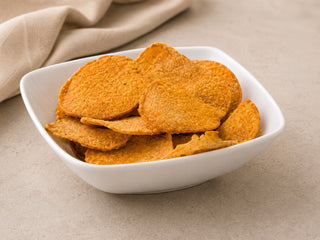
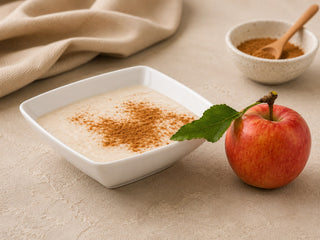
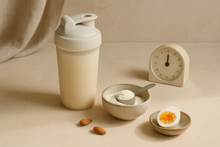
- Protein shakes: quick, 20-25 g protein per serving, good as breakfast
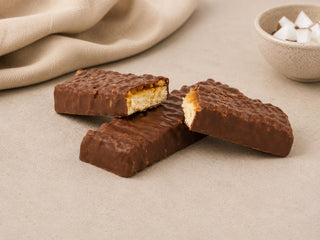
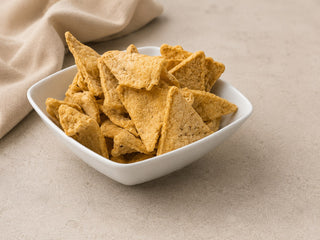
- Protein bars: portable, good as a snack or something to grab at work
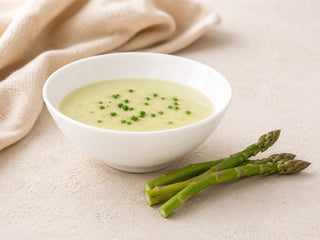
- Protein meals: a warm option, ideal as a lunch replacement
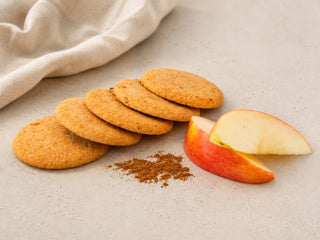
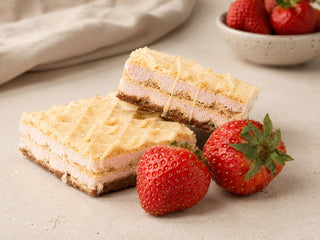
- Protein biscuits: something to chew on for those who need it
The home-cooked meal: the rules
One, sometimes two, home-cooked meals a day. But there are clear rules to follow:
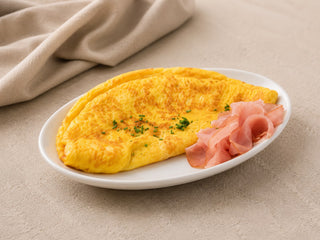
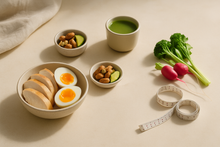
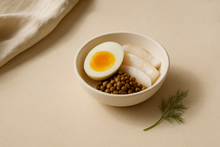
- Choose lean protein sources. Chicken breast, turkey, cod, haddock, prawns, tuna in water, egg. No fatty cuts of meat, no cheese, no full-fat cottage cheese in large amounts.
- Vegetables form the base. Non-starchy vegetables are allowed in near-unlimited amounts: broccoli, courgette, spinach, lettuce, cucumber, peppers, cauliflower. Avoid sweetcorn, peas, potato and beetroot: these contain too many carbohydrates.
- Cooking fat: no more than 1 teaspoon. Olive oil or coconut oil, no more than 5 grams per meal. Preferably cook in water or stock.
- Sauces and marinades: no. Every sauce, even a "light" version, adds carbohydrates and calories you won't see. Use herbs, spices, lemon or vinegar instead.
A practical example: 120 grams of chicken breast (27 g protein, 1.3 g fat, 0 g carbohydrates, 130 kcal) with 200 grams of steamed broccoli (5 g protein, 0.5 g fat, 7 g carbohydrates, 54 kcal). Total for that meal: 32 g protein, 184 kcal. That's exactly what Phase 2 asks of a home-cooked meal.
A day in Phase 2: a sample daily schedule
Theory helps, but a concrete schedule helps even more. Below is a representative day in Phase 2 with exact macro figures.
| Time | What | Protein | kcal |
|---|---|---|---|
| 07:30 Breakfast | Bioteïne protein shake | 22 g | 160 kcal |
| 10:30 Snack | Bioteïne protein bar | 20 g | 185 kcal |
| 13:00 Lunch | Bioteïne protein meal (warm soup) | 18 g | 140 kcal |
| 16:00 Snack | Bioteïne protein biscuit | 10 g | 95 kcal |
| 19:00 Dinner | 130 g cod + 250 g courgette | 26 g | 195 kcal |
| Total | 96 g | 775 kcal |
This schedule sits comfortably within the Phase 2 window: protein well above 80 grams, calories under 800 kcal. On busy days, swap dinner for a second protein meal. That's not a shortfall, that's phase discipline.
The most common mistakes in Phase 2
Phase 2 gives you more room to manoeuvre than Phase 1. That's exactly why people slip up. These are the mistakes we see most often, along with their consequences.
Mistake 1: stretching the freedom too far
A home-cooked meal turns into "a normal meal". A splash of oil creeps in, then a tablespoon, then a sauce. Before you know it you're at 1400 kcal without realising. Weigh your ingredients during the first two weeks of Phase 2. Not forever, but long enough to get a realistic sense of what 120 grams of chicken actually looks like.
Mistake 2: too few protein replacements
Some people cut back too quickly from three to one protein replacement a day because they feel "full enough". But a single home-cooked meal delivers an average of 25-30 g protein. That's not enough. You need the protein replacements to reach at least 80 grams of protein. Don't skip them.
Mistake 3: alcohol in small amounts
A glass of dry wine contains 85-90 kcal and trace carbohydrates. That seems acceptable. The problem is that alcohol suppresses fat oxidation immediately: your body processes alcohol as a priority over fat. Even one glass an evening can slow fat loss by 20-30% for 12-24 hours. Phase 2 isn't the moment to compromise here.
Mistake 4: the weekend problem
Strict Monday to Friday, a little looser at the weekend. Sounds familiar. But two days with an extra 200 kcal a day means 400 extra kcal a week. Over a month that's nearly 1800 kcal, roughly half a pound of fat that won't shift. Keep the structure going at weekends too, especially during the first four weeks of Phase 2.
Phase 2 and physical activity: what works and what doesn't
Exercise in Phase 2 is good, but it needs adjusting. At a calorie intake of 800-1000 kcal a day, intensive cardio or strength training more than three times a week is too taxing for proper recovery. The British Dietetic Association recommends light to moderate activity for calorie-restricted diets: walking, cycling, yoga, swimming (BDA: Very Low Calorie Diets).
Concrete guidance for Phase 2:
- Daily walking: 30-45 minutes at a moderate pace. This boosts fat oxidation without damaging muscle.
- Strength training: a maximum of twice a week, light weights, no maximal effort. The goal is muscle preservation, not muscle building.
- Avoid: HIIT sessions, marathon running, heavy exercise classes. The energy demand exceeds what you have available.
Feeling sluggish or light-headed during exercise in Phase 2? That's a sign you're short on electrolytes or fluids. Drink at least 2 litres of water a day, and add a pinch of salt to your food if you're exercising a lot.
Plateau in Phase 2: what to do when the weight stalls
A plateau in Phase 2 is normal and statistically to be expected. After 3-4 weeks of steady loss, the metabolism shifts down a gear. That's not failure, it's physiology. The Dutch Nutrition Centre (Voedingscentrum) confirms that metabolism adapts during prolonged calorie restriction (Voedingscentrum: calorie requirements).
Four steps to take when you hit a plateau:
- Check your actual intake. Weigh everything for three days. In 80% of cases, people find they're eating more than they thought.
- Temporarily raise your protein intake. Go up to 110-120 g protein a day by adding an extra protein replacement. Protein has a high thermic effect (20-30% of the calories from protein are spent on digestion).
- Vary your protein replacements. Variety in flavour and texture prevents psychological fatigue and helps you stay consistent.
- Consider a temporary return to Phase 1. Two to three days of strict Phase 1 can reset the metabolism and deepen ketosis. Then carry on with Phase 2.
Moving on to Phase 3: when and how
Phase 2 isn't a final destination, it's a bridge. Stay in Phase 2 until you're within 5-10 kg of your target weight, or until you've shown four consecutive weeks of steady weight loss at 0.5 kg per week. At that point, moving on to Phase 3 makes sense.
Take a look at the full high-protein diet guide for an overview of all the phases and their specific goals. Want to know if you're ready for the next step? The phase test helps you work that out in five minutes.
Phase 3 adds more home-cooked meals and gradually raises your calorie intake to 1000-1200 kcal. Protein replacements are reduced further, but never dropped entirely in Phase 3. That's a common misconception: protein replacements aren't a temporary aid but a permanent part of the approach until your target weight is reached and stabilised.
Frequently asked questions
How many protein replacements do I use per day in Phase 2?
In Phase 2 you use 2 to 3 protein replacements a day, supplemented with 1 to 2 home-cooked meals. This ensures a guaranteed protein intake of at least 80 grams a day and a calorie intake of 800 to 1000 kcal. Don't skip them, even if you feel full.
Can I eat bread or pasta in Phase 2?
No. Bread, pasta, rice and other starchy carbohydrates don't fit into Phase 2. They push your carbohydrate intake above 50 grams a day, which interrupts ketosis and significantly slows your fat-burning rate. Choose non-starchy vegetables as your carbohydrate source instead.
How long does Phase 2 typically last?
The duration varies from person to person and depends on starting weight, target weight and the pace of fat loss. On average, Phase 2 lasts four to twelve weeks. You move on to Phase 3 once you're within 5 to 10 kilograms of your target weight and have achieved four weeks of steady loss.
Can I exercise during Phase 2?
Yes, but in moderation. At a daily intake of 800 to 1000 kcal, intensive training is too demanding. Daily walking of 30 to 45 minutes and light strength training up to twice a week are suitable. Intensive cardio or HIIT is best avoided in Phase 2 due to the risk of muscle loss and exhaustion.
What do I do if my weight doesn't drop for a week?
First check your actual intake by weighing everything for three days. Temporarily add an extra protein replacement to raise protein intake to 110 grams. A plateau after 3 to 4 weeks is physiologically normal. Consider going back to Phase 1 for two to three days to reset your metabolism.
Can I combine Phase 2 with a social life?
Yes, but it takes some preparation. Have a protein replacement before a dinner out so your hunger is under control. At restaurants, choose grilled meat or fish with vegetables, no sauces, no bread. One exception meal every two weeks is realistic rather than a failure, but don't let it become a habit during the first four weeks.
How much weight loss is normal in Phase 2?
In Phase 2 you can expect 0.5 to 1 kilogram of fat loss a week when following the plan correctly. The pace is slightly slower than in Phase 1, since calorie intake is higher. A loss of less than 0.3 kilograms a week over two weeks is a sign to review your intake.
What's the difference between Phase 1 and Phase 2 in terms of eating pattern?
In Phase 1 you use only protein replacements, with no home-cooked meals. In Phase 2 you add one or two home-cooked meals a day made from lean protein sources and vegetables. Total calorie intake rises from 600-800 to 800-1000 kcal a day. Protein intake stays high throughout.