



The short answer: do protein shakes work for weight loss?
A protein shake can help you lose weight, but only when it replaces a meal rather than topping up what you already eat. The shake needs at least 20 grams of protein and should provide between 150 and 250 calories. Research shows an average of 3 to 5kg extra weight loss over three to six months compared with a standard calorie-controlled diet.
What does the research actually say?
Most claims about protein shakes come from influencers or brands with something to sell. So what do the independent sources say?
A 2018 Cochrane review, drawing on 23 randomised controlled trials, concluded that partial meal replacement with protein shakes leads to significantly greater weight loss than a standard calorie-restricted diet. The average difference sat between 2.4 and 5.9kg of extra loss after three to six months, depending on the study design. Participants swapped one or two meals a day for a standardised product with a fixed protein and calorie content.
The British Dietetic Association (BDA) states in its position statement that meal replacements can be effective as part of a supported approach, provided they comply with EU regulation 609/2013 and the user receives adequate guidance when transitioning back to regular food.
A meta-analysis published in the Journal of the American College of Nutrition (Heymsfield et al.) reviewed 29 studies and found that participants replacing one or two meals a day lost, on average, 2.5 times more weight than the control group after three months. Crucially, the effect largely disappeared for participants who drank the shake on top of their usual meals rather than instead of them.
The Dutch Nutrition Centre (Voedingscentrum) confirms that a higher protein intake helps sustain fullness for longer, and that meal replacement with proven products is a valid method for weight management, provided it's temporary and properly supervised.
How a shake works in your body
There's nothing mysterious about how a protein shake supports weight loss. It rests on three well-documented mechanisms.
Hormonal satiety
Protein triggers the release of satiety hormones, particularly cholecystokinin (CCK) and glucagon-like peptide 1 (GLP-1). Both send a signal to the brain that you've had enough to eat. At the same time, protein suppresses the production of ghrelin, the hunger hormone. This effect is stronger with protein than with carbohydrates or fats, even at a comparable calorie value. The practical upshot: you tend to eat 10 to 15 percent less at your next meal.
The thermic effect of protein
Your body burns energy digesting food, known as the thermic effect of food (TEF). For carbohydrates this sits at 5 to 10 percent of the calorie value. For fats, 0 to 3 percent. For protein, it's between 20 and 30 percent. In practice, of every 100 calories from protein, only 70 to 80 net calories remain for storage or use. This makes protein-rich products thermically more favourable than other macronutrients within a calorie-controlled diet.
Preserving muscle mass
In a calorie deficit, you lose more than just fat, you lose muscle too. That's unhelpful, since muscle raises your resting metabolic rate. Research shows that an intake of at least 1.2 grams of protein per kilogram of bodyweight per day significantly limits muscle loss whilst dieting. A shake containing 25 grams of protein makes a meaningful contribution to this daily target, particularly if you're replacing one or two protein-light meals a day.
For more background on protein targets by age group and activity level, see the Bioteïne high-protein diet guide.
Meal replacement versus top-up: a crucial distinction
This is the single most common misunderstanding when it comes to using protein shakes for weight loss.
A shake used as a meal replacement means the shake stands in for a whole meal. You eat less overall. You create a calorie deficit. That leads to weight loss.
A shake used as a top-up means you eat your normal meals and drink a shake alongside them. You add 200 to 350 calories on top. You increase your total intake. That leads to weight gain or a stall.
| Use | Effect on calorie intake | Effect on weight (average) |
|---|---|---|
| Replacing 1 meal/day | 300-500 fewer calories | -2 to -4kg over 3 months |
| Replacing 2 meals/day | 600-900 fewer calories | -4 to -6kg over 3 months |
| Added to normal diet | +200 to +350 more calories | +0.5 to +2kg over 3 months |
The Heymsfield et al. study found that 78 percent of participants who used the shake as a top-up saw no weight loss at all after three months. Among those replacing meals, that figure was just 12 percent.
What a good weight-loss shake should contain
Not every shake on the market is fit for purpose when it comes to weight loss. The formulation determines the outcome. Use the table below as a checklist.
| Ingredient / parameter | Minimum / ideal | What to avoid |
|---|---|---|
| Protein per serving | ≥ 20g | Products under 15g of protein |
| Calories per serving | 150 to 250 kcal | Shakes above 350 kcal (too high to replace a meal) |
| Carbohydrates per serving | < 15g | Added sugars listed as the first ingredient |
| Fibre per serving | ≥ 3g | Products with no added fibre |
| Fat per serving | 3 to 7g (unsaturated) | High saturated fat levels (> 3g per serving) |
| Artificial sweeteners | Avoid | Aspartame, acesulfame-K (effect on the gut microbiome) |
| Micronutrients | ≥ 30% NRV vitamins and minerals | No fortification when used as a meal replacement |
Products sold as meal replacements within the EU must comply with Regulation (EU) 609/2013, which sets minimum requirements for protein, energy, vitamins and minerals. Always check whether the label states "meal replacement" or "VLCD" (Very Low Calorie Diet). A standard sports nutrition protein shake doesn't automatically fall under this category.
Which protein types work best?
The type of protein in a shake affects absorption, its satiety effect, and how suitable it is for different users.
Whey protein
Whey is a fast-absorbing complete protein with a high biological value (BV: 104). It triggers a swift release of insulin and CCK after consumption. Well suited to a breakfast replacement or post-workout shake. Not suitable for those with lactose intolerance or a dairy protein allergy.
Casein
Casein absorbs slowly and delivers a longer-lasting sense of fullness. The stomach digests casein gradually over four to six hours. Well suited as a replacement for the evening meal, or whenever you need a shake to bridge a longer gap. Also dairy-derived, so the same restrictions as whey apply.
Plant-based protein (pea, rice, hemp)
Plant-based protein suits vegans and those with a dairy protein intolerance. Pea protein has a biological value of around 65, but combined with rice protein, the amino acid profile rises to a level comparable with whey. Absorption is slightly slower than whey, which can support longer-lasting fullness.
Soy protein
Soy is the only fully plant-based protein with a PDCAAS (Protein Digestibility Corrected Amino Acid Score) of 1.0. Suitable for vegans. Anyone with thyroid issues or undergoing hormone treatment should discuss this with a doctor first, due to the phyto-oestrogens involved.
| Protein type | Absorption speed | Suited to | Watch out for |
|---|---|---|---|
| Whey | Fast (1-2 hours) | Breakfast, post-workout | Lactose, dairy protein allergy |
| Casein | Slow (4-6 hours) | Evening meal, bridging gaps | Lactose, dairy protein allergy |
| Pea + rice | Moderate (2-3 hours) | Vegans, lactose-intolerant | Check the amino acid profile |
| Soy | Moderate (2-3 hours) | Vegans | Hormone treatment, thyroid conditions |
How many shakes a day?
In an active weight-loss phase, using a maximum of two shakes a day is the norm in clinically supervised programmes. This is the approach followed in most of the effective studies.
More than two shakes a day raises the risk of falling short on fibre, texture variety and micronutrients. Fibre is essential for a healthy gut microbiome and for keeping blood sugar spikes in check. A diet made up entirely of liquid meals rarely meets the recommended 25 to 30 grams of fibre a day.
A practical schedule for a weight-loss phase:
- Breakfast: shake (200 kcal, 25g protein)
- Lunch: shake (200 kcal, 25g protein)
- Evening meal: normal protein-rich meal (400-500 kcal, vegetables, fats)
- Total: roughly 800-1000 kcal a day (clinically supervised) or 1200-1400 kcal (self-managed)
Wondering which phase suits you? The Bioteïne phase test gives personalised advice based on your goal, starting weight and lifestyle.
Common mistakes with shakes
Adding extra ingredients
Banana, peanut butter, oats, honey. Every one of these additions significantly bumps up the calorie count. A tablespoon of peanut butter adds 95 kcal. A medium banana around 90 kcal. Before long, the shake sits at 400 to 500 kcal and stops functioning as a meal replacement.
Not drinking enough water
Processing protein requires extra fluid. With a high protein intake and insufficient water (under 1.5 litres a day), urea excretion rises, increasing the chance of headaches and fatigue. Drink at least 8 glasses of water a day alongside your shakes.
Too little variation
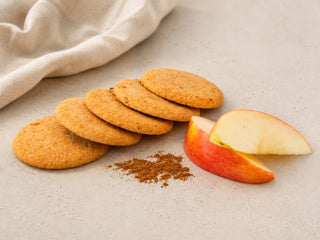
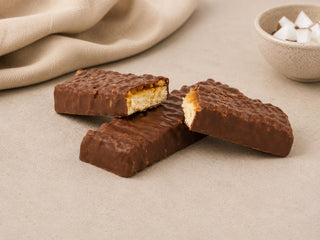
The same shake day after day for weeks leads to flavour fatigue and increases the odds of giving up early. A varied mix of flavours and product types, including protein bars, protein biscuits and protein snacks, meaningfully improves adherence.
When a shake won't work or isn't suitable
A protein shake used as a meal replacement isn't right for everyone. In the following situations, speak to a doctor or dietitian before you start:
- History of an eating disorder: highly structured eating through products can trigger relapse patterns in people with a history of anorexia, bulimia or binge-eating disorder.
- Pregnancy and breastfeeding: the calorie restriction involved in meal replacement is unsuitable. Protein needs are higher and micronutrient intake needs to be individually assessed.
- Kidney function issues: a high protein intake (over 1.5g/kg/day) places extra strain on the kidneys. Chronic kidney disease calls for a lower protein threshold unless a nephrologist advises otherwise.
- Certain medications: shakes containing grapefruit juice or soy can interact with blood thinners, thyroid medication and some antidepressants. Always check the patient information leaflet or ask a pharmacist.
- Children and adolescents: meal replacements aren't approved for anyone under 18 without medical supervision.
How Bioteïne shakes are designed for Phase 1 and Phase 2
Bioteïne works with a 4-phase system that aligns with the clinical literature on meal replacement and the gradual reintroduction of ordinary food. The shakes in the collection are specifically designed for Phase 1 (active weight loss) and Phase 2 (controlled transition).
Every shake in the Bioteïne shake collection contains at least 25 grams of protein per serving, no more than 220 kcal, under 12 grams of carbohydrates and at least 4 grams of fibre. The formula contains no aspartame and no acesulfame-K. Micronutrients are fortified to at least 30 percent of the recommended daily amount, in line with EU 609/2013 standards for meal replacements.
For anyone wanting to start with a structured approach, the Bioteïne starter pack offers a combination of shakes, snacks and a weekly plan for Phase 1. If you'd rather work out the right phase first, start with the phase test.
Alongside shakes, Phase 2 offers additional products, including protein-rich meals for the evening and bars as a snack within your daily budget.
Frequently asked questions
Does a protein shake work without dieting?
No. A protein shake only leads to weight loss when it replaces a meal and thereby creates a calorie deficit. Without adjusting your total calorie intake, a shake has no demonstrable weight-loss effect. Multiple meta-analyses confirm this consistently.
How much protein a day do I need whilst losing weight?
Most clinical guidelines recommend 1.2 to 1.6 grams of protein per kilogram of bodyweight per day during a calorie-controlled diet. That's higher than the standard NRV of 0.8g/kg, because extra protein limits muscle loss during a deficit.
Can I combine two shakes a day with exercise?
Yes, provided your total calorie and protein intake are sufficient. With intensive strength training, a third protein-rich moment (for example, a protein-rich meal or snack) may be necessary. See the high-protein diet guide for specific schedules by activity level.
Are plant-based protein shakes just as effective as whey?
A well-formulated combination of pea and rice protein has a comparable effect on satiety and muscle preservation as whey. Soy protein has a similar biological value. The main difference lies in absorption speed, not effectiveness for weight loss.
How long can I use shakes as a meal replacement?
Clinically supervised programmes typically run three to twelve weeks for the intensive phase with two shakes a day, followed by a transition period reintroducing normal meals. Use beyond twelve weeks without supervision isn't recommended.
Can I use a protein shake if I have type 2 diabetes?
Meal replacement can be effective for type 2 diabetes, but requires adjusting medication dosage as weight changes. Always consult your treating doctor before starting. Some studies show favourable effects on blood sugar regulation with supervised meal replacement.
What's the difference between a protein shake and a meal replacement?
A sports protein shake is designed for muscle recovery and doesn't contain a full micronutrient formula. A meal replacement complies with EU regulation 609/2013 and contains minimum amounts of vitamins, minerals, protein and fibre to fully replace a meal. Check the label before choosing.
Will I lose muscle mass using shakes?
With an adequate protein intake of at least 1.2 grams per kilogram of bodyweight per day, muscle loss during meal replacement is limited. Combining this with light strength training (two to three times a week) reduces the risk further. Shakes with under 15 grams of protein offer insufficient protection.