
Sugar-free high-protein desserts: the basics
A sugar-free high-protein dessert is built on three ingredients: a protein source (quark, Greek yoghurt, protein powder or a ready-made protein pudding), a calorie-free sweetener (erythritol, stevia or monk fruit) and flavour from cocoa, vanilla or fresh fruit. Get the balance right and you're looking at 15 to 25 grams of protein per portion, with under 5 grams of sugar.
That sounds easier than it actually is. Most people don't trip up on the method, they trip up on the ingredients. "Healthy" desserts on supermarket shelves regularly contain 12 to 18 grams of sugar per portion, disguised under names like maple syrup, rice syrup or agave syrup. Sugar is sugar, whatever you call it.
The recipes below all follow one principle: protein first, sugar as close to zero as possible. Every option comes with real numbers, so you can do the maths yourself.
10 sugar-free high-protein desserts: at a glance
The table below gives an honest picture. Calories, sugar and protein content are based on standard portions of 150 to 200 grams, unless stated otherwise.
| Dessert | kcal (per portion) | Sugar (g) | Protein (g) |
|---|---|---|---|
| Quark mousse with cocoa and stevia | 130 | 3 | 18 |
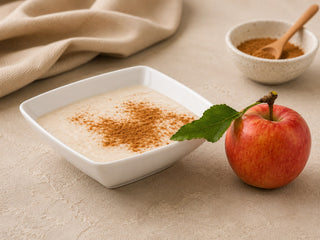
| Vanilla protein pudding | 145 | 2 | 20 |
| Greek yoghurt with cinnamon and erythritol | 110 | 4 | 15 |
| Warm chocolate protein porridge | 180 | 3 | 22 |
| Frozen quark ice cream (homemade) | 95 | 2 | 16 |
| Chia pudding with almond milk | 160 | 1 | 12 |
| Protein pancake as a dessert | 195 | 4 | 24 |
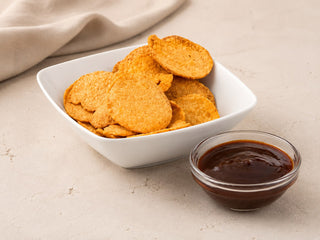
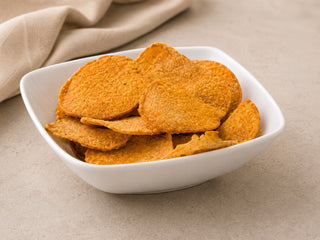
| Bioteïne protein biscuit with quark dip | 175 | 3 | 21 |
| Warm protein mug cake (microwave) | 200 | 2 | 23 |
| Chocolate protein bar chunks with yoghurt | 190 | 4 | 20 |
Look closely at the sugar column. Not a single dessert above goes past 4 grams. For comparison, a standard supermarket chocolate mousse contains an average of 19 grams of sugar per 100 grams. That's a substantial gap, especially if you're keeping a daily eye on your sugar intake.
Cold or warm: which works better for your diet
Cold desserts are the more practical choice logistically. You make them ahead, they sit in the fridge, and they're ready whenever you are. Quark mousses, chia puddings and frozen quark ice creams all fall into this category. They're satisfying, too, since cold textures naturally slow down how quickly you eat.
Warm desserts, such as a mug cake or a warm chocolate porridge, offer a different advantage. They feel more psychologically comforting, particularly on a cold evening. Research from Utrecht University on satiety shows that warmth and textural complexity contribute to a stronger sense of fullness after eating. A warm portion with 22 grams of protein can curb evening hunger more effectively than a cold version with the same protein content.
In practical terms: go warm if you tend to feel hungry again after your evening meal. Go cold if you'd rather prep ahead and keep the whole process under 5 minutes.
Cold: the best options at a glance
- Quark mousse with cocoa: 200 grams of low-fat quark, 1 tablespoon of unsweetened cocoa powder, stevia to taste. Stir, chill for 30 minutes. Done.
- Chia pudding: 250 ml unsweetened almond milk, 3 tablespoons of chia seeds, a pinch of cinnamon. Leave overnight in the fridge. 12 grams of protein, 1 gram of sugar.
- Frozen quark ice cream: quark, a handful of strawberries, stevia. Pour into an ice lolly mould, freeze for 4 hours. Cost: under 40 pence per portion.
Warm: two options that deliver
- Warm chocolate porridge: oats (40 g), cocoa powder (1 tbsp), protein powder (1 scoop), water or skimmed milk. 5 minutes on the hob. 22 grams of protein per portion.
- Mug cake: 1 egg, 1 scoop of protein powder, 1 tablespoon of cocoa powder, a pinch of baking powder, 2 tablespoons of low-fat quark. 90 seconds at 800W. The texture is denser than a proper cake, but the macros more than make up for it.
5-minute options for busy evenings
Five minutes. That's the point at which most people give up and reach for something less healthy instead. The options below all stay within that limit.
- Quark with cinnamon and erythritol: open, stir, done. 110 kcal, 15 grams of protein, 4 grams of sugar. No prep at all.
- Protein pudding (ready-made): straight from the pack. A good protein pudding, such as those in Bioteïne's meal range, delivers 20 grams of protein for a maximum of 2 grams of sugar. No washing up.
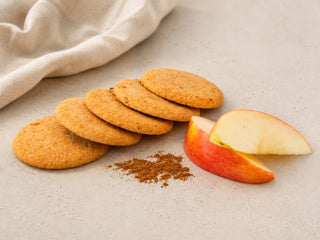
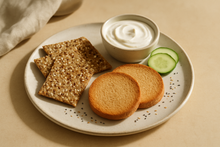
- Bioteïne protein biscuit as a dessert: two Bioteïne biscuits with a small portion of low-fat quark as a dip give you a 175 kcal dessert with 21 grams of protein. Ready in 30 seconds.
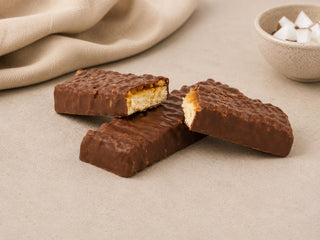
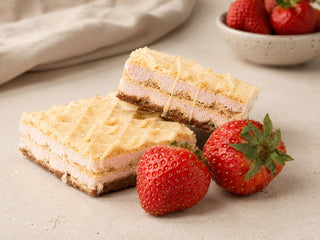
- Chocolate protein bar, crumbled over yoghurt: break a Bioteïne protein bar into pieces over 100 grams of low-fat Greek yoghurt. 20 grams of protein. Crunch, cocoa, done.
- Greek yoghurt with vanilla protein powder: 150 grams of yoghurt, half a scoop of vanilla protein powder, stir. Creamy texture, 18 grams of protein, no added sugar.
The logic here is simple: when the healthy choice is easier than the unhealthy one, you'll pick it more often. Preparation should never be the bottleneck. Curious which phase of a protein diet you're in and which portions suit it? Take the Bioteïne phase test.
Pitfalls: hidden sugars in "healthy" desserts
This is where things go wrong. People swap an ordinary dessert for something that looks healthy, but their sugar intake barely drops. Here are three concrete examples.
Agave syrup as a sweetener
Agave syrup is marketed as "natural" and "low GI". That's partly true. Its glycaemic index is lower than regular sugar, but its fructose content is higher, sometimes 70 to 90 percent. Excess fructose gets converted to fat in the liver. The Netherlands Nutrition Centre (Voedingscentrum) doesn't recommend agave syrup as a sugar substitute. Reach for stevia or erythritol instead.
Supermarket protein pudding
Check the label carefully. Some commercial protein puddings contain 8 to 12 grams of sugar per portion, despite "high protein" being splashed across the packaging. That's marketing, not nutritional guidance. Always read the nutrition table. Look for under 5 grams of sugar per 100 grams.
Fruit as an unlimited add-on
Fruit contains fructose. That's not the same as refined sugar, but it still counts. A banana contains roughly 14 grams of sugar. Two dates contain 12 grams. If you're aiming for a daily maximum of 25 grams of free sugars (the WHO guideline), two dates alone get you almost halfway there. Use berries instead: raspberries contain 4 grams of sugar per 100 grams, strawberries 5 grams. Both work well in any protein dessert.
Rice cakes and crackers as a "light" treat
A single rice cake has almost no fat, but it's roughly 80 percent carbohydrate. One on its own isn't much, but nobody stops at one. Four rice cakes with peanut butter and honey add up quickly to 20 grams of sugar and just 8 grams of protein. That's the opposite of what you're after. Skip this one entirely.
Bioteïne as the foundation for your dessert
A good protein source makes the difference between a dessert that keeps you full and one that has you hungry again an hour later. Bioteïne products are developed within a structured nutrition system, based on clinical protein guidelines of 1.2 to 1.6 grams of protein per kilogram of body weight per day.
The Bioteïne protein biscuits provide around 10 grams of protein per portion with a minimal amount of sugar. They're designed to be part of a wider meal structure, not a standalone snack eaten without context. Pair them with quark for a dessert that genuinely does the job.
The Bioteïne protein bars work well as a dessert base when broken into pieces over yoghurt. It sounds simple, but the combination of texture, cocoa and protein-rich yoghurt makes an effective replacement for high-sugar evening snacks.
Want to understand how desserts fit into a full protein diet? Read the Bioteïne high-protein diet guide for the full picture, or take a look at the 4-phase system to see how your protein intake shifts across phases.
Practical combinations: three ideas
- Dessert 1: 1 Bioteïne biscuit + 150 g low-fat quark + 1 tbsp cocoa powder + stevia. Total: 21 g protein, 165 kcal, 3 g sugar.
- Dessert 2: 1 Bioteïne bar, broken into pieces + 100 g Greek yoghurt (0% fat) + a pinch of cinnamon. Total: 20 g protein, 190 kcal, 4 g sugar.
- Dessert 3: Bioteïne protein pudding straight from the pack, chilled if you like. Total: 20 g protein, 145 kcal, 2 g sugar. Zero prep time.
The British Dietetic Association (BDA) points out that spreading protein intake across the day, including later in the evening, is more effective for muscle maintenance than concentrating it in the morning. A high-protein dessert, then, isn't a compromise. It's a strategic choice.
Take a look at the full Bioteïne snack range for more options you can use as a dessert base.
Frequently asked questions
How much protein does a dessert need to count as high-protein?
A dessert counts as high-protein if it contains at least 12 grams of protein per portion. EU food regulation (EU 1924/2006) states that a product can carry the "high in protein" claim if at least 20 percent of its calories come from protein. For desserts, aim for 15 to 25 grams per portion.
Can I have a protein dessert every evening if I'm trying to lose weight?
Yes, provided the dessert fits within your daily calorie target. A dessert of 130 to 200 kcal with 15 to 22 grams of protein replaces alternatives that are lower in calories but also lower in protein. It helps manage evening hunger, which in turn cuts down on eating outside of mealtimes.
Is erythritol safe to use as a sweetener in desserts?
Erythritol has been approved by EFSA as a safe sweetener. It contains almost no calories (0.2 kcal per gram) and has minimal effect on blood sugar. In large amounts it can have a laxative effect, so keep intake under 30 grams a day.
What's the difference between a protein pudding and a regular pudding?
A regular pudding contains 2 to 4 grams of protein per 100 grams and 12 to 18 grams of sugar. A protein pudding contains 10 to 15 grams of protein per 100 grams and under 5 grams of sugar. The difference lies in the protein source, usually casein or whey, and the swap of sugar for sweeteners.
Do protein desserts still work if I'm lactose intolerant?
Yes. Swap quark and yoghurt for lactose-free versions, or use soya yoghurt (around 5 grams of protein per 100 grams). Plant-based protein powder, such as pea or rice protein, works well as a base for mousse or pudding without any lactose.
How do I stop a homemade protein dessert tasting too sweet or too bland?
Too bland: add unsweetened cocoa powder, vanilla extract or cinnamon. Blandness usually comes from too little flavouring, not too little sugar. Too sweet: stevia and erythritol taste different to different people. Combine both sweeteners for a more neutral profile, and start with small amounts.
Are Bioteïne protein biscuits suitable as a dessert, or just a snack?
They're designed as part of a structured protein diet, but they work well as a dessert base too. Pair one biscuit with 150 grams of low-fat quark and a little cocoa powder for a dessert of around 165 kcal and 21 grams of protein. See the Bioteïne biscuits page for full nutritional details.
How much sugar should a dessert contain if I'm trying to lose weight?
The WHO recommends under 25 grams of free sugars a day for adults. As a practical guideline for desserts, aim for a maximum of 5 grams of sugar per portion. That leaves you room for sugar from other meals. Always check the nutrition table, even on products carrying a health claim.