





Why your protein needs increase after 50
From around the age of 50, the way your body processes protein begins to shift. A process known as anabolic resistance means muscle tissue responds less efficiently to protein intake. To offset this natural muscle loss, the recommended protein intake rises from 0.8 g/kg body weight to 1.0-1.2 g/kg per day, depending on your activity level and general health.
This article explains what changes in your body after 50, how much protein you actually need, and how to preserve muscle mass while maintaining a healthy weight.
Sarcopenia: what it is and why protein helps protect against it
Sarcopenia is the gradual loss of muscle mass and strength that comes with ageing. Without intervention, you lose an average of 30 to 40 per cent of your skeletal muscle mass between the ages of 40 and 80. After 50, that decline accelerates to roughly 1 to 2 per cent per year.
The consequences are practical and measurable: slower walking speed, a higher risk of falls, reduced bone density and a slower resting metabolism. That last point also makes it harder to maintain a healthy weight without sacrificing muscle in the process.
Protein offers protection in two ways. First, it supplies the amino acids needed for muscle protein synthesis, the process by which damaged or ageing muscle tissue is repaired. Second, higher protein intake stimulates the hormone IGF-1, which supports muscle growth. In older adults, this signalling pathway becomes less responsive, which is precisely why protein requirements increase.
The British Dietetic Association names adequate protein intake as one of four key pillars in sarcopenia prevention, alongside resistance training, vitamin D and calorie balance. The Voedingscentrum (Netherlands Nutrition Centre) likewise acknowledges that protein needs in older adults exceed the general population guideline.
Protein requirements by age and weight: the numbers
The table below shows how much protein you need per day based on age and body weight. These figures follow the recommendation of 1.0 g/kg for ages 50-65 and 1.2 g/kg for those over 65, in line with the PROT-AGE Study Group (Bauer et al., 2013).
| Age | Weight 60 kg | Weight 75 kg | Weight 90 kg |
|---|---|---|---|
| 30-49 years | 48 g/day | 60 g/day | 72 g/day |
| 50-65 years | 60 g/day | 75 g/day | 90 g/day |
| 65-75 years | 72 g/day | 90 g/day | 108 g/day |
| 75+ years | 84 g/day | 105 g/day | 126 g/day |
For comparison, the average protein intake among over-50s in the Netherlands sits at roughly 68 grams per day. That's enough for a sedentary fifty-something weighing 68 kg, but falls short for most active or somewhat heavier people in that age bracket.
Want to know which phase you're in and how much protein your situation calls for? Take the Bioteïne phase test for personalised protein advice.
Spreading protein across the day: the 25-30 gram rule
How much protein you eat is one thing. How you spread it across the day matters just as much. Muscles can only make effective use of a limited amount of protein per meal for muscle synthesis. In older adults, that threshold sits at 25 to 30 grams per meal.
In practice, this means three meals a day, each containing at least 25 grams of protein, offers better protection against muscle loss than the same total amount spread unevenly. A breakfast with 10 grams, a lunch with 15 grams and an evening meal with 55 grams delivers less muscle synthesis overall, even though the daily total is identical.
A practical daily schedule for someone weighing 75 kg (target: 90 grams of protein per day):
- Breakfast: 30 grams of protein (a protein shake, or cottage cheese with nuts, for example)
- Lunch: 30 grams of protein (chicken breast or cottage cheese on wholegrain bread, for example)
- Evening meal: 30 grams of protein (salmon or pulses with dairy, for example)
A Bioteïne protein shake delivers an average of 25 grams of protein per serving at just 140-160 kcal. That makes it an efficient way to boost the protein content of a meal without significantly raising your calorie intake. Browse the full range of shakes.
Resistance training and protein: the combination that works
Protein alone isn't enough. Muscle synthesis needs a trigger, and that trigger is resistance training. The combination of adequate protein intake and strength training is, scientifically speaking, the most effective strategy against sarcopenia.
Concrete recommendation: strength training 2 to 3 times a week, targeting the major muscle groups (legs, back, chest), at an intensity of 60 to 80 per cent of the maximum weight you can lift (1RM). Muscle synthesis is elevated immediately after training, so eating a protein-rich meal or snack within 30 to 60 minutes of exercising boosts recovery and the build-up of new muscle mass.
A Bioteïne protein bar or snack is a practical option here. Take a look at the protein bars or the protein-rich snacks.
Worth noting: if you haven't exercised in a while, or take medication that affects your heart rate, discuss your training plan with your GP or physiotherapist first. This isn't box-ticking, it's a genuinely relevant safety step.
Losing weight after 50 without losing muscle
Losing weight later in life calls for a different approach than it would in your thirties. The risk is that a calorie deficit doesn't just target fat, it also eats into muscle mass. In older adults, muscle rebuilding is slower, so lost muscle is harder to win back.
The basic principles of healthy weight loss after 50:
- A calorie deficit of no more than 300-500 kcal per day. More aggressive dieting accelerates muscle loss.
- Keep protein intake at or above 1.2 g/kg. Protein has a muscle-sparing effect during a calorie deficit.
- Maintain or start strength training. Even during weight loss, training helps protect muscle mass.
- Structure your meals properly. Don't skip meals. Three meals with 25-30 grams of protein each works better than two large meals.
A useful resource here is the Bioteïne high-protein diet guide, which sets out a detailed approach to protein-focused weight loss, including guidelines for each phase.
The Bioteïne 4-phase system was designed specifically for people who want to lose weight step by step without losing muscle, with protein intensity increasing at each phase. Phases 1 and 2 are also well suited to over-50s just getting started.
A meal-replacement approach lowers calorie intake in a controlled way while keeping protein intake on track. Browse the protein-rich meals or jump straight in with the Bioteïne starter pack.
Points to watch: kidneys, medication and speaking to your doctor
Higher protein intake is safe and advisable for most healthy over-50s. That said, there are situations where a bit of caution is warranted.
Kidney function
If you already have reduced kidney function (a lowered GFR), a high protein intake can place extra strain on the kidneys. The 1.0-1.2 g/kg guideline applies to people with normal kidney function. If you have kidney issues or type 2 diabetes with kidney complications, consult a dietitian or nephrologist before increasing your protein intake. This is a medical consideration, not a general risk for healthy people.
Medication and interactions
Some medications commonly taken by over-50s, including blood thinners such as warfarin, can interact with major changes in diet. Always have a quick word with your GP or pharmacist before changing your diet significantly, particularly if you're on multiple medications.
Malnutrition and MUST screening
The opposite problem, too little protein, is a real concern among older adults: malnutrition. The MUST score (Malnutrition Universal Screening Tool) is a simple tool healthcare professionals use to flag nutritional shortfalls. If you're losing weight unintentionally or have a reduced appetite, that's a signal to speak to your GP.
Vitamin D
Vitamin D supports muscle function and works alongside protein in preventing sarcopenia. The Dutch Health Council recommends a supplement of 20 micrograms per day for people over 70. This is a separate recommendation, not part of the protein guideline itself, but relevant to the broader picture of muscle preservation.
How Bioteïne can help with protein intake after 50
The practical challenge with higher protein needs is that appetite often decreases with age. Bigger portions aren't the answer if you're simply less hungry. Protein-rich products with a low calorie density are an efficient way to fill that gap.
Bioteïne products are developed with exactly that principle in mind: high protein density per calorie, without needing to eat large quantities. Here's an overview of what our products deliver:
| Product | Protein per serving | kcal per serving | Best suited for |
|---|---|---|---|
| Protein shake | 25 g | 140-160 kcal | Breakfast, post-training |
| Protein-rich meal | 30 g | 250-300 kcal | Lunch or evening meal |
| Protein bar | 20 g | 190-220 kcal | Snack, post-training |
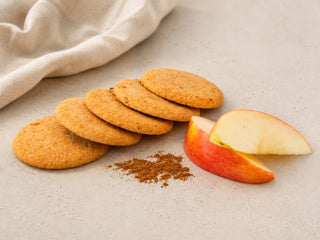
| Protein biscuit | 15 g | 150-180 kcal | Snack, top-up |
Want to find out which product suits your situation? Take the Bioteïne phase test for personalised advice, or dive straight in with the starter pack, put together for people trying a protein-focused plan for the first time.
For more background on protein-focused weight loss, protein sources and daily meal plans, see the full high-protein diet guide.
Frequently asked questions
How much protein do I need if I'm 55 and weigh 80 kg?
At 80 kg and between the ages of 50 and 65, the recommendation is 1.0 gram of protein per kilogram of body weight, which works out to 80 grams of protein per day. If you're active or do strength training, 1.2 g/kg, or 96 grams, may suit your needs better.
What is sarcopenia and how would I notice it?
Sarcopenia is the gradual loss of muscle mass and strength that comes with ageing. Early signs include reduced strength during everyday tasks, slower walking, getting more tired climbing stairs, and unexplained changes in body weight. Without intervention, you lose an average of 1 to 2 per cent of muscle mass per year after 50.
Is a high-protein diet safe for my kidneys later in life?
For people with normal kidney function, an intake of 1.0 to 1.2 g/kg protein per day is safe. If you already have kidney issues, such as reduced GFR, or diabetes with kidney complications, speak to a doctor or dietitian before increasing your protein intake.
Can I still build muscle after 60?
Yes. Muscle growth is possible at any age, though it happens more slowly than it did in your thirties. The combination of resistance training (2-3 times a week) and adequate protein intake of 25-30 grams per meal is scientifically proven to be effective, even for people over 60.
What's the best way to spread my protein intake across the day?
Spread your protein intake across three meals, each containing 25 to 30 grams of protein. This produces better muscle synthesis than the same total spread unevenly. Don't skip meals, and try to eat something protein-rich within 30 to 60 minutes of strength training.
What's the difference between protein needs at 40 and at 65?
At 40, the general guideline is 0.8 g/kg per day. From 50 onwards, this rises to 1.0 g/kg due to anabolic resistance. After 65, 1.2 g/kg is recommended. That's a 50 per cent increase compared with the standard recommendation for younger adults.
Does protein help with weight loss later in life too?
Yes, in two ways. Protein delivers a high sense of fullness per calorie, which helps you stick to a calorie deficit. It also protects muscle mass during weight loss, which matters even more for older adults since lost muscle is harder to rebuild.
Which Bioteïne products are suitable for over-50s?
All Bioteïne products are suitable, but the focus is on products with a high protein density per calorie. Shakes (25 g protein per 140-160 kcal) and protein-rich meals (30 g protein per 250-300 kcal) are practical if your appetite has decreased. The starter pack offers a clear introduction.