


What makes a good low-carb dinner?
A proper low-carb dinner contains under 30 grams of carbohydrate, at least 30 grams of protein, and stays below 500 calories. That combination keeps you satisfied, supports muscle maintenance and prevents a blood sugar spike before bed. All 12 recipes below meet these three criteria.
Low-carb evening meals are everywhere online, but most recipes skip the protein side of the equation entirely. That's a genuine problem. Without adequate protein intake (at least 1.6g per kilogram of bodyweight per day, according to the Dutch Nutrition Centre), you end up losing muscle tissue alongside fat mass. The recipes below are built specifically to hit both targets: carbs low, protein high.
Not sure which approach suits your situation? Start with the phase test to find your starting point.
Overview: 12 low-carb dinners
The table below gives you the nutritional breakdown for each recipe at a glance. All figures are calculated per single serving.
| Dish | kcal | Carbs (g) | Protein (g) | Prep time |
|---|---|---|---|---|
| Chicken breast with roasted peppers | 390 | 12 | 48 | 20 min |
| Salmon with cauliflower rice | 420 | 9 | 42 | 20 min |
| Mince and courgette pan | 430 | 11 | 38 | 25 min |
| Scrambled eggs with smoked salmon and spinach | 360 | 5 | 34 | 15 min |
| Roast chicken with broccoli mash | 450 | 14 | 52 | 35 min |
| Beef mince and aubergine bake | 480 | 16 | 40 | 40 min |
| Roasted cod and asparagus | 340 | 8 | 44 | 30 min |
| Peppers stuffed with turkey mince | 410 | 18 | 36 | 35 min |
| Tofu stir-fry with pak choi | 370 | 13 | 31 | 20 min |
| Omelette with feta and sun-dried tomato | 380 | 10 | 32 | 15 min |
| Lentil and courgette soup with Greek yoghurt | 350 | 28 | 30 | 25 min |
| Cauliflower cheese bake with egg | 400 | 15 | 33 | 30 min |
4 quick recipes: ready in 25 minutes or less
1. Chicken breast with roasted peppers (20 min)
Fry 150g of chicken breast in a hot pan with olive oil, 8 minutes per side. Add sliced red pepper and cook for a further 5 minutes. Season with smoked paprika, garlic and black pepper. Serving suggestion: a handful of rocket on the side. This dish delivers 48g of protein for just 12g of carbs.
2. Salmon with cauliflower rice (20 min)
Coarsely grate 300g of raw cauliflower. Dry-fry in a pan for 5 minutes until the moisture has cooked off. At the same time, fry 150g of salmon fillet in butter, 4 minutes per side. Season the cauliflower rice with lemon zest and parsley. Carbs: 9g. Protein: 42g. Cauliflower rice is a reliable way to keep portion sizes generous without pushing up the carb count.
3. Scrambled eggs with smoked salmon and spinach (15 min)
Beat 3 eggs. Dry-fry 100g of spinach in a pan. Add the eggs and stir gently until just set. Top with 80g of smoked salmon. No sauce needed. Total: 360 kcal, 5g carbs, 34g protein. One of the quickest high-protein options on this list.
4. Omelette with feta and sun-dried tomato (15 min)
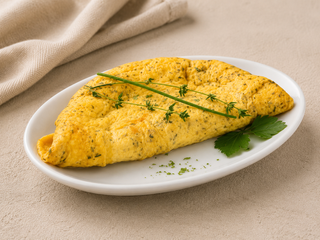
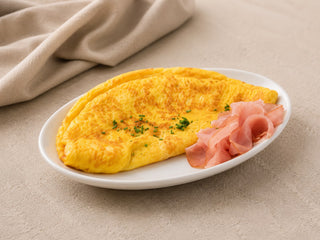
Beat 3 eggs with salt and pepper. Pour into a hot pan with a little olive oil. Scatter 50g of crumbled feta and 3 chopped sun-dried tomatoes over one half. Fold and cook for a further 2 minutes. Delivers 32g of protein for 10g carbs and 380 kcal.
4 oven recipes: minimal effort, maximum output
5. Roast chicken with broccoli mash (35 min)
Marinate 180g of chicken breast in olive oil, garlic and thyme. Roast for 35 minutes at 200°C. Meanwhile, boil 250g of broccoli until tender, then mash with a splash of double cream and salt. Broccoli mash stands in for traditional mashed potato and contains 80 per cent fewer carbs. Protein: 52g. This is the highest-protein dish on the list.
6. Beef mince and aubergine bake (40 min)
Brown 150g of beef mince with onion and garlic. Layer into an ovenproof dish with sliced aubergine. Pour 100ml of passata over the top and scatter with 40g of grated cheese. Bake for 25 minutes at 180°C. Aubergine soaks up the flavour of the mince and adds bulk without extra carbs.
7. Roasted cod and asparagus (30 min)
Place 180g of cod fillet on a baking tray alongside 200g of green asparagus. Drizzle with olive oil, lemon and capers. Roast for 20 minutes at 190°C. This is the lowest-calorie dish on the entire list: 340 kcal for 44g of protein. Cod is one of the leanest white fish options, with a very high protein density per 100g.
8. Peppers stuffed with turkey mince (35 min)
Halve 2 peppers and remove the seeds and pith. Fry 150g of turkey mince with onion, garlic and cumin. Fill the peppers and bake for 20 minutes at 180°C. Optionally top with 20g of grated cheese. Peppers contain just 6g of carbs per 100g, while also providing vitamin C and B6.
4 vegetarian recipes with high protein content
Vegetarian low-carb cooking takes a bit more planning. The challenge is that many plant-based protein sources, pulses and grains among them, also tend to be relatively high in carbs. The four recipes below get around this by combining eggs, dairy and tofu. For a broader look at protein-focused eating strategy, see our high-protein diet guide.
9. Tofu stir-fry with pak choi (20 min)
Pat 200g of firm tofu dry and cube it. Fry until golden in sesame oil. Add 200g of pak choi, low-sodium soy sauce, ginger and garlic. Stir-fry for 5 minutes over high heat. Tofu delivers 8g of protein per 100g. Combined with the pak choi, this makes a light, quick meal totalling 370 kcal and 31g of protein.
10. Omelette with feta and sun-dried tomato
See the quick recipes section above. This dish also falls into the vegetarian category. Eggs provide roughly 6g of protein each. Three eggs plus feta bring you to 32g of protein for 380 kcal. A complete evening meal in 15 minutes.
11. Lentil and courgette soup with Greek yoghurt (25 min)
Simmer 80g of red lentils (dry weight) with 1 litre of vegetable stock, 1 courgette and turmeric. Blend until smooth. Serve with 100g of Greek yoghurt (10 per cent fat) on top. Note: this is the only recipe on the list to reach 28g of carbs, due to the lentils. Red lentils do, however, contain resistant starch, which lowers the glycaemic response. Protein: 30g.
12. Cauliflower cheese bake with egg (30 min)
Boil 400g of cauliflower florets until just tender. Mix with 3 beaten eggs, 60g of grated mature cheese and nutmeg. Pour into a greased ovenproof dish and bake for 20 minutes at 180°C until golden on top. This dish contains 15g of carbs and delivers 33g of protein for 400 kcal. The combination of egg and cheese makes it very filling.
Vegetables as a carb swap: the basics
Most low-carb recipes rely on one core technique: swapping a starchy base for vegetables. It sounds simple, but how you execute it determines whether it's actually sustainable. Below are the most effective swaps, along with the carb saving per portion.
| Original | Carbs (g/100g) | Swap | Carbs (g/100g) | Saving per 200g portion |
|---|---|---|---|---|
| White rice | 28 | Cauliflower rice | 5 | 46g less |
| Pasta (cooked) | 25 | Courgette spaghetti | 3 | 44g less |
| Mashed potato | 17 | Broccoli mash | 7 | 20g less |
| Lasagne sheets | 23 | Aubergine slices | 6 | 34g less |
| Breadcrumbs | 52 | Ground almonds | 7 | Not applicable (used as flavouring) |
Texture is the key. Cauliflower rice works best if you dry-fry it first in a pan with no oil. Courgette spaghetti releases moisture when heated, so pat it dry with kitchen paper before cooking. Broccoli mash needs a splash of double cream or butter to get anywhere near the texture of mashed potato.
Research published in Nutrients (2019) shows that replacing refined carbohydrates with non-starchy vegetables significantly lowers the post-meal blood glucose response, even in people without diabetes.
Meal prep: 5 days of low-carb dinners in 1 hour
Most people don't fall off track through lack of motivation, but through lack of time on weeknights. Meal prep solves that. Below is a plan for 5 evening meals you can prepare on a Sunday in roughly 60 minutes.
- Week 1, days 1 and 2: On Sunday, roast a tray of 400g chicken breast with 500g mixed vegetables (pepper, courgette, onion). Split into two portions. Keeps in the fridge for up to 4 days.
- Week 1, day 3: Prepare the beef mince and aubergine bake. Cook it through fully and portion it up. Reheating takes 5 minutes in the microwave.
- Week 1, days 4 and 5: Make the lentil and courgette soup in a large pan (2 litres). Keeps in the fridge for up to 5 days. Add the Greek yoghurt only when serving.
Store meals in airtight glass containers. Plastic absorbs odours and can leach substances when heated. Label each container with the date. Storage times: meat dishes up to 3 days, soups up to 5 days, fish dishes up to 2 days.
The British Dietetic Association recommends preparing meals ahead for the week as a strategy to reduce overall calorie intake and improve protein consistency.
Bioteïne meals as a backup for your evening plan
On evenings when cooking isn't an option, or if you haven't hit your daily protein target yet, Bioteïne offers ready-made options built around the same principles: low carb, high protein, controlled calories. The Bioteïne meals range is designed to meet the criteria of under 30g of carbs and at least 25g of protein per portion.
This isn't a replacement for a full diet built on whole foods, but a practical backup for busy days. Combine it with the recipes above to aim for a week of at least four home-cooked meals and no more than three ready-made ones.
For a complete eating plan tailored to your weight goal and body composition, take a look at the high-protein diet guide, or take the phase test to find out which phase you're in.
Frequently asked questions
How many carbs can you eat in the evening on a low-carb diet?
The general guideline for a low-carb dinner is under 30 grams of carbohydrate per meal. On a strict ketogenic diet, that limit drops to 20 grams total per day. For most people, 20 to 30 grams per evening meal is an achievable and effective threshold, without extreme restriction.
Can you maintain muscle mass on a low-carb diet?
Yes, provided you eat enough protein. The threshold is at least 1.6 grams of protein per kilogram of bodyweight per day, according to the Dutch Nutrition Centre. An evening meal containing 30 to 50 grams of protein makes a meaningful contribution to muscle protein synthesis, even without carbohydrates as an energy substrate.
Is a low-carb dinner suitable for vegetarians?
Yes, but it requires more planning. The best low-carb vegetarian protein sources are eggs, hard cheese, Greek yoghurt, cottage cheese and firm tofu. Pulses contain more carbohydrate, but also resistant starch, which slows the glycaemic response. Use them in moderate amounts.
How long before you see results on a low-carb diet?
In the first 3 to 5 days, you'll mainly lose glycogen and the water stored alongside it, which can be 1 to 3 kilograms. Genuine fat loss typically starts after 2 to 3 weeks of consistently eating under 100 grams of carbohydrate per day, combined with a calorie deficit of 300 to 500 kcal per day.
What are the best vegetables for a low-carb dinner?
Vegetables with under 5 grams of carbohydrate per 100 grams are ideal: spinach (1g), courgette (3g), cauliflower (5g), broccoli (7g), pepper (6g) and asparagus (3g). Avoid sweetcorn, peas, parsnip and beetroot, which contain 10 to 17 grams of carbohydrate per 100 grams.
Can you eat dairy on a low-carb diet?
Yes. Full-fat Greek yoghurt, hard cheeses and double cream are relatively low in carbs and are rich protein sources. Avoid semi-skimmed milk in large amounts (5g carbs per 100ml) and flavoured yoghurts containing added sugar. Always check the label for total carbs per portion.
How do I combine Bioteïne products with home-cooked low-carb meals?
Use Bioteïne meals on days when you don't have time to cook. Plan for no more than 2 to 3 ready-made meals a week alongside 4 to 5 home-cooked dinners. This keeps things consistent without becoming dependent on products, and your total protein intake stays stable regardless of how the week is structured.
Is a low-carb dinner safe in the long term?
Research shows that diets containing under 130 grams of carbohydrate per day are safe for most healthy adults for at least 12 months. If you have kidney issues, type 1 diabetes, or are pregnant, individual advice from a dietitian is recommended before starting a low-carb eating pattern.