






Do protein bars help with weight loss?
A protein bar supports weight loss when you use it to replace a snack or a light meal. That way you cut calories, raise your protein intake and keep hunger under control for longer. Use it as an extra on top of your usual eating pattern, though, and it works against you. The bar itself is neutral. Context decides everything.
That sounds straightforward, but most people use bars the wrong way round. They grab one after lunch because it "sounds healthy", don't count the calories, and then wonder why the scales aren't moving. An average protein bar delivers 180 to 280 kcal. That's not a free snack. It's a meal component.
Protein satisfies better than carbohydrate or fat, gram for gram. A meta-analysis published in The American Journal of Clinical Nutrition found that a higher protein intake (1.2 to 1.6 g per kg of body weight per day) contributes significantly to weight loss through greater satiety and a higher thermic effect of food. A bar with 20 g of protein makes a genuine contribution here, provided it fits within your daily calorie budget.
Find out more about how protein works within a structured weight-loss plan in the Bioteïne high-protein diet guide.
Good bar vs. bad bar: what's actually in it?
Not every bar with the word "protein" on the wrapper is useful for weight loss. Sugar and calorie levels vary enormously. The table below shows what to look out for.
| Feature | Good bar | Poor bar |
|---|---|---|
| Protein per bar | 15 g or more | Under 10 g |
| Sugar per bar | Under 5 g | Over 12 g |
| Calories per bar | 150 to 220 kcal | Over 280 kcal |
| Fibre | 3 g or more | Under 1 g |
| Protein/kcal ratio | At least 30% of kcal from protein | Under 15% from protein |
| Sugar alcohols | Limited (max 10 g) | Over 20 g (risk of digestive discomfort) |
| Ingredients list | Short, recognisable ingredients | Long, full of additives and syrups |
A bar delivering 22 g of protein at 200 kcal with under 5 g of sugar is a functional product. A bar delivering 8 g of protein at 260 kcal with 18 g of sugar is essentially a confectionery bar wearing a health halo. The Dutch Nutrition Centre rightly points out that the word "protein" on a wrapper is not a quality mark in itself.
When is a bar the smart choice?
There are three situations in which a protein bar genuinely supports your goal.
Replacing an unhealthy snack
You're out and about, hunger strikes at 3pm, and the choice is between a 280 kcal biscuit with 30 g of sugar or a 190 kcal bar with 20 g of protein. That's not a difficult decision. The bar wins, not because it's perfect, but because it's the better option in that moment.
As a light meal replacement
Within a structured, multi-phase protein diet such as the Bioteïne 4-phase system, a bar can serve as a quick, controlled meal, particularly in phase 1 and 2, where calorie intake is deliberately kept low. Two bars a day, each with 200 kcal and 20 g of protein, provide 400 kcal and 40 g of protein between them, a meaningful contribution towards your daily target of 1.2 to 1.6 g of protein per kg of body weight.
After intense exercise
Muscles have a raised capacity to absorb protein straight after training. A bar with 20 g of protein eaten right after a workout supports muscle recovery and helps curb unnecessary hunger afterwards. The British Dietetic Association recommends 20 to 40 g of protein within the hour after intense exercise.
Red flags on the label
Plenty of bars look entirely wholesome from the outside. The label often tells a different story. Here are the signs you shouldn't ignore.
- Sugar as the second or third ingredient: ingredients are listed by weight. If sugar sits near the top, it's the dominant component.
- Several types of sugar at once: glucose syrup, fructose syrup, honey and maltodextrin are all sugar wearing different names. Four types of sugar still add up to sugar, four times over.
- More than 25 g of sugar alcohols: maltitol, sorbitol and xylitol are used as sweeteners but can cause digestive discomfort at higher doses. Above 25 g a day, that's a real risk.
- Trans fats: less common now, but always worth checking. Even 0.5 g per portion adds up across several products a day.
- Protein content under 10 g: at that point it isn't really a protein bar. It's a confectionery bar with a marketing claim attached.
- "Natural" or "pure" without further detail: these are unregulated terms. They tell you nothing about nutritional value.
Not sure where you stand with your current diet? The Bioteïne phase test helps you work out which approach suits you in two minutes.
Bar versus real food: an honest comparison
A protein bar is convenient. That's it. It doesn't replace a proper meal in the long run, and in most cases it contains fewer micronutrients than real food. That's not a reason to dismiss it, but it is a reason to keep it in its proper place.
Consider a comparison. Two boiled eggs, an 80 g portion of salmon and a handful of spinach together provide around 28 g of protein, plenty of B12, omega-3 and iron, for roughly 250 kcal. An average protein bar delivers 18 to 22 g of protein at 200 kcal, but noticeably fewer micronutrients. Real food wins on nutritional quality.
Still, the bar doesn't lose out on practicality. It takes 30 seconds to eat. No preparation needed. It won't spoil in your bag. For the moments when real food simply isn't an option, a decent-quality bar is a legitimate choice.
A healthy eating pattern, according to the Dutch Nutrition Centre, is built on varied, basic wholefoods. Bars fit in as a supplement to that, not as the foundation.
How many protein bars a day when losing weight?
One to two a day is the sensible maximum within a weight-loss context. Beyond two, nutritional quality starts to suffer and the risk of taking on too many sugar alcohols increases.
A concrete example: say you weigh 75 kg and want to lose weight. Your daily protein target sits at 1.4 g per kg, so 105 g of protein a day. Your calorie budget is 1,400 kcal. Two bars, each with 20 g of protein and 200 kcal, provide 40 g of protein and 400 kcal, that's 38% of your protein target from bars alone. The remaining 65 g of protein comes from your normal meals. That's a realistic, workable split.
Never use bars as an excuse to skip main meals without a proper plan. That leads to shortfalls and overeating later in the day. Three meals a day with clear protein sources work better than six bars and nothing else.
Take a look at the Bioteïne bars collection for an overview of bars that meet the criteria set out above.
Bioteïne bars: what sets them apart?
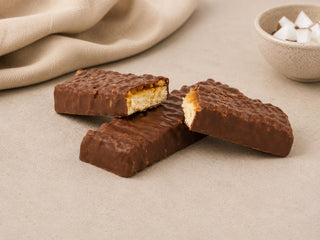
Bioteïne bars are developed specifically for use within a structured protein diet. They meet the nutritional standards outlined above: at least 15 g of protein per bar, under 5 g of sugar, added fibre, and a calorie count between 160 and 220 kcal per bar. There are no hidden sugar syrups, and the ingredients list stays short.
They're designed to replace a snack or light meal, not to top one up. That's a deliberate choice. A bar you eat just because it's there serves no purpose in a weight-loss plan.
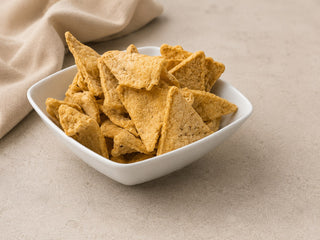
Alongside bars, Bioteïne also offers protein-rich snacks for variety between meals, so you're not eating the same texture every day. Variety helps you stick with it, and sticking with it is what determines your results.
New to a protein diet? The Bioteïne starter pack combines bars, shakes and meals in a structured approach for your first two weeks.
Frequently asked questions
Can I lose weight by eating only protein bars?
Not in a sensible way. Bars lack the micronutrients your body needs for healthy functioning. Use them to replace one or two snacks or a light meal, and combine them with proper protein sources such as meat, fish, eggs or pulses.
How much protein should a protein bar contain at minimum?
At least 15 g per bar to make a genuine contribution to your daily protein target. Bars with under 10 g of protein per portion are too light to count as a protein source and deliver relatively too many calories for what they offer.
Are protein bars suitable as a breakfast replacement?
They can be, provided the bar contains enough protein and you pair it with something that adds bulk and fibre, such as a piece of fruit or some cottage cheese. A bar alone as breakfast is too light for most people and tends to leave you hungry before lunch.
What's the difference between a protein bar and an ordinary muesli bar?
An ordinary muesli bar typically contains 2 to 5 g of protein, plenty of sugar and little fibre. A quality protein bar delivers 15 to 25 g of protein at a lower sugar content. The calories are similar, but the nutritional value differs significantly.
Can I eat a protein bar every day while dieting?
Yes, one to two a day is manageable within a structured protein diet. More than two a day isn't advisable, given the limited micronutrient value and the possible digestive discomfort from sugar alcohols above 25 g a day.
Are protein bars suitable for people with diabetes?
That depends on the composition. Choose bars with under 5 g of sugar and keep an eye on total carbohydrate content. Sugar alcohols raise blood sugar less than regular sugar, but not to zero. If in doubt, consult a dietitian or doctor.
When is a protein bar not a good idea?
When you eat it on top of a full day's meals without tracking calories. That adds 180 to 280 kcal to your day with no compensation. In that case, the bar works against your weight-loss goal, regardless of its protein content.
How do I choose the right bar for my diet phase?
That depends on how many calories you eat per day and which phase of your weight-loss plan you're in. The Bioteïne phase test gives you personalised advice in two minutes, based on your weight, goal and current eating pattern.