





Exercising during a protein diet: what's sensible?
Exercising during a protein diet isn't just possible, in most cases it's genuinely a good idea. Staying active helps preserve muscle mass while you shed fat. The key lies in getting your protein intake right (1.6 to 2.2g per kg of body weight), matching your training intensity sensibly, and timing your meals around your workouts.
That said, "just carry on training as normal" isn't a blanket rule that suits everyone. A calorie deficit changes how your body responds to exercise. What works on a calorie surplus can behave quite differently once you're eating 500 to 800 kcal less per day. That calls for adjustments, not for giving up training altogether.
What happens in your body when you train on a deficit
A protein diet combines a calorie deficit with a higher protein intake. Your body has to manage two things at once: burning fat for energy, and holding on to as much muscle tissue as possible. These two processes can pull in opposite directions. Not impossibly so, but it does need some attention.
Glycogen, the stored carbohydrate in your muscles and liver, runs out faster when you're eating less. During intense training you burn through those reserves more quickly. The upshot: you can't sustain high-intensity effort for as long, recovery slows down, and the risk of muscle loss rises, particularly if protein intake falls short.
Research published in the American Journal of Clinical Nutrition shows that a protein intake of at least 1.6g per kg of body weight protects muscle mass significantly better during a calorie deficit than lower intakes. For active people training hard, this can rise to as much as 2.2g per kg.
What does that mean in practice? Someone weighing 80kg needs 128 to 176g of protein a day. On a 1,400 kcal diet, that's a substantial chunk of your total food intake. Without some planning, you won't hit that by accident. Have a look at the high-protein diet guide for a clear overview of how to structure this.
Which type of training suits which phase
Not every form of exercise makes the same demands on your body. The question isn't just "can I exercise?" but "which type of training fits my current phase and calorie intake?"
Strength training: a high priority
Strength training is the most valuable form of exercise during a protein diet. It gives your muscles a reason to stick around. Resistance training sends a clear signal to your body: this tissue is needed, keep it. Without that signal, your body is more likely to break down muscle mass for energy when you're in a deficit.
Two to three sessions a week of 45 to 60 minutes is a realistic schedule. Don't add extra volume if your calorie deficit is bigger than 600 kcal a day. Recovery simply costs too much at that point.
Cardio: useful, but dose it carefully
Light to moderate cardio (walking, cycling, swimming at a low intensity) supports fat burning and places little strain on recovery. That works well. High-intensity interval training (HIIT) is a different story. HIIT places heavy demands on your glycogen stores and your recovery capacity. On a calorie deficit, that can tip you into overtraining or a stalling loss.
A useful rule of thumb: if your calorie intake is under 1,200 kcal, don't do HIIT more intensively than twice a week. Pair it with active recovery (walking, yoga) on the other days.
Intense group classes and cycling
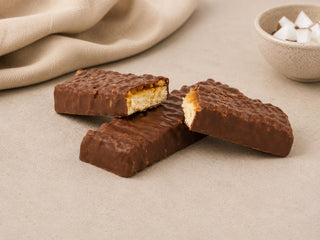
A 60-minute spin class burns 500 to 700 kcal on average. If you're already sitting at a 600 kcal deficit that day, your total deficit suddenly jumps to 1,100 to 1,300 kcal. That's too much for sustainable muscle preservation. Reduce your deficit on that particular day with an extra protein meal or a protein bar after the class.
The right protein intake for active dieters: a practical calculation
The UK's NHS guidance sets a baseline of around 0.75g protein per kg of body weight per day for healthy adults. For people exercising during a protein diet, a different standard applies. The British Dietetic Association recommends athletes training on a calorie deficit aim for at least 1.8 to 2.0g per kg.
| Body weight | Minimum protein intake (1.6g/kg) | Optimal intake (2.0g/kg) | Maximum intake (2.2g/kg) |
|---|---|---|---|
| 60kg | 96g | 120g | 132g |
| 70kg | 112g | 140g | 154g |
| 80kg | 128g | 160g | 176g |
| 90kg | 144g | 180g | 198g |
| 100kg | 160g | 200g | 220g |
Bear in mind these figures apply to your current training weight, not your goal weight. Base your calculation on your present body weight, and recalculate every four to six weeks as you lose weight.
Not sure which phase of your diet you're in, or what intake suits you? The Bioteïne phase test can help you work that out.
Timing your protein around training
When you eat matters almost as much as how much you eat, especially around training sessions.
Before training
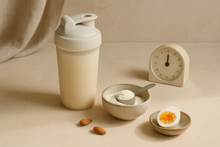
A protein-rich meal two to three hours before training gives your muscles the amino acids they need right when they need them. Can't plan that far ahead? A quick protein source 30 to 60 minutes before training is a reasonable alternative, think a shake with 25 to 30g of protein or a compact protein bar.
After training
The so-called "anabolic window" is narrower than was once thought. It's less about exact timing and more about your total daily intake. Still, there's a practical advantage to a protein-rich meal within 60 to 90 minutes of training: you take in a substantial part of your daily target right as muscle repair kicks in.
A meal with 30 to 40g of protein after training is a solid target. That's achievable with a meal replacement, a shake alongside a side dish, or two protein-rich products combined.
Spread your protein across the day
Muscles can only make effective use of a certain amount of protein per meal for repair and growth. The practical ceiling sits around 30 to 40g per sitting. Eating more in one go doesn't translate into greater muscle protein synthesis. Spread your daily total across four to five sittings instead.
Managing your energy: not too little, not too much
Too large a calorie deficit sabotages your training. Too small a deficit slows your weight loss. Finding the balance is really the heart of exercising while dieting.
A deficit of 300 to 500 kcal a day is a sensible starting point for most people who are also training. That leaves room for recovery, keeps enough energy for the training itself, and supports a weekly loss of 0.3 to 0.5kg. Slower than a "maximum crash diet", but the results stick around longer and consist more of fat loss than muscle loss.
Eating a little more on heavy training days (an extra 50 to 100 kcal, ideally from protein or complex carbohydrates) is a strategy that works well. This is known as calorie cycling. It's not complicated: Monday, strength session, 1,500 kcal. Wednesday, rest day, 1,300 kcal. Your weekly average determines your rate of loss.
Take a look at Bioteïne's 4-phase system for a structured approach that accounts for these variations.
Common mistakes when exercising on a protein diet
Many people get the theory right but stumble on the execution. These four crop up most often.
- Too much cardio, not enough strength work: Cardio feels like it's helping you lose weight. But it can cost you muscle mass too. Aim for a ratio of at least two strength sessions to every three cardio sessions.
- Front-loading protein in the evening: Many people eat little during the day and try to make up for it at dinner. 60g of protein in one meal has less impact than three servings of 20g. Spreading it out matters.
- Forgetting to drink enough: Protein needs water for breakdown and processing. On a protein diet, you need at least 2 litres of water a day, more if you're training. Dehydration can reduce performance by 10 to 15 percent.
- Skipping rest: Muscles grow and repair after training, not during it. On a calorie deficit, recovery is already slower. Two rest days a week are not a luxury.
A practical day plan: protein diet with training
Abstract advice is helpful, but a concrete example works better. Below is a plan for someone weighing 75kg who trains four times a week and is aiming for 150g of protein a day on 1,500 kcal.
| Time | Meal/Product | Protein (g) | kcal |
|---|---|---|---|
| 07:30 Breakfast | Protein shake + quark (150g) | 38 | 280 |
| 10:30 Snack | Protein bar | 20 | 190 |
| 13:00 Lunch | Protein-rich meal replacement | 35 | 360 |
| 16:00 Pre-workout | Small protein shake | 20 | 130 |
| 19:00 Dinner | Chicken (150g) + vegetables | 38 | 320 |
| Total | 151g | 1,280 kcal |
This plan shows that 150g of protein on 1,280 kcal is entirely achievable, but it does require deliberate product choices. On rest days you can eat slightly less or adjust one meal. Consider the starter pack if you'd like structure without having to plan everything yourself.
Recovery: the most underrated part of exercising while dieting
Training provides the stimulus. Protein supplies the raw material. But recovery is when the actual work gets done. Many people overlook this, especially when they're motivated and eager for quick results.
Sleep is the most concrete recovery tool you have. During deep sleep, growth hormone release peaks, and this hormone plays a key role in muscle repair and fat oxidation. People who consistently sleep less than six hours lose more muscle mass at the same calorie deficit, according to research from the University of Chicago (Annals of Internal Medicine, 2010). That loss can account for up to 60 percent of total weight lost, as muscle rather than fat.
Seven to eight hours of sleep a night isn't an optional extra. It's a basic requirement for losing weight effectively while staying active.
Active recovery helps too. A 30-minute walk the day after a heavy strength session eases muscle soreness and improves blood flow, which helps deliver amino acids to muscle tissue. It's a simple thing, but it works.
Find out more about matching your training to your nutrition phases in the high-protein diet guide.
When taking a break from training is the wiser choice
There are situations where rest is the better move for your performance. These are the signals to dial things back:
- Persistent muscle soreness lasting longer than 72 hours after a session
- Morning heart rate 8 to 10 beats above your normal resting rate
- Appetite noticeably reduced or absent
- Difficulty concentrating, irritability, disrupted sleep
- Weight gain despite a calorie deficit (fluid retention due to raised cortisol)
These are signs of overtraining or insufficient recovery. The instinctive response, "train harder to break through the plateau", only makes matters worse. Take two to four days of light activity or complete rest, make sure your protein intake is adequate, then start back up gradually.
The Dutch Nutrition Centre's (Voedingscentrum) resource offers an accessible overview of protein requirements by age group and activity level, useful as a general reference.
Frequently asked questions
How much protein do I need if I'm exercising during a protein diet?
For people training on a calorie deficit, the recommendation sits between 1.6 and 2.2g of protein per kg of body weight per day. At 80kg, that's 128 to 176g. Spread this across four to five meals of 25 to 40g each for optimal muscle protein synthesis.
Can I build muscle mass while on a protein diet?
Building muscle on a calorie deficit is limited, but preserving muscle is well within reach. Beginners may even see a slight increase in the first few weeks. Focus on maintaining and firming up what you have. Genuine muscle building requires a calorie surplus, which is a different goal to losing weight.
What's the best type of exercise to do during a protein diet?
Strength training two to three times a week is the most valuable choice, supplemented with light cardio on the other days. Avoid too much HIIT if your calorie intake is under 1,200 kcal, your recovery capacity is too limited for intense interval training at that point.
Should I eat differently on a training day?
On a heavy training day, a slightly higher calorie intake (an extra 50 to 100 kcal) is useful. Get this from protein or slow-releasing carbohydrates. Either way, eat a protein-rich meal within 60 to 90 minutes after training for the best muscle recovery.
Is it risky to exercise on a low-calorie diet?
Below 1,000 kcal a day, intense exercise is not advisable without medical supervision. Below 1,200 kcal, heavy strength work or HIIT becomes risky for muscle loss and exhaustion. If in doubt, consult a dietitian or doctor before starting an intensive schedule.
How do I avoid losing muscle while losing weight?
Three factors protect muscle mass on a deficit: sufficient protein (at least 1.6g/kg/day), regular strength training as a signal to your body, and adequate sleep. Sleeping less than six hours? You'll demonstrably lose more muscle than fat at the same deficit.
What are good protein-rich snacks around exercise?
A protein bar with 20g of protein before training is practical and compact. After training, a shake or a small protein-rich meal works well. Avoid high-sugar snacks around exercise, they give a quick energy spike but do little for muscle recovery or satiety while dieting.
Can I combine the Bioteïne 4-phase system with exercise?
Yes. The system is designed precisely to work in phases, aligning nutritional intensity with activity level. Use the phase test to work out which phase you're in and adjust your training schedule accordingly for the best results.