

How much protein is in nuts?
Nuts contain 15 to 25 grams of protein per 100 grams, on average, depending on the variety. Peanuts sit at the top with around 25 grams. Almonds provide roughly 21 grams. Walnuts and cashews come in somewhat lower, between 14 and 18 grams. But these protein figures always arrive alongside 550 to 650 kilocalories per 100 grams. That's what makes portion size the deciding factor.
Protein per nut: the figures at a glance
The table below draws on data from the Dutch Nutrition Centre. All values are per 100 grams of unsalted, unroasted nuts.
| Nut | Protein (g) | Fat (g) | Calories (kcal) |
|---|---|---|---|
| Peanuts | 25.3 | 49.2 | 585 |
| Almonds | 21.2 | 49.9 | 579 |
| Cashews | 17.7 | 43.9 | 567 |
| Walnuts | 14.4 | 65.2 | 654 |
| Hazelnuts | 13.0 | 60.7 | 628 |
| Pistachios | 20.2 | 44.8 | 557 |
What jumps out straight away is that fat, not protein, drives the calorie count. Walnuts pack over 65 grams of fat per 100 grams. That's not a reason to avoid them, but it does make the calorie-to-protein ratio very different from, say, low-fat quark or a protein shake.
Why portion size matters so much with nuts
A sensible portion of nuts is 25 to 30 grams, roughly a small, cupped handful. That gives you about 5 to 7 grams of protein and 140 to 165 kilocalories. Compare that with 100 grams of chicken breast: 31 grams of protein for just 165 kilocalories. The gap is considerable.
Calorie density is the core issue when you're trying to lose weight. You hit your daily calorie ceiling quickly without getting anywhere near your protein target. Someone working with an 1,800 kilocalorie daily budget who has two portions of nuts has already spent 15 to 18 percent of it on a snack that doesn't deliver much fullness.
Fullness, or satiety, is the other side of this story. Research published in the American Journal of Clinical Nutrition shows that high-fat, calorie-dense snacks score less well on satiety per kilocalorie than protein-rich, low-fat alternatives. Nuts are nutritious. They're also remarkably easy to overeat.
What a realistic portion gives you
| Portion (30g) | Protein (g) | kcal | Fat (g) |
|---|---|---|---|
| Peanuts | 7.6 | 176 | 14.8 |
| Almonds | 6.4 | 174 | 15.0 |
| Cashews | 5.3 | 170 | 13.2 |
| Walnuts | 4.3 | 196 | 19.6 |
Three to eight grams of protein per portion is reasonable and worth having, but it's not a primary protein source. Nuts are better thought of as a top-up to your daily protein intake than a foundation for it. If you want to know how much protein you personally need each day, the Bioteïne phase test will work it out quickly.
Nuts as a weight-loss snack: worthwhile or not?
They're not off-limits. Nuts contain unsaturated fats, fibre, magnesium and vitamin E. The British Dietetic Association lists nuts as part of a balanced diet, provided the portion is right.
The trouble with weight loss isn't the nut itself. It's the setting you eat them in. A bowl on the kitchen table, a bag in the drawer, eating while doing something else entirely. That's when things slip. Not through lack of willpower, but because of how calorie-dense food behaves: the "I've had enough" signal kicks in later than it does with fibre-rich, water-rich foods.
Use nuts strategically. Three to four times a week, in a portion of 25 to 30 grams, measured out in advance. Not straight from the bag. That's the difference between a sensible addition to your protein intake and a daily surplus of 200 to 400 kilocalories that never shows up in your calculations.
Almonds and protein: the most popular example
Almonds are the nut people search for most often when hunting for protein. Understandable. They're widely available, mild in flavour and relatively protein-rich for a nut. 21 grams per 100 grams is a decent amount.
But look closely at the quality of that protein. Nuts contain plant protein with a lower biological value than animal sources. They're low in, or lacking, lysine, an essential amino acid. If you never pair them with other protein sources, your body absorbs that protein less efficiently. A varied diet solves this. Relying on one type of snack as your sole protein source doesn't work.
Anyone paying close attention to protein intake, whether during a weight-loss phase or a recovery period, will find guidance on food quality and amino acid profiles in the Bioteïne high-protein diet guide.
The biggest pitfall: a handful becomes half a bag
This isn't an exaggeration. Research into so-called "mindless eating" consistently shows that people underestimate the quantity of nuts they eat by 20 to 50 percent. A 200 gram bag of cashews delivers 1,134 kilocalories, more than half a standard daily budget for someone trying to lose weight.
It starts with one handful. Then just one more. While watching television, working, or chatting. Nuts are soft, easy to chew and don't give you the large chunks that signal "stop eating." As a food, they simply weren't designed for portion control.
Practical fix: weigh your portion out before you start. Put the nuts in a small bowl. Put the bag away. That's it. No complicated system, but it does work. Eating habits are largely shaped by your surroundings, not by willpower alone.
Calories creeping up without you noticing
Say you eat two "small handfuls" of nuts a day, estimated at 40 grams. What you actually eat is closer to 60 grams. Difference: 120 kilocalories a day. Over 30 days, that's 3,600 extra kilocalories, roughly equivalent to half a kilogram of body fat. That's how a small daily miscalculation translates into real stagnation on the scales.
This isn't scaremongering. It's just the maths.
Better high-protein snack options for an active weight-loss plan
Nuts aren't wrong. They're just not an efficient protein source if you're watching your calories. For anyone wanting to combine the two, there are alternatives that deliver more protein per kilocalorie.
Here's the comparison:
| Snack | Portion | Protein (g) | kcal | Protein per 100 kcal |
|---|---|---|---|---|
| Almonds | 30g | 6.4 | 174 | 3.7g |
| Peanuts | 30g | 7.6 | 176 | 4.3g |
| Bioteïne protein bar | 40-50g | 15-20 | 160-200 | 9-10g |
| Low-fat quark (plain) | 150g | 15 | 90 | 16.7g |
| Bioteïne protein snack | 30-40g | 10-14 | 120-150 | 9-10g |
Dedicated protein products offer a protein-to-kilocalorie ratio two to four times more favourable than nuts. For anyone aiming for 120 grams of protein a day within a 1,600 kilocalorie budget, that ratio makes a real difference.
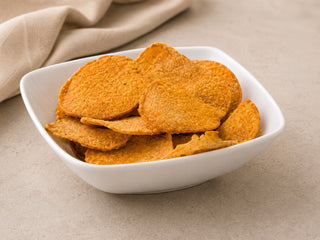
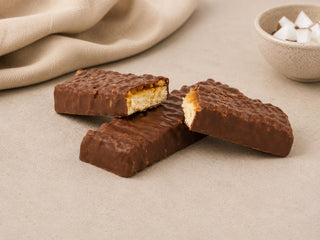
Bioteïne protein bars and protein snacks are designed for exactly this scenario: a snack for moments when nuts would blow your calorie target. Fixed portion, known macros, no scales required.
Want to see the full picture of how snacks fit into a structured weight-loss plan? The Bioteïne 4-phase system explains how your protein needs shift with each phase and which products suit each one best.
Frequently asked questions
How much protein is in almonds per 100 grams?
Almonds contain roughly 21 grams of protein per 100 grams. That's high for a plant-based source, but almonds also carry 579 kilocalories per 100 grams. A realistic 30 gram portion works out to about 6 grams of protein and 174 kilocalories.
Are peanuts the most protein-rich nut?
Yes. Peanuts, with around 25 grams of protein per 100 grams, contain more protein than any other common nut. Botanically, peanuts are actually legumes rather than true nuts. Pistachios also score well, with over 20 grams of protein per 100 grams.
Can you lose weight if you eat nuts every day?
Yes, as long as the portion is kept consistent. A daily portion of 25 to 30 grams fits within a calorie deficit. The problem is that nuts are easy to overeat. Without weighing them out, it's easy to underestimate what counts as "a handful."
Which nut has the fewest calories?
Pistachios and cashews have the lowest calorie density among common nuts, at roughly 557 to 567 kilocalories per 100 grams. Walnuts sit at the top, at 654 kilocalories per 100 grams, thanks to their high fat content.
How many nuts a day on a high-protein diet?
A daily portion of 25 to 30 grams is a reasonable guideline. That delivers 5 to 8 grams of protein. Nuts are a supplement to your diet, not a primary protein source. Anyone with higher protein targets needs more targeted sources.
Is peanut butter a good protein source when losing weight?
Peanut butter has similar macros to peanuts: high in protein but also high in calories. A 15 gram tablespoon delivers around 4 grams of protein and 90 kilocalories. As long as you watch the portion, it's fine to include. It won't burn fat, but it's not forbidden either.
What's a better snack than nuts if I'm trying to lose weight?
For more protein per kilocalorie, dedicated protein snacks, low-fat dairy or protein bars beat nuts by a clear margin, delivering two to four times as much protein per 100 kilocalories. Their portions are also fixed, which makes overeating harder.
Do all nuts contain complete protein?
No. Nuts contain plant protein with an incomplete amino acid profile. They're relatively low in lysine. That's not an issue with a varied diet, but anyone relying solely on nuts for their protein intake may not fully meet their amino acid needs.