


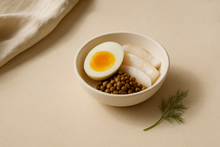

Why does a protein-rich meal keep you full for longer?
Protein satisfies more effectively than carbohydrates or fats, because it activates several satiety systems simultaneously. It stimulates the release of the hormones PYY and GLP-1, suppresses the hunger hormone ghrelin, and has a high thermic value of 20-30%. A meal containing 30-40 g of protein has been shown to reduce calorie intake in the hours that follow.
The hormones behind your hunger and fullness
Your body doesn't manage hunger through willpower. It does so through hormones, and the two main players are ghrelin and leptin. Ghrelin is the hunger hormone: it rises before a meal and falls afterwards. Leptin, produced by your fat tissue, signals fullness. But that's not the whole story.
Protein specifically activates two gut hormones that carbohydrates and fats barely touch: PYY (peptide YY) and GLP-1 (glucagon-like peptide 1). Both slow down gastric emptying and send a fullness signal to the hypothalamus. That signal stays active for longer after a protein-rich meal than after a carbohydrate-rich meal with the same calorie count.
A study published in Cell Metabolism (Cummings & Overduin, 2007) found that protein keeps ghrelin levels significantly lower for three hours after a meal, compared with fat and carbohydrates. In practice, that means less urge to snack between lunch and dinner.
The difference between macronutrients
| Macronutrient | Satiety effect | Effect on ghrelin | Thermic effect |
|---|---|---|---|
| Protein | High | Strong drop | 20-30% |
| Carbohydrates | Moderate | Moderate drop | 5-10% |
| Fats | Moderate | Slight drop | 0-3% |
The thermic effect: calories you burn for free
Processing food takes energy. This is known as the thermic effect of food (TEF). For protein, that's 20-30% of the calories consumed. For carbohydrates, it's 5-10%. For fat, almost nothing.
To put it plainly: eat 100 kcal of protein and digesting it costs 20-30 kcal. So that food nets you 70-80 kcal. Eat 100 kcal of fat, and digestion costs barely 2-3 kcal. That gap adds up over the course of a day.
A daily intake of 120 g of protein from food (480 kcal) therefore costs 96-144 kcal to digest. That's comparable to 20-30 minutes of brisk walking, purely through what you eat. No exercise. No extra effort. This mechanism is one of the reasons high-protein diets consistently show better results for weight management in research, even when total calorie intake is kept equal.
Gastric emptying: why protein lingers in your stomach for longer
Your stomach isn't a simple bag. It actively regulates how quickly food moves into the small intestine, a process controlled by receptors in the stomach wall. Protein activates these receptors more strongly than carbohydrates do.
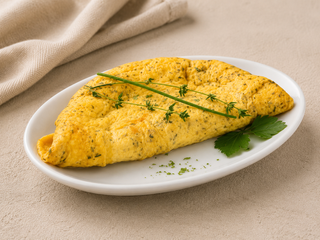
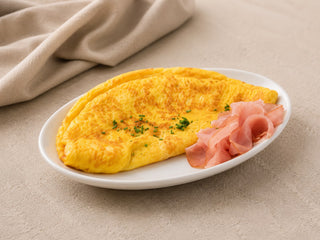
Gastric emptying after a protein-rich meal takes around 3-4 hours on average. After a meal made up mainly of refined carbohydrates, the stomach is already empty within 1-2 hours. That explains why you're hungry again 90 minutes after a white cheese roll (low protein, plenty of fast-digesting carbs), while an omelette with vegetables keeps you going for hours.
The slowest digestion occurs with casein, a protein found in milk. Casein forms a gel in the stomach that breaks down very gradually. That's precisely why Bioteïne meal replacements incorporate casein-containing protein sources: they offer steadier satiety than pure whey-protein products.
How much protein do you need for optimal satiety?
The threshold at which protein noticeably satisfies sits at around 25-30 g per meal. Below that, the effect is limited. Above 50 g per meal, the added benefit levels off, although a higher daily protein intake still supports muscle maintenance.
The Dutch Nutrition Centre (Voedingscentrum) recommends 0.8 g of protein per kg of body weight per day as a baseline. For weight management or active adults, recommendations typically run higher, at 1.2-1.6 g per kg. For someone weighing 80 kg, that works out to 96-128 g of protein a day.
A practical spread across the day
- Breakfast: 25-30 g protein (think Greek yoghurt with quark, or a protein shake)
- Lunch: 30-35 g protein (chicken breast, pulses, or a protein-rich meal replacement)
- Dinner: 30-40 g protein (fish, meat, or a vegetarian protein source)
- Snacks: 10-15 g protein (a protein bar or snack)
That spread isn't arbitrary. Research by Paddon-Jones et al. (American Journal of Clinical Nutrition, 2009) showed that spreading protein intake across the day stimulates muscle protein synthesis more effectively than consuming the same total amount in one or two meals. And more muscle mass means a higher resting metabolic rate, which in turn supports satiety.
Not sure exactly where you stand? The Bioteïne phase test helps you work out which protein requirement and schedule suits your situation.
Protein and the brain: satiety doesn't start in your stomach
An underrated mechanism: amino acids, the building blocks of protein, act directly on the brain. Tryptophan, an amino acid found abundantly in animal protein, is the precursor to serotonin. Higher serotonin levels dampen cravings, particularly for sweet, carbohydrate-rich food.
This isn't a placebo effect. Clinical research shows that people with a higher protein intake eat less impulsively and react less strongly to environmental cues, such as the smell of food or seeing an advert for snacks. The precise neurochemical pathways haven't been fully mapped yet, but the behavioural effects are consistent across meta-analyses.
Tyrosine, another amino acid, is the precursor to dopamine. Dopamine governs not just reward but also the motivation to eat. A stable dopamine balance, supported by adequate protein intake, reduces so-called "food reward" behaviour, where you eat in response to emotions rather than genuine hunger.
What happens when you don't eat enough protein?
Too little protein isn't just a matter of satiety. It has direct physiological consequences. The body breaks down muscle tissue to meet its amino acid needs. Losing muscle mass lowers your basal metabolic rate, meaning your body burns fewer calories at rest.
This mechanism sits at the heart of the yo-yo effect. A calorie-restricted diet without adequate protein intake (below 0.8 g/kg) leads to measurable muscle loss within 4-8 weeks. The British Dietetic Association emphasises that preserving muscle during weight loss depends on both protein quality and how it's spread across the day.
Protein quality is expressed using the PDCAAS (Protein Digestibility Corrected Amino Acid Score). Animal protein typically scores 1.0, the maximum. Plant protein scores lower, but combinations of plant sources (e.g. rice plus peas) can achieve a comparable profile. That's why Bioteïne products use combined protein sources.
Signs your protein intake may be too low
- Constant hunger, even shortly after a meal
- Afternoon fatigue with no obvious cause
- Loss of muscle strength or mass despite an active lifestyle
- Slow wound healing or brittle nails
- Strong cravings for sweet snacks
Protein-rich products in practice: what works and what doesn't
Not every product labelled "high protein" is created equal. Three variables determine how satisfying a product genuinely is: the amount of protein per 100 kcal, protein quality (PDCAAS), and the speed of digestion.
| Product type | Protein per serving (g) | kcal per serving | Digestion | Satisfying? |
|---|---|---|---|---|
| Chicken/fish (150 g) | 35-40 | 150-200 | Slow | High |
| Greek yoghurt (200 g) | 18-20 | 130-150 | Moderate | Moderate |
| Bioteïne meal replacement | 25-30 | 200-250 | Slow (casein) | High |
| White bread + cheese | 8-10 | 250-300 | Fast (carbohydrates) | Low |
| Nut mix (30 g) | 5-7 | 180 | Moderate | Low-moderate |
A white bread roll with cheese might give you 8-10 g of protein per serving, but 250-300 kcal alongside it. That's a lot of calories for very little satiety in return. A structured protein meal, such as those in the Bioteïne meal collection, delivers more protein per calorie, which considerably improves satiety per kcal.
A quick check you can do at home: work out the protein density. That's the number of grams of protein divided by the number of kcal, multiplied by 100. Anything above 10 is good. Anything above 15 is excellent. A Bioteïne meal replacement typically sits at 12-15. Chicken breast comes in at 22. A nut mix? Just 3-4.
The 4-phase system: satiety as a building block of structure
Satiety isn't an end in itself. It's a tool. If you're not constantly hungry, you can stick to an eating pattern. That's the functional reason protein intake sits at the heart of structured diet programmes.
The Bioteïne 4-phase system builds up protein intake phase by phase. In the first phase, which typically lasts 2-4 weeks, daily protein intake is raised to 100-130 g. During this period, users consistently report less hunger, less impulsive snacking, and steadier energy levels. That's not a coincidence. That's physiology.
Want to understand how this fits into a complete schedule? You'll find a detailed explanation in the Bioteïne high-protein diet guide. The guide covers not just macro distribution, but also the practical logistics of a high-protein week: shopping, meal prep, and navigating social situations.
Want to get started straight away without much preparation? The Bioteïne starter pack contains a curated combination of products for your first two weeks. That gives you structure without having to put everything together yourself.
Frequently asked questions
How much protein do I need per meal to stay full?
The threshold for a noticeable satiety effect sits at 25-30 g of protein per meal. Less than 20 g has a limited effect on hormone release. More than 50 g per meal doesn't add further satiety benefit, although your total daily intake still matters for muscle maintenance.
Does plant protein satisfy just as well as animal protein?
Plant protein does satisfy, but tends to have a lower PDCAAS score than animal protein on average. Combinations of plant sources, such as rice with peas or lentils with quinoa, largely make up for this. The total amount per meal therefore matters slightly more than it does with animal protein.
Why am I sometimes hungry again quickly after a high-protein meal?
Possible causes: the meal contained less protein than you thought, the protein source was digested quickly (whey moves faster than casein or meat), or you were dealing with emotional cravings rather than genuine hunger. Keeping a food diary for 3-5 days usually clarifies which scenario applies.
What exactly does protein do to the hormone ghrelin?
Protein suppresses ghrelin, the hunger hormone, for longer than carbohydrates or fats do. Ghrelin levels stay significantly lower for three hours after a protein-rich meal. This effect has been documented in multiple clinical studies and is one of the key mechanisms behind protein's satiating effect.
Is it harmful to eat 120-130 g of protein every day?
For healthy adults without kidney conditions, 1.2-1.6 g of protein per kg of body weight per day is safe and well supported in the scientific literature. If you have kidney issues or a specific medical condition, it's wise to consult a doctor or dietitian before increasing your intake.
Does protein really burn more calories than other macronutrients?
Yes. The thermic effect of protein is 20-30% of the calories consumed. That means 100 kcal of protein nets you 70-80 kcal. For carbohydrates, this is 90-95 kcal, and for fat, 97-98 kcal. Over a day with 120 g of protein, this difference adds up to 80-120 kcal of extra calorie burn through digestion alone.
How quickly will I notice the satiety effect after increasing my protein intake?
Most people notice a difference in hunger within 3-5 days of increasing protein intake to 100 g or more per day. Hormonal adjustments, particularly ghrelin regulation, typically stabilise within 1-2 weeks. A structured schedule, such as the Bioteïne 4-phase system, speeds up the adjustment.
What's the difference between whey and casein for satiety?
Whey protein is absorbed quickly, giving a short, sharp peak in amino acid concentration. Casein digests slowly, providing a steady, sustained release of amino acids. For satiety over 3-5 hours, casein is more effective. Whey is better suited to right after training, when rapid absorption is desirable.