







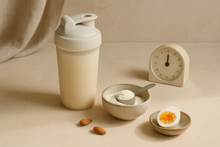
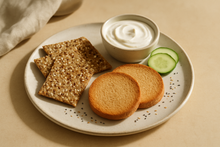



The short answer: the difference at a glance
A protein diet increases your daily protein intake to somewhere between 1.6 and 2.4 grams per kilogram of body weight, with the aim of preserving muscle and keeping you fuller for longer. A low-carb or ketogenic diet, on the other hand, restricts carbohydrates to under 50 grams a day to switch the body into fat-burning mode via ketosis. The two approaches overlap in places, but their underlying mechanisms and typical use cases are genuinely different.
What is a protein diet
A protein diet is a nutritional strategy that deliberately increases protein as a proportion of your macronutrients. The standard UK Reference Nutrient Intake sits at around 0.8 grams of protein per kilogram of body weight. On a protein diet aimed at weight loss or body recomposition, this is raised to between 1.6 and 2.4 grams per kilogram, depending on activity level and goals.
Why does this work? Protein has the highest thermic effect of any macronutrient. Digesting it alone burns 20 to 30 percent of the calories it contains. Fat and carbohydrates, by comparison, sit at 0 to 3 percent and 5 to 10 percent respectively. This is documented in research published in the American Journal of Clinical Nutrition (Westerterp-Plantenga et al., 2004).
Beyond thermogenesis, protein triggers a stronger satiety response through the hormones GLP-1 and PYY, which help dampen hunger. This is what makes a protein diet genuinely sustainable in practice: you naturally eat fewer calories without having to count them obsessively.
A typical day's eating on a protein diet for someone weighing 75 kilograms might look like this:
- Breakfast: 30 grams of protein
- Lunch: 35 grams of protein
- Dinner: 40 grams of protein
- Snacks: 15 to 20 grams of protein
- Total: 120 to 125 grams of protein per day
For more background on building a protein-rich eating pattern, see the Bioteïne protein diet guide.
What is a low-carb or ketogenic diet
A low-carb diet limits carbohydrate intake to 50-130 grams a day. A ketogenic diet goes further still: under 20-50 grams of carbohydrates daily, low enough to shift the body into ketosis. In ketosis, the liver produces ketone bodies as an alternative fuel source for the brain and muscles.
The typical macro split on a ketogenic diet looks like this:
- Fat: 65 to 75 percent of total calories
- Protein: 20 to 25 percent
- Carbohydrates: 5 to 10 percent
Weight loss in the first few weeks can be substantial, though a good part of it is down to glycogen depletion and the water that goes with it. For every gram of glycogen stored, the body holds onto roughly 3 grams of water. With around 400 grams of glycogen in storage, starting a ketogenic diet can mean an immediate drop of 1.2 to 1.6 kilograms in water weight alone.
Low-carb diets are also used for specific metabolic conditions. The British Dietetic Association recognises the ketogenic diet as a clinical tool for epilepsy and is researching its use in type 2 diabetes.
The practical downside is how restrictive the eating pattern becomes. Grains, pulses, fruit in larger amounts and most dairy are largely off the table. That calls for a genuine overhaul of your usual eating habits.
Protein diet vs low-carb: a direct comparison
The table below sets the two strategies side by side on the points that matter most in practice.
| Feature | Protein diet | Low-carb / keto |
|---|---|---|
| Primary focus | Increased protein intake (1.6-2.4 g/kg) | Carbohydrate restriction (<50 g/day) |
| Protein intake | High (120-160 g/day) | Moderate (80-110 g/day) |
| Carbohydrate intake | Not restricted (150-250 g/day possible) | Strictly limited (20-50 g/day) |
| Satiety | High, via GLP-1 and PYY | High, via ketone bodies and fat intake |
| Muscle preservation | Strong (mTOR activation, leucine threshold) | Moderate to good with sufficient protein |
| Initial weight loss (weeks 1-2) | 0.5-1.0 kg fat mass | 1.5-3.0 kg (including water loss) |
| Longer-term fat loss | Consistent with a calorie deficit | Comparable after 3-6 months |
| Sustainability | High (few restrictions) | Low to moderate (strict rules) |
| Suitable for athletes | Yes, including intensive training | Limited for explosive or endurance sport |
| Clinical risk | Low with normal kidney function | Monitoring advised for long-term use |
Which works better for whom
Which approach works best depends on your personal profile, lifestyle and goals. There's no universal answer, but there are some clear pointers.
A protein diet suits you better if
- you train regularly or want to actively preserve muscle mass while losing weight
- you have a sociable eating pattern and don't want to rethink every dinner out
- you've had a rough time with strict elimination diets in the past
- you want to combine weight loss with improving body composition
- your BMI is above 27 and you're after lasting, structural change
A low-carb diet suits you better if
- you want a quick, motivating result on the scales in the first two weeks
- you have insulin resistance or prediabetes (always under professional guidance)
- you're not particularly active and mostly do sedentary or light work
- you cope well with dietary restrictions and find structure reassuring
A meta-analysis published in Nutrients (Paoli et al., 2018) shows that low-carb and high-protein diets produce comparable results for weight loss over 12 months, provided total calorie intake is equivalent. The real difference lies in how practical each approach is day to day, and in how well muscle mass is preserved.
Can you combine a protein diet with a low-carb approach
Yes, you can. A high-protein, low-carb approach is a hybrid strategy that's popular in clinical weight management, though it does come with specific conditions.
With this combination, the macro split typically looks like this:
- Protein: 30 to 40 percent of calories
- Fat: 40 to 50 percent
- Carbohydrates: 10 to 20 percent
This combination boosts satiety, protects muscle mass and supports fat-burning. The downside is that the bar for genuine ketosis sits higher, since excess protein can be converted to glucose through gluconeogenesis. In other words, true ketosis isn't always guaranteed at higher protein intakes.
For anyone prioritising sporting performance, this combination is less suitable. Glycogen is the primary fuel source above 70 percent of maximum heart rate, so restricting carbohydrates can hurt both training performance and recovery speed.
Common mistakes with both approaches
Mistake 1: not eating enough protein on a low-carb diet
Many people following a low-carb diet focus on fat and forget about protein. Protein intake can then drop to as low as 60-80 grams a day, well below the threshold needed for muscle preservation. On a low-carb diet, aim for at least 1.2 grams of protein per kilogram of body weight.
Mistake 2: counting protein but ignoring calories
A protein diet naturally reduces overall calorie intake through satiety, but that's not a licence to eat without limits. Fat contains 9 kcal per gram, so combining high fat intake with high protein intake can still tip you into a calorie surplus.
Mistake 3: abandoning the diet too quickly after hitting a plateau
Weight loss slows after 2 to 4 weeks on either diet. This is entirely normal, physiologically speaking. The body adjusts its resting metabolic rate through adaptive thermogenesis, and basal metabolism typically falls by 10 to 15 percent after more than 4 weeks in a calorie deficit. This isn't a sign the strategy has failed.
Mistake 4: spreading protein unevenly across the day
Research shows that muscle protein synthesis is optimised with at least 20 to 40 grams of protein per meal, largely thanks to the leucine threshold of around 2 to 3 grams per serving. Loading it all into one large meal is less effective than spreading it across 3 to 4 meals or snacks.
Mistake 5: forgetting to count snacks
Calorie-dense snacks labelled "low-carb" can sometimes contain more than 400 kcal per 100 grams thanks to their high fat content. Always check the nutritional label and factor it into your daily total.
The Bioteïne approach: structure over restriction
Bioteïne doesn't work to a single dietary label. The system is built around four phases, with protein intake as the central anchor and carbohydrate intake adjusted per phase according to your goal: losing weight, stabilising, or maintaining.
The four phases are built on the principle that a controlled protein intake of 1.6 to 2.2 grams per kilogram delivers the most robust results over periods of 8 to 16 weeks. That's not a claim plucked from thin air, it's consistent with BDA guidance and the research into protein requirements during energy restriction.
Bioteïne products are designed to cover specific protein moments in your day without requiring a full overhaul of your eating pattern. A shake delivers 25 to 30 grams of protein at 150 to 180 kcal. A bar offers 15 to 20 grams of protein as a snack. Which you choose depends on your phase and your needs.
The Bioteïne starter pack contains products for the first two phases, together with a practical guide to structuring your daily protein moments. If you're not sure which phase you're in, the phase test is a sensible place to start.
More detail on building a fully protein-rich eating pattern can be found in the Bioteïne protein diet guide, which also includes sample daily menus based on weight and activity level.
Frequently asked questions
What's the biggest difference between a protein diet and a low-carb diet?
A protein diet actively raises protein intake to 1.6-2.4 grams per kilogram to support muscle preservation and satiety. A low-carb diet restricts carbohydrates to under 50 grams a day to trigger fat-burning through a metabolic shift. The focus and the underlying mechanism differ, though the two diets do overlap in places.
Which diet gives faster results on the scales?
A low-carb or ketogenic diet produces a faster drop on the scales in weeks 1 and 2, averaging 1.5 to 3 kilograms. A large part of this is water loss from glycogen depletion rather than fat mass. After 3 to 6 months, fat mass loss is comparable to that of a protein diet.
Is a protein diet harmful to your kidneys?
With healthy kidney function, an increased protein intake of 1.6 to 2.2 grams per kilogram of body weight has not been shown to cause harm. This has been confirmed in several systematic reviews. If you have existing kidney issues, a lower threshold applies, so speak to a dietitian before increasing your protein intake.
Can you eat low-carb and still get enough protein?
Yes. A low-carb diet doesn't exclude protein-rich foods. Meat, fish, eggs, cottage cheese and certain hard cheeses are both low in carbohydrates and high in protein. It takes a bit of planning, but 120 grams of protein a day is entirely achievable on a low-carb approach.
What's better for preserving muscle while losing weight?
A protein diet performs better here. Higher protein intake activates mTOR signalling and consistently hits the leucine threshold of around 2 to 3 grams per serving. This protects muscle mass during a calorie deficit better than a standard low-carb diet with moderate protein intake.
How long before you see results on a protein diet?
The first measurable changes in body composition typically appear after 3 to 4 weeks. Weight loss on the scales usually starts within the first week given a calorie deficit of 300-500 kcal a day. Visible changes in body shape generally take 6 to 8 weeks with consistent application.
Are there diets that combine a protein diet with low-carb eating?
Yes. A high-protein, low-carb approach is a hybrid strategy using 30 to 40 percent protein and 10 to 20 percent carbohydrates. This combines muscle preservation with increased fat-burning. Genuine ketosis isn't always achievable at higher protein intakes, but this isn't necessary for weight loss or body composition goals.
Which approach is easiest to sustain long term?
A protein diet scores higher on sustainability than a strict low-carb diet. Fewer food groups are off-limits, social occasions remain manageable, and intake is easier to adjust flexibly. Research shows adherence at 12 months is consistently higher for a protein diet than for a ketogenic diet.