
What makes a cracker "protein-rich"?
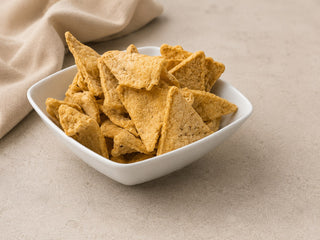
A protein cracker contains at least 15 grams of protein per 100 grams and considerably fewer fast carbs than a standard wheat cracker. Ordinary crackers typically deliver 2 to 4 grams of protein per 100 grams, whereas a protein cracker hits three to four times that figure. The difference lies in the base ingredient: wheat flour makes way for soya, pea or whey protein.
Sounds straightforward enough. Yet plenty of products marketed as "protein crackers" are really just ordinary crackers with a small protein boost and the same amount of fast carbs as ever. It pays to check the nutrition label before you buy.
Crackers mark one of those moments in the day that can make or break a diet. You want something small, you don't fancy cooking, and before you know it you've eaten three rice cakes that barely touch the sides. A low-carb cracker with a genuine protein content solves that snack moment without derailing your daily macro target.
Protein cracker vs ordinary cracker: the numbers
The table below compares an average protein-rich cracker with a standard wholewheat cracker and a plain rice cake. All values are per 100 grams, based on typical product averages.
| Product | Energy (kcal) | Carbs (g) | Of which sugars (g) | Protein (g) | Fibre (g) | Fat (g) |
|---|---|---|---|---|---|---|
| Protein cracker (soya/pea) | 370 | 28 | 2 | 28 | 8 | 10 |
| Wholewheat cracker | 415 | 68 | 3 | 9 | 5 | 12 |
| Rice cake (plain) | 388 | 82 | 1 | 7 | 1 | 3 |
A gap of 19 grams of carbs per 100 grams sounds abstract until you put it in context: two ordinary crackers (roughly 25 grams) already provide over 17 grams of carbohydrate. Two protein crackers of the same portion give you just 7 grams. That adds up, especially if you have four snack moments a day.
Fibre deserves a mention too. A rice cake has virtually none, which is why four of them still leave you hungry. A protein cracker with 8 grams of fibre per 100 grams keeps blood sugar steadier and slows gastric emptying. The Voedingscentrum (the Dutch nutrition authority) recommends 30 to 40 grams of fibre a day; a cracker with a decent fibre content makes a real contribution to that.
What to check on a protein-rich cracker
Not every low-carb cracker is a protein cracker. And not every protein cracker suits a strict protein diet. Three things are worth your attention.
The protein source
Soya isolate, pea protein and whey protein are the most common sources. Soya isolate and whey protein both contain all the essential amino acids. Pea protein is low in methionine but works perfectly well as part of a varied daily diet. Crackers based purely on oats or seeds contain little complete protein, however "protein-rich" the packaging claims to be.
The sugar content
Some protein crackers compensate for the added protein with added sugar for flavour. Check the "of which sugars" line: anything above 5 grams per 100 grams is a sign the manufacturer has traded nutritional quality for taste. Under 3 grams is fine.
The serving size on the pack
Manufacturers sometimes list a 15-gram serving to make the macros per portion look impressive. Always convert the figures to per 100 grams. That's the fair basis for comparison.
Want to know exactly which phase of a protein diet you're in and what your daily protein target should be? The phase test gives you a personal benchmark in under two minutes.
Toppings that don't sabotage your macros
The cracker itself might tick every box, yet you can still miss your macro target if the topping doesn't play along. This is where most people trip up.
Toppings that work
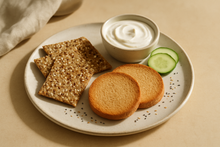
- Cottage cheese or quark: 11 to 13 grams of protein per 100 grams, low in fat and carbs. Easy to portion.
- Chicken or turkey breast (plain): 22 grams of protein per 100 grams. Watch out for added salt and preservatives in pre-packed cold cuts.
- Hard-boiled egg: 13 grams of protein per egg, and satisfying too. Two crackers with egg and a touch of mustard already make a proper little snack.
- Low-fat cream cheese or cottage cheese: functional, neutral in flavour, and pairs with both savoury and lightly sweet toppings.
Toppings to keep in check
- Peanut butter (regular): high in fat, modest protein contribution per layer. One teaspoon is fine as a flavour hit, but three tablespoons soon add up in calories.
- Butter plus full-fat cheese: a perfectly good calorie choice if the rest of your day is light, but it will undo a calorie deficit if it becomes your default.
- Sweet toppings: jam, chocolate sprinkles, honey. Low in protein, high in fast sugars. This largely cancels out the point of the protein cracker in the first place.
The British Dietetic Association notes that snacks within a weight-management diet should ideally provide at least 10 grams of protein while keeping overall calorie intake deliberately low. Two protein crackers with chicken or cottage cheese sit comfortably within that range.
Do protein-rich crackers fit into phase 1?
Phase 1 of a medically sound protein diet is typically the most restrictive stage, with a daily carbohydrate ceiling of 50 to 80 grams and a protein target of 1.2 to 1.5 grams per kilogram of bodyweight. Standard crackers fall outside those limits almost immediately.
A good protein cracker with 28 grams of protein and 28 grams of carbs per 100 grams does fit, provided the portion is right. Two crackers of 12 grams each supply around 7 grams of carbs and 6.7 grams of protein together, which is a realistic snack for phase 1, particularly paired with a protein-rich topping.
Crispbread is a different story. Standard crispbread is almost entirely fast carbs, with fewer than 9 grams of protein per 100 grams and up to 76 grams of carbohydrate. Protein-rich crispbread barely exists as a category. In phase 1, you're better off leaving it on the shelf.
Want the complete overview of what fits into which phase, including portion sizes and macro limits? The protein diet guide lays it out step by step.
A recent meta-analysis published in Nutrients (2019) found that a higher protein intake during calorie restriction protects muscle mass more effectively than a standard protein intake. Exactly why every snack, crackers included, counts.
Bioteïne crackers: purpose-built for protein-diet moments
Bioteïne's crackers were developed as a direct replacement for the snack moment where most diet plans come unstuck. They contain at least 25 grams of protein per 100 grams, fewer than 30 grams of carbs per 100 grams, and come in flavours suited to both savoury and lightly sweet toppings.
They're not meant to be a main meal. They're meant for that 10.30am or 3pm moment when you'd otherwise reach for something else entirely. That moment is the hinge on which a successful diet day swings.
Bioteïne crackers form part of the wider snacks range, which ties into the 4-phase system. Every cracker is phase-labelled, so there's no need to calculate or second-guess anything.
Browse the full range of protein snacks, crackers included, via the snacks collection. If you'd rather start with a complete set for your first few weeks, the starter pack gives you a structured overview without having to piece everything together yourself.
The crackers also combine well with other Bioteïne products. Shakes for breakfast, a cracker as a snack, and a meal replacement for lunch: that pattern delivers a consistent 90 to 110 grams of protein a day without you having to work out every meal yourself.
Frequently asked questions
How much protein does a protein-rich cracker contain per piece?
That depends on the weight per piece. A 12-gram cracker with 25 grams of protein per 100 grams provides 3 grams of protein per piece. Two crackers give you 6 grams. Add a protein-rich topping and you're quickly at 10 to 14 grams per snack moment.
Are protein crackers a suitable bread replacement?
As a full bread replacement they're too limited in volume and calories. As a replacement for a bread-based snack, they work well. For a fully protein-rich eating pattern, it's worth considering meal replacements alongside crackers too.
What's the difference between a protein cracker and a low-carb cracker?
A low-carb cracker simply contains fewer carbs, not necessarily more protein. A protein cracker scores on both counts: more protein and fewer fast carbs. Check both columns on the nutrition label to spot the difference.
Can you eat crackers during phase 1 of a protein diet?
Standard crackers almost never fit into phase 1. Specific protein crackers with fewer than 30 grams of carbs per 100 grams can work, provided the daily carb limit of 50 to 80 grams isn't exceeded. Use the phase test to find your own limit.
How does protein-rich crispbread compare with protein crackers?
Protein-rich crispbread barely exists as a category. Standard crispbread contains 75 to 80 grams of carbs per 100 grams and fewer than 9 grams of protein. For a protein diet, crispbread is generally a poor choice and best avoided, particularly in the early phases.
How many crackers can I have per day on a protein diet?
That depends on your total daily carb budget. With a daily maximum of 80 grams of carbs and two to three other meals, there's usually room for two to four protein crackers as a snack. Work out your budget for the day in advance.
Are protein-rich crackers suitable if you're lactose intolerant?
That depends on the protein source. Crackers based on soya isolate or pea protein are usually lactose-free. Whey protein naturally contains lactose unless the product is certified lactose-free. Check the ingredients label specifically for whey protein concentrate versus isolate.
What's a realistic protein target for a snack?
The British Dietetic Association uses 10 grams of protein per snack as a practical baseline for people actively optimising their protein intake. Two protein crackers with a spoonful of cottage cheese or a slice of chicken breast comfortably hit that target, all for under 200 kilocalories.