
Bioteïne products or cooking from scratch: what actually works better?
Ready-made protein products don't replace home-cooked meals entirely, but they solve a very real problem: consistency. Cooking from scratch gives you fresh food, but it takes time, requires planning, and often results in macros that vary from day to day. Ready-made products offer fixed portion sizes, known protein content, and zero prep time. Both approaches have a place in a diet that actually works.
It's a fair question people ask. You're stood in the supermarket, you see chicken breast for a couple of quid, and you think: why would I bother buying a shake or a bar? That's a reasonable thought. The answer isn't about the ingredients themselves, it's about the reality of everyday life.
What cooking from scratch gives you, and what it costs you
Cooking has genuine advantages. Fresh ingredients, control over salt and fat, variety on the plate. A home-cooked meal of 200g chicken breast, 150g broccoli and 100g wholegrain rice delivers around 45g protein, 380 kcal, and might cost you around £2.20 in ingredients. On paper, unbeatable.
But it costs you something too. Shopping, prepping, cooking, washing up. On average, 25 to 45 minutes per meal. Do that three times a day and you've lost an hour and a half. Five days a week, that's over seven hours. That's an entire working day.
The real problem: day three and day four
Monday, you prep your weekly menu with enthusiasm. Tuesday, still going strong. But Wednesday the meeting overruns, and Thursday the kids are poorly. Then what? You eat whatever's around. A sandwich, a bar of chocolate, something quick on the go. The protein target (typically 1.2 to 1.6g per kg bodyweight when dieting, according to Dutch nutrition centre guidelines) simply doesn't get hit that day.
That's not a lack of willpower. That's logistics. And you don't fix logistics with more discipline. You fix it with better structure.
The macro comparison: what actually delivers what?
Below is an honest comparison of home-cooked options versus comparable Bioteïne products. The figures are based on standard portion sizes and average preparation.
| Option | Protein (g) | kcal | Prep time | Cost (approx.) |
|---|---|---|---|---|
| Home-cooked chicken meal (200g chicken + veg + rice) | 45 | 380 | 30-40 min | £2.20-3.00 |
| Home-made Greek yoghurt + nuts + fruit | 18 | 280 | 5 min | £1.60-1.90 |
| Home-made protein shake (whey, milk, banana) | 28-32 | 340 | 5 min | £1.30-1.70 |
| Bioteïne protein meal shake | 27-30 | 200-230 | 2 min | £2.60-3.00 |
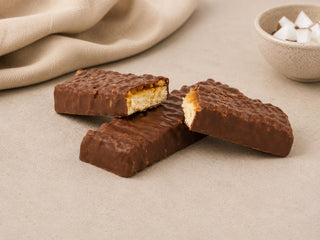
| Bioteïne protein bar | 20 | 200 | 0 min | £2.20-2.60 |
| Bioteïne high-protein meal (ready-made) | 30-35 | 300-360 | 4-5 min (microwave) | £3.50-4.30 |
What stands out is that the protein per portion doesn't differ dramatically between options. The real gap is in kilocalories. A home-made shake with full-fat milk and banana quickly adds up to 100 kcal more than a Bioteïne shake with a similar protein content. On a daily calorie deficit of 500 kcal, those extra 100 kcal add up over a year to more than 30,000 kcal. That's nearly 4kg of body fat.
When cooking from scratch is the better choice
Cooking works well when you have structure in place. Some concrete situations where it makes sense:
- You cook for a family and can adjust your own portion without extra effort
- You have a fixed batch-cooking day (Sunday afternoon, two hours, four days' worth ahead)
- Your main meals are well planned and it's really only snacks and breakfasts that slip through the cracks
- Your calorie target is higher (for building muscle) and you have room for more calorific home-cooked meals
In these situations, cooking from scratch genuinely pays off. Not just in nutrients, but in satisfaction, variety, and a sense of control. That's worth something.
Batch cooking: the numbers
If you spend two hours cooking on a Sunday, you can typically prepare four to five main meals. That covers Monday through Thursday. The remaining meals, breakfast, lunch, snacks, still need sorting. And that's exactly where the shortfalls creep in. A 2017 study published in the International Journal of Behavioral Nutrition shows that people who plan meals tend to have a significantly lower BMI, but also that planning most often breaks down around non-main meals: breakfast and snacks.
Where ready-made protein products make the difference
There are three points in the day where home-cooked meals fail most often.
The first is breakfast. If you don't have time to scramble eggs, you grab a sandwich. Two slices of bread with cheese might give you 14g of protein. A Bioteïne shake delivers 27-30g in two minutes. That gap of 13-16g protein a day, seven days a week, adds up to almost 100g of protein a week. Not something to dismiss.
The second is the mid-afternoon slump. Between 3pm and 5pm, blood sugar dips, concentration drops, and you reach for whatever's nearest. If that's a protein bar with 20g protein and 200 kcal, you've done well. If it's a biscuit, not so much.
The third is after exercise. Muscles are most receptive to protein in the first 30-60 minutes after training, sometimes called the anabolic window (though newer studies suggest this matters less than once thought). If you still need to cook at that point, you'll be eating an hour later. Drinking a shake is simply the more practical option.
The quality argument: is home-made more nutritious?
Many people assume so. And for certain micronutrients, that's true. Fresh vegetables, oily fish, nuts: these deliver vitamins, minerals and fatty acids you won't find in a protein shake.
But for the specific goal of protein intake during weight management, the comparison is more nuanced. Protein quality (measured via the PDCAAS score, a standard for protein digestibility and amino acid profile) for whey protein is 1.0, the maximum possible score. Chicken breast sits at 0.91. Wholegrain rice at 0.47. Gram for gram, whey protein delivers a more bioavailable amino acid profile than most home-cooked sources, unless you're specifically choosing high-quality animal protein.
That doesn't mean you should live on shakes alone. It means "home-made is better" is too simple a conclusion. It depends entirely on what you're actually making.
What the BDA says about protein products
The British Dietetic Association emphasises that most healthy adults get sufficient protein from ordinary food, but also acknowledges that certain groups (older adults, people in a weight-loss phase, and intensive athletes) can benefit from supplementary protein products. The BDA explicitly states that protein shakes and bars can be a practical addition, provided they don't fully replace meals rich in micronutrients.
That's precisely the hybrid model that good protein diets are built on. Take a look at the Bioteïne high-protein diet guide for an overview of how to structure this in practice.
The hybrid model: the smartest approach
If you only cook from scratch, you miss the buffer for busy days. If you only eat ready-made, you miss variety and well-rounded micronutrients. In practice, a combination gives the most stable results.
A workable schedule looks like this:
- Breakfast: Bioteïne shake or high-protein yoghurt. Quick, high in protein, low in kcal.
- Lunch: Home-made or ready-made, depending on the day. At the office: a Bioteïne meal or bar. At home: home-made soup or a chicken salad.
- Dinner: Home-cooked. This is the moment for fresh vegetables, oily fish, wholegrains.
- Snacks: A protein bar or biscuit when hunger strikes. Prevents unplanned snacking.
This schedule delivers, on a 1,600 kcal day, an average of 120-140g protein. For someone weighing 75kg, that's 1.6-1.9g per kg bodyweight, comfortably within the evidence-based range for weight loss while preserving muscle mass.
Want to know which schedule suits your situation and goals? The Bioteïne phase test gives you a personalised starting point.
The costs, calculated honestly
A common argument is: "Ready-made is expensive." Is that true? Partly.
| Scenario | Cost per day | Protein per day (g) | Prep time per day |
|---|---|---|---|
| 100% home-cooked (3 meals, 2 snacks) | £5.30-8.00 | 90-110 | 60-90 min |
| Hybrid (2x home-cooked, 1x ready-made, 2x snack) | £7.10-9.70 | 120-140 | 35-50 min |
| Mostly ready-made (1x home-cooked dinner) | £8.80-12.40 | 130-150 | 20-30 min |
The cost difference between hybrid and fully home-cooked comes to £1.80-3.50 a day. That's £55-105 a month. Not nothing. But weigh that against the time saved: 15 to 40 minutes less prep time per day. And against the consistency gained: fewer missed protein targets, fewer unplanned snacks.
For people in an active weight-loss period of 8 to 12 weeks, that cost difference can be a sensible investment. Once the habit is established, you can shift more towards cooking from scratch. The Bioteïne starter pack offers a cost-efficient way to structure those first few weeks without having to choose products one by one.
What people underestimate: the mental load of cooking
Food choices largely come down to decision fatigue. Every time you ask yourself what to eat, what you need, whether it fits your macros, that costs mental energy. Behavioural research calls this "decision fatigue": the more decisions you make throughout the day, the worse your later decisions tend to become.
Ready-made products with fixed macros remove that decision entirely. No weighing, no calculating, no second-guessing. That sounds trivial. It isn't. For people already juggling a busy schedule, a calorie deficit (which is cognitively taxing in itself) and behaviour change, having fewer decisions to make is a genuine relief.
Cooking from scratch also demands constant knowledge: do you know exactly how much protein is in 100g of cottage cheese? How many kcal a tablespoon of olive oil adds? How much rice to weigh out for 200 kcal? Research shows most people consistently get this wrong, and almost always underestimate. Fixed products with clear labels remove that uncertainty.
Frequently asked questions
Is cooking from scratch always cheaper than ready-made protein products?
Not always. Home-cooked meals are cheaper in ingredient costs, but once you factor in time costs, food waste and unplanned purchases on busy days, the difference is smaller than it looks. For snacks and breakfast, ready-made protein options are often competitively priced.
How much protein do I need per day for weight loss?
The standard evidence-based guideline is 1.2 to 1.6g protein per kg bodyweight per day during calorie restriction. For someone weighing 75kg, that's 90 to 120g a day. Intensive athletes may need up to 2.0g per kg to preserve muscle mass during a deficit.
Can I use a protein shake as a full meal replacement?
For one or two meals a day, a protein shake as a replacement is perfectly sensible, provided your daily micronutrient intake stays on track through other meals. A whole day of shakes alone is nutritionally incomplete and isn't recommended by dietitians.
How does the protein quality of shakes compare to chicken?
Whey protein has a PDCAAS score of 1.0, the maximum value. Chicken breast scores 0.91. Both are excellent sources with a complete amino acid profile. The difference is small, but whey is absorbed slightly faster, which gives a practical advantage after exercise.
When does batch cooking actually pay off?
Batch cooking works if you have at least one fixed day a week for prep and mainly want to cover your main meals. Breakfast, snacks and lunch at the office remain tricky. A hybrid approach, cooking dinners yourself and sorting the rest ready-made, tends to be more sustainable for most people.
Are protein bars a good snack replacement?
Yes, provided you check the sugar and fibre content. A good-quality protein bar delivers 20g protein for 200 kcal and curbs hunger hormones more effectively than a fast-carb snack. Check the label: more than 10g sugar per bar is a reason to look elsewhere.
How do I know which Bioteïne schedule suits me?
That depends on your starting weight, daily rhythm, protein needs and how much you want to cook yourself. The Bioteïne phase test gives you personalised advice based on a short questionnaire, so you start with the schedule that best fits your situation, without guesswork.
Is it realistic to stick to a protein diet without ready-made products?
Entirely possible, but it requires consistent planning, cooking skills and time. Most people who abandon a protein diet don't do so because they don't understand the concept, but because the logistics collapse on busy days. Ready-made products aren't a substitute for healthy eating, they're a buffer against those moments.