
Social eating while on a diet: what actually works
Social eating needn't sabotage a diet. Most people who abandon their weight loss efforts don't do it on a quiet weekday evening, they do it at a birthday do or a dinner out. If you know in advance what you'll order, roughly how much protein is on the table, and when you're going to allow yourself an exception, you'll stay the course. That's not down to willpower. It's down to preparation.
Still, it's tricky. Not because you're weak, but because social situations built around food work differently. There's pressure, there's abundance, there's alcohol. And nobody wants to be the person at the table lugging around a separate tub of food or asking three times exactly what's in the sauce.
This article gives you a proper system, not vague advice. You'll learn how to hit 80 to 100 grams of protein on a day that includes a dinner out, what to do at a birthday party, how to handle pressure from other people, and when it's fine to simply join in without a shred of guilt.
Why social occasions are the biggest stumbling block
Research from the British Dietetic Association shows that social pressure is one of the main reasons people temporarily or permanently abandon their eating habits. It's not about the calories from one evening. It's about what happens afterwards: the feeling of "well, I've already blown it", followed by a week that spirals.
Picture this: you've eaten disciplined meals for three weeks straight. Then you turn up at a birthday party and eat two slices of cake and a bowl of crisps. Calorie-wise, that barely dents three weeks of effort. Psychologically, though, it can be a tipping point. That's the real risk.
What helps isn't flawless compliance. What helps is a clear framework: which habits are non-negotiable, and which are flexible. You draw that line yourself, in advance, not at the exact moment the cake is being passed round.
The difference between an exception and a slip-up
A deliberate exception is a choice. You eat the birthday cake because you want to, you enjoy it, and afterwards you simply carry on. A slip-up is unintentional, driven by circumstance. The difference isn't in the food itself but in the thinking behind it. Train yourself to spot that distinction. It costs no calories and it protects your progress.
Protein as your anchor: hitting your daily target despite a dinner out
On an ordinary day, reaching 100 grams of protein is fairly straightforward once you know what you're eating. On a day with a dinner or birthday party, the structure is different: you might skip lunch, eat later, or eat a large amount all at once. That makes hitting your protein target harder.
The strategy: use the hours before the dinner to build up your protein balance. Not so you can eat less in the evening, but so you're not making decisions out of hunger once you're at the table.
| Time | Food choice | Protein | kcal (approx.) |
|---|---|---|---|
| Breakfast (07:30) | Bioteïne protein shake + quark (150 g) | 38 g | 310 |
| Lunch (12:00) | Bioteïne meal or chicken breast + vegetables | 32 g | 380 |
| Pre-dinner snack (17:00) | Bioteïne protein bar | 20 g | 200 |
| Dinner (19:30) | Social meal, moderate portion, focus on meat/fish | 20-30 g | 600-900 |
| Total | 110-120 g | 1490-1790 |
With this rhythm, you'll have hit your protein target before you've even sat down at the table. You won't be hungry when you arrive. You'll make better choices, not because your willpower is somehow stronger, but because the groundwork's already been done.
Have a look at the full protein guide if you want to work out your daily protein requirement based on your weight and goal.
Birthdays: a practical approach for each scenario
Birthdays are a different beast from restaurants. You have far less control over what ends up on the table. There are usually nibbles, cake, and alcohol. And there's the social traffic: people pressing food on you, people topping up your glass, a table full of temptation.
Scenario 1: You're the guest
Eat a protein-rich meal or a Bioteïne shake at home before you go. That way you won't reach for the bitterballen simply to quiet your hunger. At the party, choose deliberately: pick one or two nibbles you genuinely fancy and skip the rest. Have a small slice of cake if you fancy it. Avoiding the cake altogether only to feel guilty afterwards over three extra sausage rolls isn't a good trade.
Scenario 2: You're hosting
This is actually the easiest scenario. You have a say in what's on the table. Alongside the traditional nibbles, put out a plate of protein-rich options: smoked salmon, chicken skewers without sweet sauce, cubes of cheese. Nobody will notice, but you'll be the one benefiting.
Scenario 3: A children's party or family gathering
Here, the food on offer tends to be heavy on sugar and carbohydrates. Pizza, cake, fizzy drinks. Eat beforehand. Pop a Bioteïne protein bar in your bag. Not as a substitute for the get-together, but as a buffer. You don't need to turn everything down. You just need to avoid acting purely out of hunger.
Eating out at a restaurant: what you can steer
Restaurants are more straightforward than birthday parties. There's a menu. You get to choose. The skill lies in knowing what to look out for.
Protein-rich choices by restaurant type
| Restaurant type | Good choices | Protein (approx.) | What's best avoided |
|---|---|---|---|
| Italian | Grilled fish, carpaccio, insalata con pollo | 30-40 g | Pasta in cream sauce, tiramisu |
| Greek | Grilled meat, tzatziki, Greek salad with feta | 35-45 g | Pitta bread, saganaki in large amounts |
| Japanese | Sashimi, grilled chicken, miso soup | 30-40 g | Sushi rolls with tempura or mayo |
| Steakhouse | Steak (200 g), grilled vegetables | 50-55 g | Chips, sugar-heavy sauces |
| Indonesian | Satay, grilled fish, gado gado (peanut sauce in moderation) | 25-35 g | Nasi goreng, spring rolls |
You don't need to pore over the menu as if it's an exam. Choose the dish with the most protein-rich components: meat, fish, pulses. Ask for side dishes to be served separately where possible. Sauce on the side isn't fussy, it's perfectly normal.
Alcohol: the figures worth knowing
Alcohol contains 7 kcal per gram. A glass of red wine (150 ml) averages around 125 kcal. A beer (300 ml) comes to roughly 130 kcal. Two glasses of wine with a meal adds up to about 250 extra kcal. That's not dramatic if the rest of your day has been on track. What matters more: alcohol temporarily slows fat burning and lowers your inhibitions, meaning you're likely to eat more than intended later in the evening.
Drink if you're drinking. But have water in between, skip the sugary mixers, and give the dessert a miss if you've already had two glasses. That's moderation in practical terms.
Handling social pressure at the table
This is the part people underestimate. It's not the calories in the food, it's the pressure from others. "You are eating with us, aren't you?" "Go on, have another slice, it's a celebration." "Are you on a diet? Surely you don't need that?"
A few practical ways to handle this without owing anyone an explanation:
- Put some on your plate, eat a portion of it. Nobody's counting what you've eaten.
- Say "I'm pretty full already" rather than "I'm not allowed this". The first is neutral. The second invites a debate.
- Be the person who's actively chatting, asking questions, engaged in the conversation. People who are socially present get noticed less for eating less.
- If someone presses you: one friendly "no thanks" is enough. You don't need to explain it twice.
The Dutch Voedingscentrum (Netherlands Nutrition Centre) puts it well: eating behaviour on social occasions is strongly shaped by environmental factors. Simply knowing that pressure exists is already half the solution.
The day after a dinner out: how to reset
You've eaten something you hadn't planned for. Maybe more than you meant to. Now what?
Don't compensate by fasting for a day or doubling up your training. That backfires and creates a pattern of guilt and punishment that's more damaging in the long run than the dinner itself. Research backs this up too: restrictive behaviour following a "slip" increases the likelihood of binge eating later on, as described in the Journal of Health Psychology (2013).
What you should do instead:
- Eat your usual protein-rich breakfast the next morning. No skipped meals.
- Drink more water that day, at least 2.5 litres. Water retention after a rich meal or alcohol is temporary and clears quickly.
- Simply carry on with your regular routine. No extra rules, no extra exercise, no punishment.
Not sure which phase of your diet you're in, or what structure suits you best? The phase test gives you a tailored starting point in two minutes.
Planning a week around a social occasion
Sometimes you know in advance that something's coming up: a dinner on Friday, a birthday on Saturday. You can plan the week around it a little more tightly without it feeling like punishment. This isn't compensation, it's forward planning.
| Day | Approach | Goal |
|---|---|---|
| Monday to Thursday | Stick closely to your plan, minimal deviation | Build up a calorie deficit, hit protein target |
| Friday (dinner out) | Protein-rich day until the dinner, then flexible | Hit your daily protein target, enjoy the meal |
| Saturday | Normal breakfast and lunch, birthday in the afternoon | Build a buffer for the afternoon, no forced fasting |
| Sunday | Reset: normal routine, extra hydration | Close the week calmly, no extra measures |
This schedule costs you nothing extra. It simply gives you structure in a week that otherwise lacks it. Pair this with the ready-made options from the Bioteïne starter pack for the days when preparation time is tight.
Practical products worth taking with you
For some social occasions, it's handy to have something on you. Not as a substitute for the social meal, but as a buffer for the hours before or after. A Bioteïne protein bar in your coat pocket for a 3pm birthday party isn't obsessive. It's just logistics.
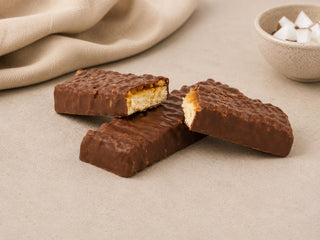
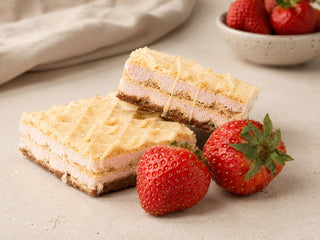
- Protein bar (20 g protein, approx. 200 kcal): easy to carry, satisfying, needs no refrigeration.
- Protein shake (25-30 g protein per serving): ideal as breakfast on a day with a dinner ahead, so you start the day with a solid protein foundation.
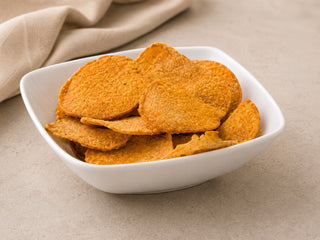
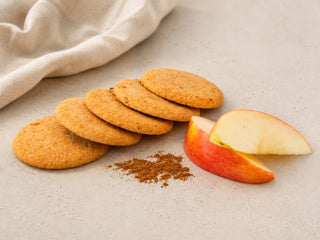
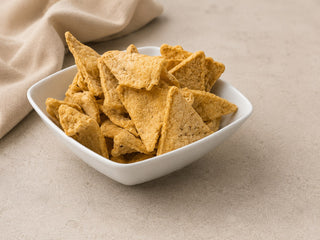
- Protein biscuits or snacks: discreet, needs no explanation, works well if people around you ask what you're eating.
Have a look at the full range in the starter packs if you want to plan a whole week around social occasions.
Frequently asked questions
Do I need to explain my diet to people at the table?
No. You owe nobody an explanation. "I'm eating a bit differently at the moment" or "I'm already full" is enough. The more you explain, the more questions you'll get. Keep it short, keep it neutral, and steer the conversation elsewhere quickly.
How many extra calories can I eat at a dinner out?
An occasional surplus of 400 to 600 kcal has no measurable effect on your body weight over a week, provided the rest of the week is on track. What counts is the average over 7 days, not a single meal. One dinner won't undo three weeks of discipline.
What do I do if I have no say in what's served?
Focus on the most protein-rich items on the table: meat, fish, eggs, cheese, pulses. Eat less of the starchy or sugary side dishes. You don't have to clear your plate and you don't have to refuse anything. There's always a choice, even without a menu.
Is one glass of alcohol really a problem?
No. One glass of wine comes to roughly 125 kcal and has no significant impact on your progress. Two to three glasses do temporarily boost your appetite and lower your inhibitions, though. That second effect matters more than the calories themselves. Be aware of it, and drink mindfully.
How do I hit my protein target on a day when I eat nothing early on and have dinner in the evening?
Spread your protein intake cleverly across breakfast and a pre-dinner snack. A protein shake at breakfast (30 g protein) plus a bar midway through the day (20 g) already gets you to 50 grams before dinner. Add a meal of meat or fish and you'll reach 80 to 100 grams total with no real effort.
What if I have several social commitments in one week?
Plan the week as a whole, not day by day. Keep the weekdays tight. Treat social occasions as two deliberate flexible moments a week, no more. If it's regularly more than twice a week, it's worth asking yourself whether your expectations about progress are realistic for this stage of life.
Does eating beforehand actually help before a birthday party?
Yes, demonstrably. Someone who arrives at a social occasion already full makes different choices to someone who arrives hungry. A protein-rich snack 60 to 90 minutes beforehand lowers your ghrelin levels and reduces the likelihood of impulsive eating. This has nothing to do with willpower and everything to do with physiology.
How do I know which phase of my diet I'm in after a difficult week?
One difficult week doesn't change your phase. But if you notice social occasions are consistently disrupting your pattern, it's worth recalibrating your approach. The phase test helps you work out where you stand and what the next step should be.